
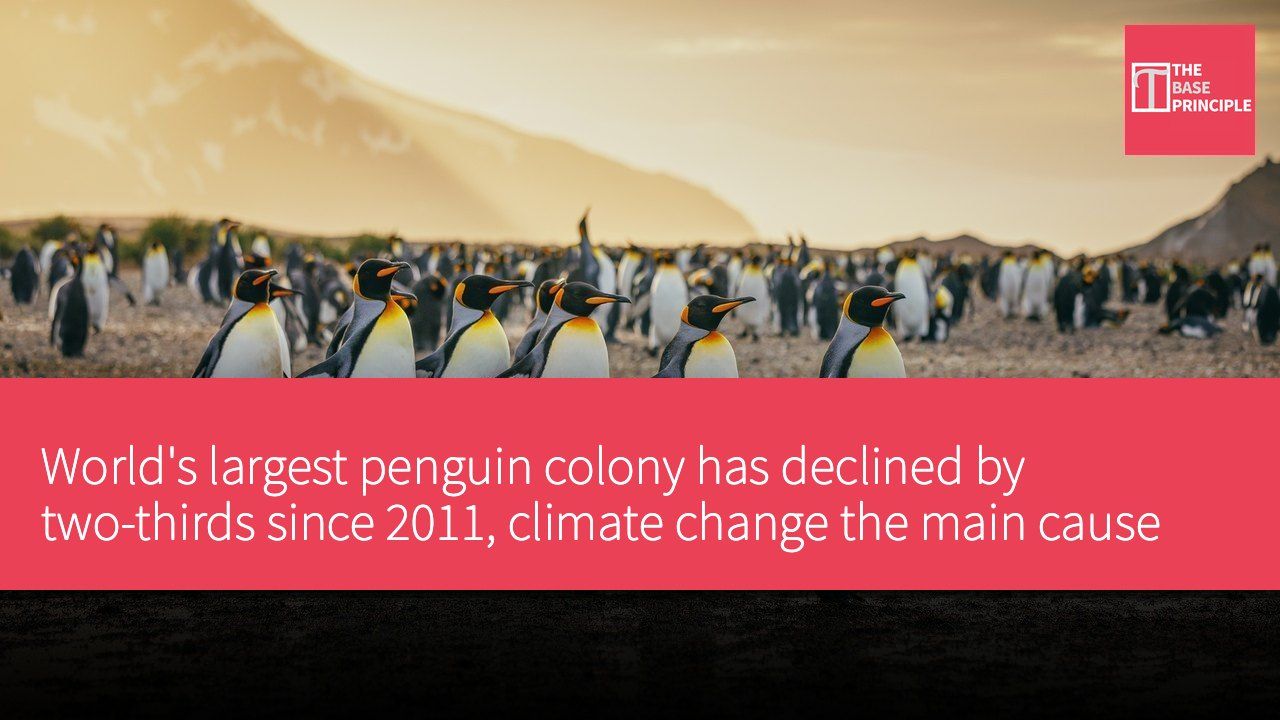
- The world's largest penguin colony has declined by two-thirds since 2011, with climate change the main cause.
- The rapid decline of chinstrap penguins in the South Sandwich Islands raises the risk of ecosystem collapse.
- Climate warming has raised winter temperatures on the Antarctic Peninsula, making it difficult for chinstrap penguins to adapt.
- Macaroni penguin numbers have increased, but not enough to offset the loss of chinstrap penguins.
According to a new study, the world's largest penguin colony has shrunk by two-thirds since 2011, with climate change considered the most likely cause. Scientists say the rapid decline of chinstrap penguins on Zavodovski Island in the northern South Sandwich Islands raises the risk of ecosystem collapse. Norman Ratcliffe, a penguin ecologist at the British Antarctic Survey, said: "This is a massive population collapse, equivalent to losing half a million breeding individuals from the island." The research suggests the pace of this collapse may be accelerating, and chinstrap penguins may need to be listed as an endangered species.
According to a 2011 survey, Zavodovski Island hosted the world's largest penguin colony, with about 600,000 chinstrap penguins and about 90,000 macaroni penguins. Given the decline since then through 2025, the island may have already lost this title, ceding it to Cape Adare in the Ross Sea. Chinstrap penguins face pressure elsewhere as well. A 2020 Guardian report found chinstrap penguin numbers declining in the South Shetland Islands, raising scientists' concerns that "something is wrong with one of the wildest ecosystems on the planet."
Climate change affects penguin survival
Scientists believe the most likely cause is climate disruption. Human-driven warming has raised winter temperatures on the Antarctic Peninsula and its surroundings by 9 degrees Fahrenheit (5 degrees Celsius), making it one of the fastest-warming regions on the planet. On June 6, Argentina's Esperanza Base on the Trinity Peninsula recorded a record winter high of 59.7 degrees Fahrenheit (15.4 degrees Celsius), about 36 degrees Fahrenheit (20 degrees Celsius) above normal. Scientists described the gap as "absolutely bonkers." Chinstrap penguins struggle to adapt because they have a specialized diet and specific ocean temperature preferences.
Tracking data show they prefer to forage in cooler waters to the northwest of the island, hoping to find Antarctic krill, their primary food source. As waters warm, krill have moved south to the Weddell Sea.
Volcanic activity and penguin population decline
Although macaroni penguin numbers have increased by 30%, this is still insufficient to offset the loss of chinstrap penguins. Ratcliffe said this offers only cold comfort, because if current trends continue, all penguins will face a shortage of space. Scientists have ruled out several other possible causes. They found no sign of competition for food between the two penguin species, and the nearest humans are thousands of miles away. All findings point to climate disruption, not competition or human activity.
The island is volcanic, and a major eruption occurred in 2016, sparking a "penguin Pompeii hypothesis" that this caused a sudden population crash. However, the data do not support this hypothesis, showing instead a steady linear decline. Observations also show chinstrap penguins avoid the main "Suffocating Plain" area, where volcanic ash and lava have accumulated. Ratcliffe said the loss of chinstrap penguins will have broader impacts on the food web. He said: "Every ecosystem can be viewed as a giant Jenga stack; every component removed increases the risk of the entire ecosystem collapsing completely."
The study was originally published in Current Biology.
Impact of climate change on Antarctic ecosystems
The sharp decline in chinstrap penguin numbers reflects the profound impact of climate change on Antarctic ecosystems. As temperatures rise, the distribution of the penguins' primary food source, Antarctic krill, is also changing, making it difficult for penguins to find enough food. Although macaroni penguin numbers have increased, this is not enough to offset the loss of chinstrap penguins, highlighting the fragility of the overall ecosystem. This situation not only affects the penguins themselves but may also have broader impacts on the entire food web, underscoring the urgency of climate change.