
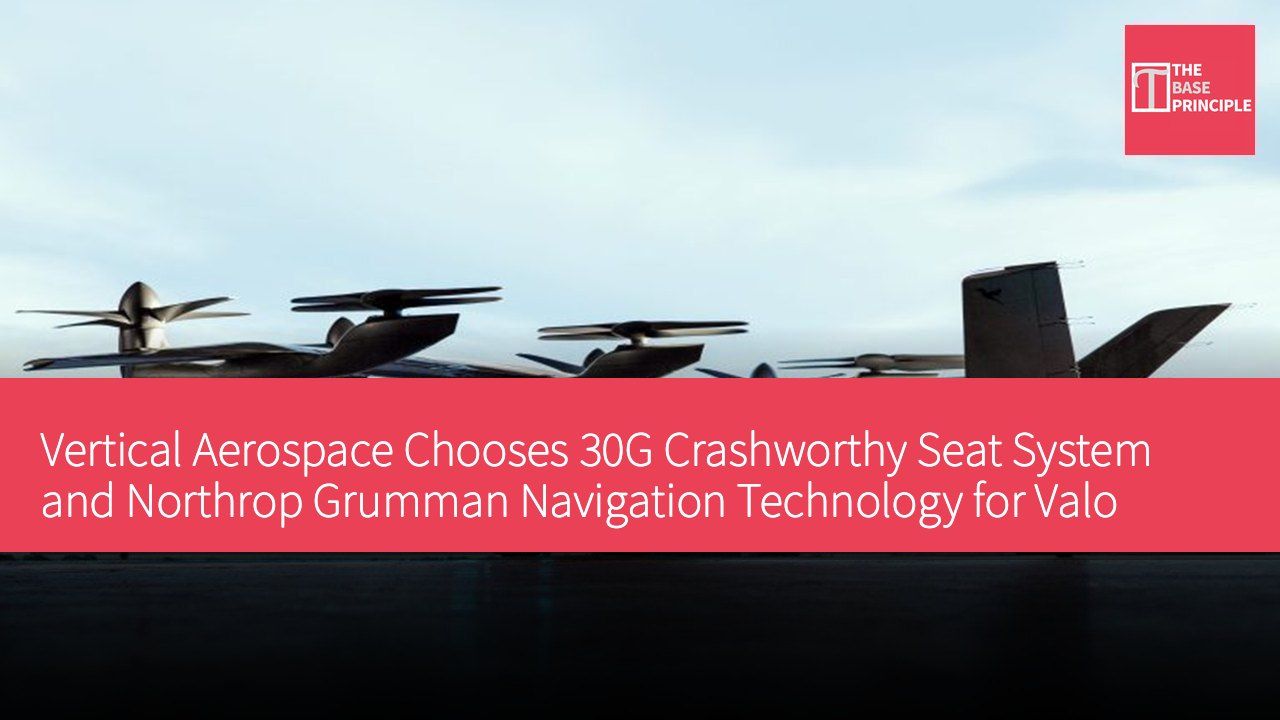
- Vertical Aerospace selects 30G crashworthy seat system and navigation technology.
- The seat system is designed to absorb high-impact forces during a collision.
- Northrop Grumman will supply the LCR-110 inertial reference system.
- Vertical still needs to complete the development and certification of the systems.
UK-based Vertical Aerospace has selected a 30G energy-absorbing seat system and Northrop Grumman navigation technology for its Valo electric air taxi, as the company moves towards aircraft certification and production. The Bristol-based aircraft developer announced two long-term supplier agreements on October 16. South Korea's ANH Structure will be responsible for the design and manufacture of the aircraft's seats, while Germany's Northrop Grumman LITEF will supply its LCR-110 inertial reference system.
The seat system will utilize technology designed to absorb high-impact forces during a collision. Meanwhile, the navigation system will provide essential flight information, including the aircraft's attitude, heading, and position. Both systems are designed for Vertical's piloted electric vertical takeoff and landing (eVTOL) aircraft Valo, which aims to carry four passengers. These agreements establish the responsibilities of the suppliers but do not imply that the completed systems have received certification for the aircraft.
Seat System Design and Functionality
ANH Structure will design, develop, certify, and manufacture a universal seat platform for Valo's pilot, observer, and passengers, specifically designed for crash scenarios. The seat will incorporate the company's proprietary 30G energy-absorbing technology. The 30G figure refers to an acceleration equivalent to 30 times the force of gravity. The energy-absorbing seat is intended to manage the forces transmitted to occupants during a collision, potentially reducing the risk of injury. However, Vertical has not disclosed the crash test results for the Valo seat system.
The suppliers still need to complete development, testing, and certification before the seats can enter production. ANH has received design and production organization approval from the European Union Aviation Safety Agency (EASA). This qualification allows the company to conduct approved aviation design and manufacturing work but does not constitute certification for the new seat. The agreement covers the process from detailed design to industrial production. The universal seat architecture will also help Vertical use similar components across different versions of the aircraft.
The Importance of the Navigation System
Navigation supports flight control. Northrop Grumman LITEF, a German subsidiary of the U.S. defense and aerospace company, will supply the LCR-110 inertial reference system. This system provides information about the aircraft's attitude, heading, and position to flight-critical systems. Attitude describes the aircraft's tilt or orientation during flight, while heading indicates the direction it is pointing. This information is crucial for eVTOL aircraft, as it must manage transitions between vertical takeoff, flight states, and traditional forward flight. According to Vertical, the LCR-110 meets applicable EASA and Federal Aviation Administration (FAA) technical standards for inertial reference equipment.
Its existing approvals do not exempt the necessity of integrating and certifying the system for Valo. These agreements expand Vertical's supplier network, which includes Honeywell Aerospace, Sonaca, Evolito, and Hyundai WIA. Vertical plans to use a universal aircraft platform for configurations accommodating four and six passengers, as well as electric, hybrid-electric, and autonomous variants. These remain part of its development strategy rather than a series of certified aircraft.
The company stated that it has approximately 1,500 orders from customers across four continents, including American Airlines, Avolon, and Japan Airlines. These orders do not represent completed aircraft deliveries.
The latest agreements ensure suppliers for two critical aircraft systems, but Vertical still needs to complete development, integration, and regulatory certification before Valo can enter commercial service.
Challenges and Opportunities for Vertical Aerospace
Vertical Aerospace is advancing the development of its Valo electric air taxi, having selected advanced seat and navigation systems to enhance safety and performance. The choice of these technologies reflects its commitment to passenger safety, particularly with the seat system's 30G energy-absorbing technology designed to mitigate collision risks. However, despite establishing supplier agreements, Vertical still faces challenges in development, testing, and obtaining certification, which are crucial for its commercialization process. Successfully integrating these systems will help enhance its market competitiveness and drive the future development of electric air transportation.