
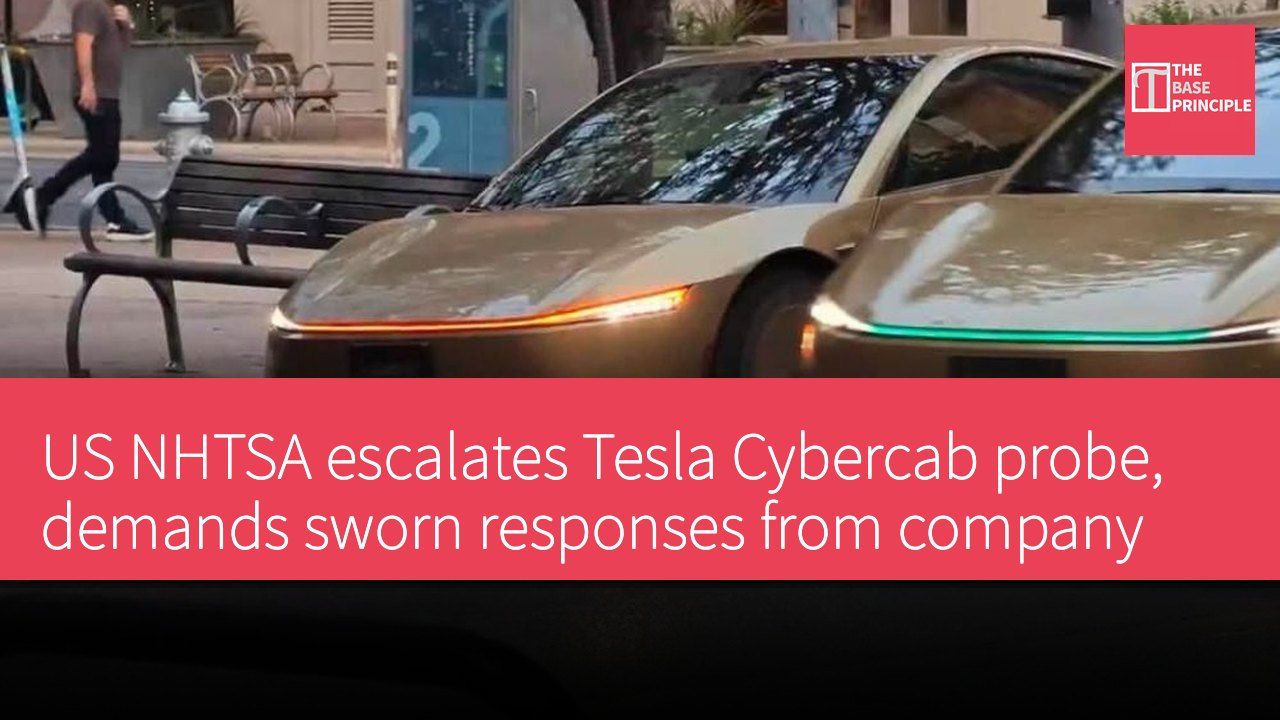
- NHTSA is requiring Tesla to provide sworn answers certifying the completeness of its responses.
- The special order asks Tesla to explain the self-certification decisions behind the Cybercab.
- NHTSA is probing specific gaps in the Cybercab's design in detail.
- If the certification is found to be flawed, Tesla could face substantial civil-penalty exposure.
What NHTSA is asking for
Teslarati, reporting when the initial query surfaced, noted that the agency wanted to understand how Tesla had certified that a vehicle with no permanently attached steering wheel, pedals or rearview mirror complies with the federal motor vehicle safety standards. A special order is a different instrument, one that turns a factual inquiry into a legally binding demand; NHTSA used the same mechanism during its 2023 Autopilot investigation of Tesla. Among the 21 requests, several zero in on specific gaps in the Cybercab's design. One asks whether Tesla has at any point used a temporarily attached human-operated control device to help certify the vehicle, and if so, which standard it relied on. Another cites the rule directly: "The service brake shall be operable by a foot control." Yet the Cybercab has no foot pedals. NHTSA is seeking a detailed explanation of how the vehicle satisfies that requirement, and how it complies without an exemption of the kind Zoox secured in July under Section 555.
The potential legal exposure
The order does not assert that the Cybercab is unsafe or that Tesla has broken a rule. It asks Tesla, under oath, to explain the reasoning behind the decisions it made when self-certifying the vehicle. That distinction matters, but the exposure it creates is no less real. According to Motor1, if NHTSA ultimately concludes the certification is defective, civil penalties could reach as high as US$139 million, on top of the criminal exposure that comes with a false sworn statement. Tesla has not publicly outlined how it plans to respond.
Even as the September 30 deadline approaches, the Cybercab continues to carry passengers in Austin through the Robotaxi app, and the company is still expanding the vehicle's service footprint. The special order does not pause any of that; instead, it sets a date by which Tesla must put its certification logic on the record, with the names of senior company executives attached.
The legal challenge of certifying the Tesla Cybercab
NHTSA's escalation of its Cybercab probe to demand sworn responses reflects heightened scrutiny of autonomous-driving safety. The special order requires Tesla to explain how it meets safety standards without traditional controls, signaling tighter regulatory oversight of emerging technologies. The stakes extend beyond Tesla's commercial operations: the outcome could shape compliance and safety practices across the autonomous-vehicle industry and fuel broader debate over how those standards should be set.