
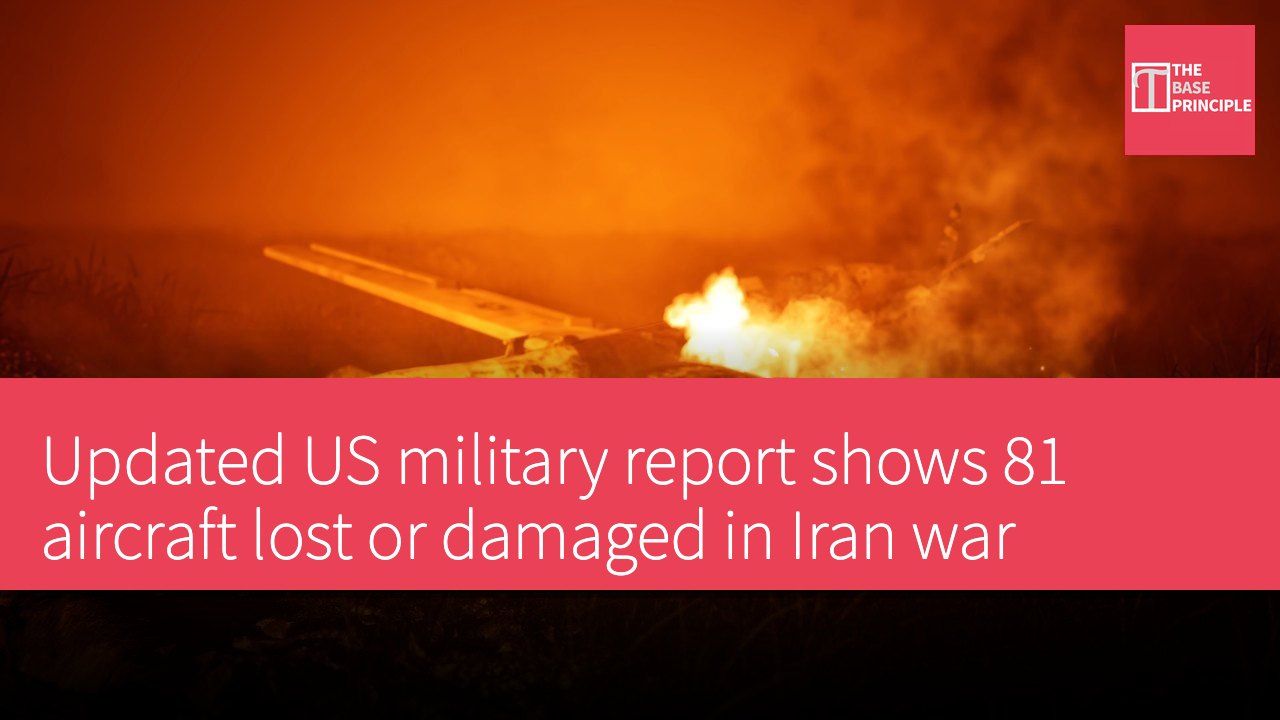
- The United States has lost or damaged 81 aircraft in operations against Iran.
- The MQ-9 Reaper and F-15E are the primary aircraft types lost.
- The loss of tankers and the E-3 is critical to force operations.
- Ongoing combat damage affects aircraft combat availability.
According to the latest Congressional Research Service (CRS) assessment, the United States has listed 81 aircraft lost or damaged in operations against Iran since February 28. The report was revised on October 5, nearly double the 42 aircraft listed in the CRS May assessment. The list includes fixed-wing aircraft, helicopters, and unmanned systems, notably 45 MQ-9 Reapers and 12 F-15E Strike Eagles as the primary losses. According to Military Identification reporting, the increase in this figure should not be interpreted as 39 additional aircraft lost since May, because the accounting continues to evolve as more incidents, damage assessments, and attribution details become public.
The MQ-9 Reaper, primarily used for intelligence, surveillance, reconnaissance, and precision strike, has borne the brunt of the losses. The updated list also includes three MQ-1 series unmanned aircraft, raising the proportion of remotely piloted systems in the total. These losses raise questions about persistent surveillance in contested airspace. Repeated losses or damage could reduce the number of Reapers available for continuous coverage and force commanders to shift to more survivable sensors and standoff systems.
Impact of MQ-9 Reaper Losses
Additionally, the 12 F-15Es represent a different kind of strain. The fighter remains the primary long-range strike aircraft, combining substantial weapons payload, combat radius, and precision strike capability. Prolonged damage to the fighters stresses a limited fleet that must also be allocated to other theaters. Unlike unmanned losses, this also affects the number of trained aircrews, maintenance requirements, and the ability to generate high-end strike sorties.
The tally also lists one F-35A Lightning II, seven KC-135 Stratotankers, one E-3 Sentry airborne warning and control aircraft, A-10 Thunderbolt IIs, MC-130J Commando II special operations aircraft, one Navy MQ-4C Triton surveillance unmanned aircraft, and several helicopters. The loss of tankers and the E-3 is particularly significant because they are critical to force operations.
Importance of Tankers and the E-3
Tankers extend the operational range and endurance of fighters and bombers, while the E-3 provides surveillance, battle management, and command and control functions. Even a temporary reduction can limit sortie generation and shorten time on station.
The CRS tally includes more than just aircraft shot down by the enemy. It also covers combat losses, friendly fire incidents, Iranian missile or drone attacks on aircraft on the ground, crashes, and aircraft deliberately destroyed by U.S. forces. The CRS warns that the figures remain subject to revision due to classification, ongoing combat, and attribution uncertainties. Some aircraft listed as damaged may have already returned to service. The report cites a September Congressional Budget Office estimate that the replacement cost of U.S. equipment losses recorded through August 1 could range from $1.9 billion to $3.3 billion, depending on Pentagon replacement decisions.
This range applies to overall equipment losses, not just the 81 aircraft.
Challenges of Sustained Combat
According to Military Identification analysis, losses in a sustained regional war cannot be measured by permanent write-offs alone. Combat damage, base attacks, maintenance requirements, and temporary removal from service can all reduce combat availability even if the aircraft are eventually repaired. The revised figures highlight the broader challenge facing the Pentagon: maintaining sufficient surveillance, strike, refueling, and command and control capacity while repairing damaged aircraft, replacing losses, and keeping forces ready for global commitments.
Ongoing Challenges Facing the U.S. Military
In the ongoing regional war, the U.S. military faces significant challenges from aircraft losses. With the loss of MQ-9 Reapers and F-15Es, force operational capability is affected, particularly in surveillance and strike missions. The loss of tankers and the E-3 further limits operational range and command and control capability. The report notes that these losses affect not only the number of aircraft but also trained aircrews and maintenance requirements, which are critical to maintaining force combat readiness.