
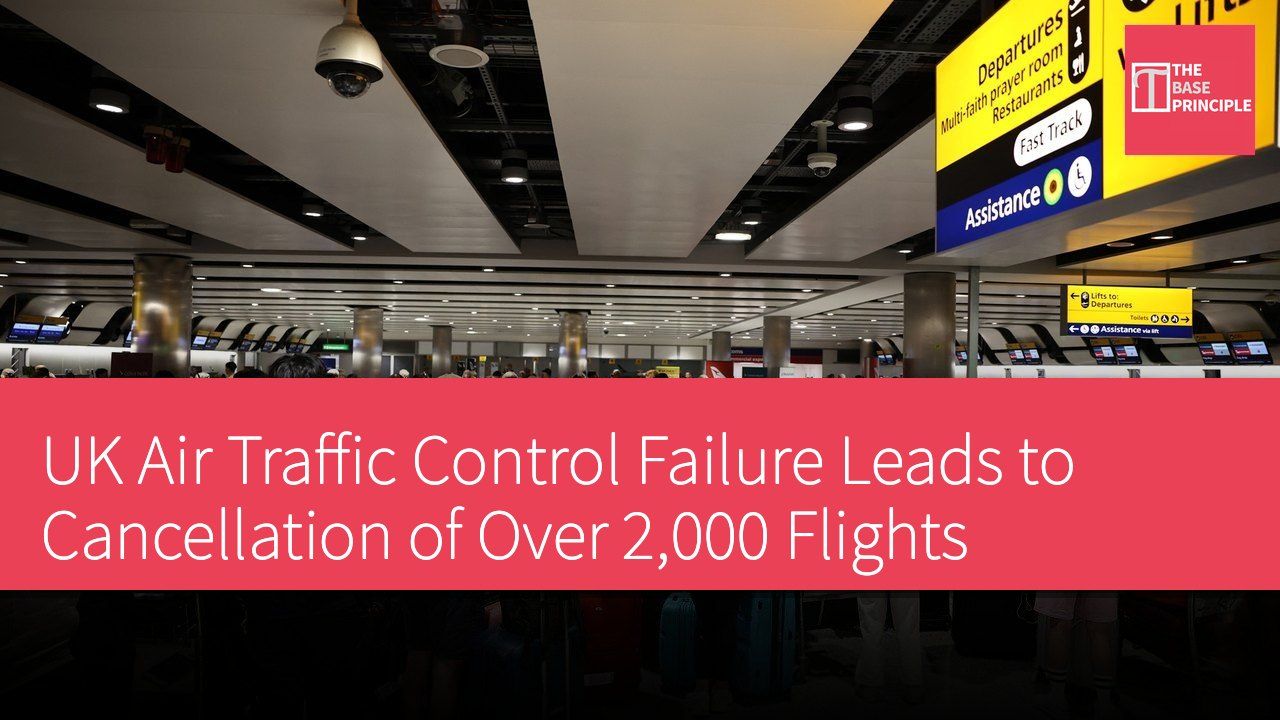
- The UK air traffic control failure led to the cancellation of over 2,000 flights and stranded hundreds of thousands of passengers.
- Multiple major airports were affected, with over 290 flights canceled on Wednesday.
- The NATS CEO apologized for the incident but faced calls for his resignation from airline executives.
- The outage has raised questions about the resilience of the UK's air traffic infrastructure, which has experienced technical issues before.
UK air travel operations have resumed after an air traffic control failure led to the cancellation of over 2,000 flights and left hundreds of thousands of passengers stranded at airports across the country. UK airports restarted operations on Wednesday, September 9th, following hours of closure the previous day. Cirium, a London-based aviation data and analytics firm, reported that approximately 1,750 flights were canceled on Tuesday, September 8th. The UK’s National Air Traffic Service (NATS) reported that departure delays were caused by "technical issues" with its flight processing system.
Heathrow, Gatwick, Manchester, and Birmingham airports experienced the most severe delays. Reports indicated that over 290 flights were canceled on Wednesday. The proportion of grounded departures was 30% on the first day and dropped to 5% on the second day. NATS CEO Martin Rolfe apologized to affected passengers and referred to the incident as an "IT failure." However, Yvonne Moynihan, the UK managing director of Wizz Air, and Neal McMahon, the chief operating officer of Ryanair, both called for Rolfe's resignation, citing recurring technical issues.
Airline Reactions to the Outage
The disruption to air operations began on Tuesday when NATS experienced technical issues that led to the cancellation of over 2,000 flights and left hundreds of thousands of passengers stranded. Media reports indicated that Ryanair was one of the worst-affected airlines, with approximately 150,000 passengers impacted and over 200 flights canceled. British Airways canceled or diverted around 100 flights, affecting tens of thousands of passengers. Rolfe revealed that the organization is investigating the incident and believes the issue differs from previous faults. While he apologized for the disruption and stated that a cyberattack had been ruled out, he was still summoned to meet with Transport Minister Heidi Alexander on Wednesday.
Alexander urged all passengers to "keep checking with airlines" to confirm whether their flights were operating as scheduled. On the social media platform X, she stated: "I am seeking assurances that lessons will be learned and that the systems supporting air travel can fulfill their duties."
Questions Over Air Traffic Infrastructure Resilience
However, the disruption has once again raised questions about the resilience of the UK's air traffic infrastructure. Tuesday's outage was not the first major technical issue to hit the UK's air traffic network in recent years. A system failure in August 2023 caused widespread flight cancellations during one of the busiest travel periods of the year, reportedly costing airlines around $135 million (approximately £100 million). Another technical issue occurred in July 2025 when a radar-related fault disrupted flights at major airports, including Heathrow.
In an interview with Reuters, Ryanair CEO Michael O'Leary described the outage as a repeat of the 2023 disruption caused by improper flight scheduling. He said, "Fire him. He has been there since 2015 and is useless." The company also issued a statement saying that over 65,000 passengers were affected by the outage. "How many more failures will it take before the overpaid failure NATS CEO Martin Rolfe takes responsibility and resigns?" the statement read.
McMahon noted, "Holidaymakers, business travelers, and thousands of visitors are once again paying the price for NATS' shameful failure."
Moynihan also joined Ryanair in calling for Rolfe's resignation. She stated, "I think in any industry, when you've had three strikes, you need to consider three outs. So, I think this is absolutely something he needs to consider." She added, "The third time and the third excuse are no longer enough." Rolfe stated that he takes full responsibility for the incident. The government has given him one week to investigate the incident and report the findings to Alexander.
Impact and Accountability of the Air Traffic Control Outage
The air traffic control outage has not only caused massive flight cancellations but has also triggered a crisis of confidence in the UK's air transport system. Airline executives have expressed strong dissatisfaction with NATS' performance and have called for the resignation of the organization's leader, highlighting ongoing frustration with recurring technical issues. The incident has once again underscored the vulnerability of the aviation industry to technical failures, particularly during peak travel periods, with far-reaching consequences for passengers. The government and relevant agencies need to enhance the resilience of infrastructure to prevent similar incidents from occurring in the future.