
- Tesla's Cybercab production speed exceeds actual deployment capacity, facing challenges.
- The production line is about 78% automated, with a goal of 100% automation, completing a vehicle in 10 seconds.
- The Cybercab uses independently packaged 4680 battery cells, enhancing maintenance efficiency.
- Deployment has become a bottleneck, with plans to deliver to customers by the end of 2026.
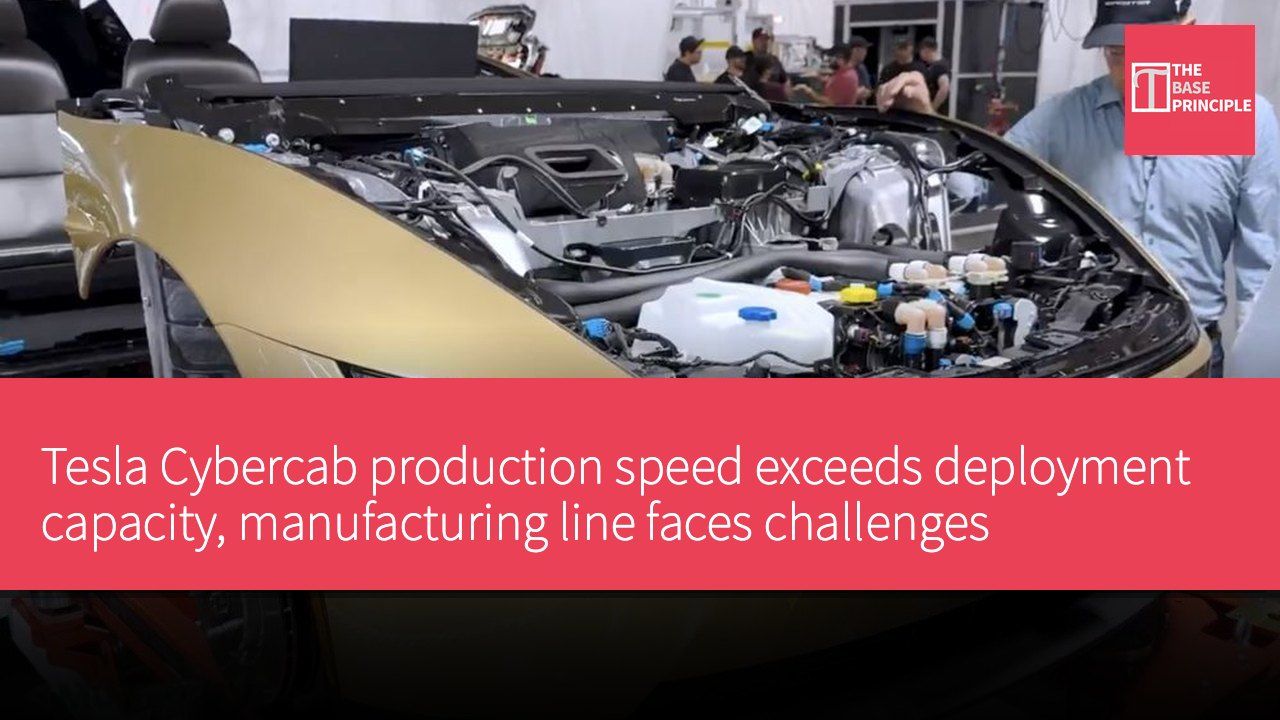
According to Tesla Vice President Lars Moravy, the Cybercab production line in Texas is currently capable of building two-seat robot taxis at a faster rate than the company can deploy them into service. In a deep analysis of the Cybercab on Munro Live, he stated, "We are not running every day because the speed of the production line is just too fast. Right now, it is exceeding our deployment capability." Moravy noted that it is a race to see who can keep up, with the production line currently in the lead.
Tesla's official Robotaxi account shared a video analysis of the Cybercab on X, referring to it as "Cybercab Engineering Deep Dive." Moravy's comments went further than what he mentioned last week during the third-quarter earnings call, where he noted that the annual production capacity of the Cybercab line exceeds 125,000 units, with actual operational capability far exceeding that figure. This tour showcased the sources of production speed. Tesla's unwrapped process breaks the Cybercab down into front, rear, side, and central modules, which are built and tested separately before being assembled on a short final production line.
Production Line Automation Level
The final production line has only 25 fully automated workstations, which Tesla's team estimates is one-fifth to one-tenth of what is required for the Model Y.
The entire production line is about 78% automated, with the frame production line achieving 100% automation, reducing the floor space used for each vehicle layout by approximately 50%. The goal is "100% automation, 10-second cycle time," meaning a Cybercab is completed every 10 seconds. Tesla has also eliminated the paint shop, with only the side modules being painted, while the exterior panels receive color in the mold machine. Engineers state that the vehicle is designed to last at least 500,000 miles, which is crucial for a vehicle that is primarily used for passenger transport.
Cybercab Battery Design Features
The vehicle's battery has also received similar treatment. The Cybercab uses an 88S6P packaged 4680 battery cell, featuring a steel casing, which is a first for Tesla. Each module is independently packaged, allowing for a single failed module to be replaced without needing to replace the entire battery pack. A wireless battery management board replaces traditional wiring harnesses, and the new contactors are fast enough to completely eliminate thermal fuses. Tesla's battery chief rated this battery pack as A-, while the Model Y structural pack received a D, and the Cybertruck received a B-.
Deployment Challenges and Future Plans
At the front, the gear ratio of the drive unit is 11:1, while most Tesla vehicles have a gear ratio of about 9:1, as the Cybercab does not require high top speeds. Moravy described the deployment aspect as now becoming a bottleneck. Tesla has over 50 Cybercabs operating during the F1 race weekend in Austin, and Texas records show 463 Cybercabs registered. Tesla stated during the earnings call that Cybercab service will launch next month in Dallas, and Moravy indicated that the company plans to offer the Cybercab to customers by the end of 2026.
Since the production line entered mass production in April, all units produced so far have been incorporated into Tesla's own fleet.
Munro Live also inquired when a Cybercab could be obtained for disassembly, to which Tesla responded, "Not yet."
Contradiction Between Production Speed and Deployment Capability
The production speed of the Tesla Cybercab far exceeds its actual deployment capability, reflecting the company's contradiction between expanding production capacity and market demand. With the highly automated production line, Tesla needs to balance production efficiency with actual service capability to ensure it can effectively meet market demand. While the design and battery technology innovations of the Cybercab have enhanced product performance, if the deployment speed cannot keep pace with production speed, it may impact the company's competitiveness in the market.