
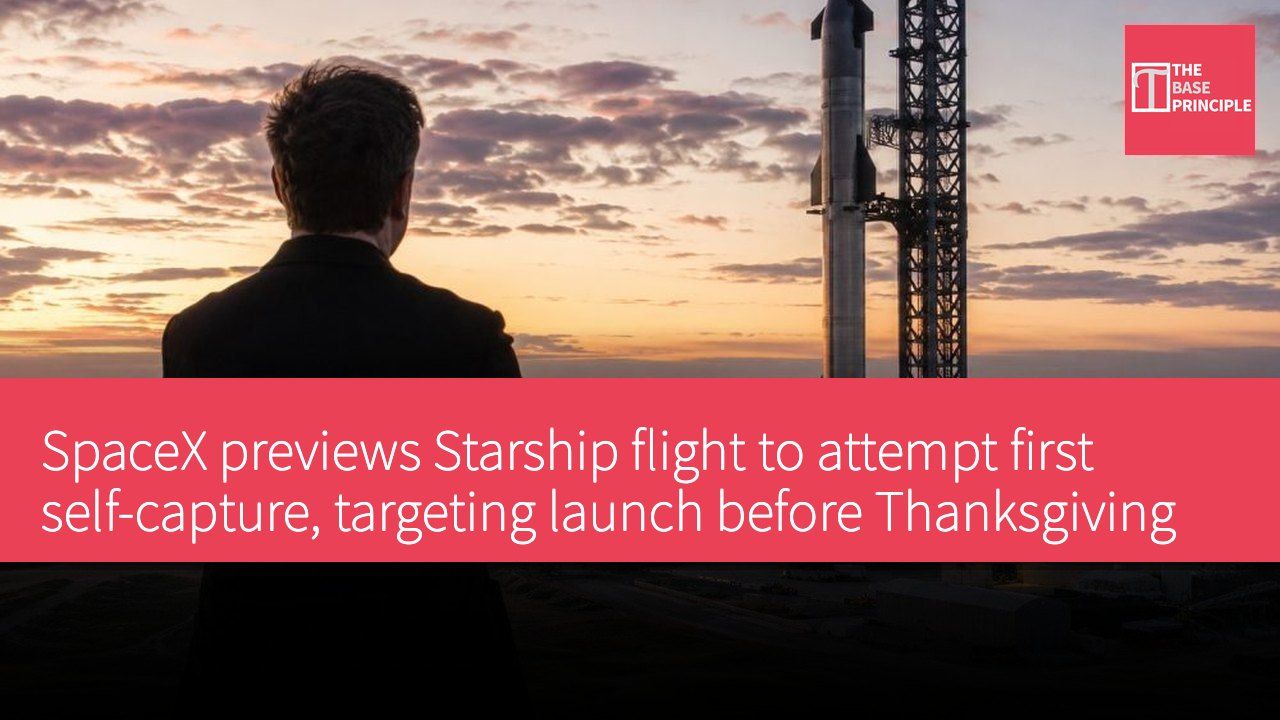
- SpaceX will attempt to catch the Starship ship for the first time, an unprecedented challenge.
- A successful catch would achieve full recovery of an orbital-class rocket, reducing launch costs.
- NASA's lunar program also depends on Starship's recovery capability.
- SpaceX aims to launch a tanker every six days, requiring rapid ship recovery.
Elon Musk said SpaceX's next Starship flight will attempt to catch the ship itself, an unprecedented challenge. At Saturday's X Takeover event at Giga Texas, Musk told an audience of about 2,000 that Flight 15 is expected in four to six weeks, "possibly launching just before Thanksgiving, that's my guess." This represents a delay from earlier reports that had targeted as early as Oct. 19.
Musk explained the reason for the shifting dates. "We make a series of improvements to the rocket between each flight," he said, adding that there are sometimes hundreds or even thousands of small changes. This time the change list is short, "but some of them require a fair amount of work, we have to go inside the tanks to make these modifications."
Significance of catching the ship
"We're going to try to catch the ship, which is a very big deal," Musk said. "If we succeed, it will be the first time an orbital-class rocket has been fully recovered." SpaceX has already caught the Super Heavy booster with the tower's mechanical arms, and has discussed plans to catch the ship since late 2025, but the upper stage has never been caught. Musk also outlined the next steps: "The next major milestone will be flying the booster and ship again," he said, describing Flight 16, in which "all parts of the orbital rocket will fly again."
SpaceX's pursuit of this goal is driven by cost and launch frequency.
Implications for NASA's lunar program
To date, all Starship ship flights have ended with a splashdown in the ocean, and SpaceX expects these water landings often result in a fireball. A ship returning to Starbase can be inspected and flown again. According to SpaceX's IPO filing, the Starship V3 design is capable of delivering 100 metric tons of cargo to orbit in a fully reusable configuration. SpaceX aims to reduce the cost of reaching orbit by 99% or more relative to historical averages, and tower capture should enable "multiple launches per day."
The benefits extend beyond lowering launch costs. The next-generation Starlink V3 satellites are too large to fly on Falcon 9 and can only be launched on Starship, up to 60 at a time. Flight 14 on Sept. 28 deployed the first 26 satellites after Starship reached orbit despite an early engine shutdown, according to Teslarati. Musk blamed the engine computer software and said the heat shield is "extremely robust," claiming in August that he had solved Starship's biggest challenge.
NASA's lunar program also depends on this capability.
NASA's inspector general described a lander mission requiring a propellant depot in low Earth orbit and more than 10 tanker flights. SpaceX aims to launch a tanker every six days. That timeline is only achievable if the ship and booster can be rapidly recovered and reflown. Moreover, ship-to-ship propellant transfer has not yet been attempted. Notably, the challenge of returning the ship to the launch site remains unexplored, which would involve extensive aviation safety assessments because reentry would pass over land.
Potential impact of Starship capture technology
SpaceX's plan to attempt catching the Starship ship is not only a technical challenge but also has far-reaching implications for future space missions. If successful, it would significantly reduce launch costs and increase launch frequency, which is critical for both commercial spaceflight and NASA's lunar program. As Starship's design can accommodate larger satellites, this will advance global satellite internet development. If frequent launches can be achieved, it will help accelerate the pace of space exploration and resource utilization, and could change the operating model of the space industry.