
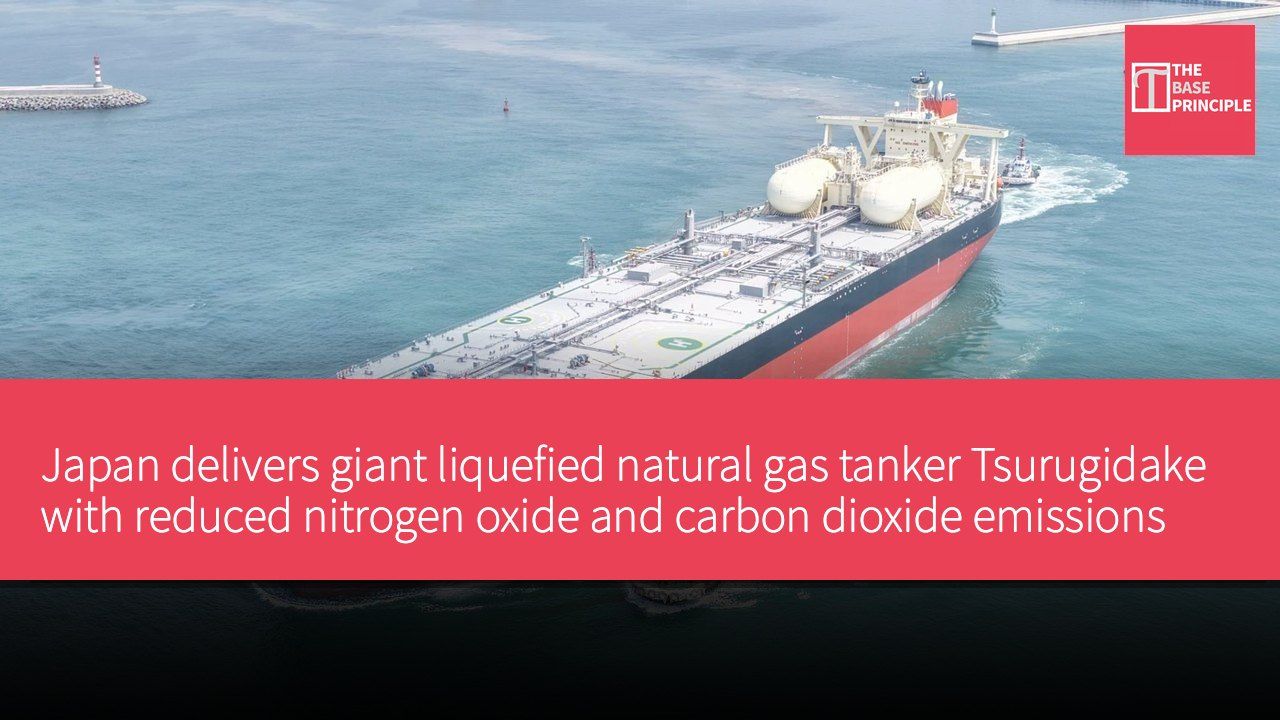
- The Tsurugidake tanker can reduce NOx emissions by up to 85%.
- The vessel is equipped with a dual-fuel engine that can reduce CO2 emissions by 25% to 30% during operation.
- The tanker meets the International Maritime Organization's Energy Efficiency Design Index Phase III requirements.
- The newly designed bow improves navigational performance and enhances fuel efficiency.
Japan has recently delivered a giant liquefied natural gas (LNG) tanker that can reduce nitrogen oxide (NOx) emissions by up to 85% and carbon dioxide (CO2) emissions by 30%. The massive vessel, named Tsurugidake, was built by Kawasaki Heavy Industries in Tokyo and was delivered to Sequoia Navigation Inc. at a shipyard in Dalian, China, on October 14, 2026. The ship measures 1,114 feet (339.5 meters) in length and has a deadweight capacity of 310,020 tons.
Additionally, the tanker is 197 feet (60 meters) wide, 94.8 feet (28.9 meters) deep, and has a draft of 69 feet (21 meters). This vessel is the fourth liquefied natural gas-fueled very large crude carrier (VLCC) delivered by the Kawasaki Group. According to company data, the supertanker was constructed at the COSCO KHI Shipbuilding (DACKS) shipyard in Dalian, a joint venture between Kawasaki and China's COSCO Shipping. Kawasaki officials revealed, "This new design significantly reduces the resistance caused by bow waves during navigation, thereby enhancing propulsion performance."
Environmental Advantages of the Dual-Fuel Engine
According to Kawasaki, the vessel is equipped with a dual-fuel engine capable of operating on liquefied natural gas (LNG) and low-sulfur fuel oil. When using LNG, the engine can reduce carbon dioxide emissions by approximately 25% to 30% compared to traditional heavy oil engines. The company also estimates that NOx emissions can be reduced by 85%, while sulfur oxides (SOx) can be completely eliminated. This means that the long-distance transportation of crude oil will become less polluting. The tanker is powered by an electronically controlled seven-cylinder two-stroke MAN B&W 7G80ME-C10.5-GI-HPSCR engine, allowing for efficient operation at low speeds.
At the same time, the vessel is also equipped with a large-diameter, high-efficiency propeller to reduce fuel consumption during navigation. Kawasaki noted that the ship complies with the International Maritime Organization (IMO) Energy Efficiency Design Index (EEDI) Phase III requirements, which mandate a 30% improvement in energy efficiency compared to the original baseline for new vessels.
Impact of the New Bow Design
This supertanker features a redesigned bow to enhance its performance at sea. Traditional tankers typically have a bulbous bow that extends below the waterline. However, the shape of this new vessel is different. Kawasaki stated, "Kawasaki's new VLCC replaces the traditional bulbous bow with a newly designed bow, extending the vessel's length at the waterline." The ship has a cargo capacity of 352,151 cubic meters, a cruising speed of approximately 15.45 knots, and can accommodate up to 37 crew members. Kawasaki has also installed SOx scrubbers at the exhaust outlets of the main engine and onboard power generation system, which are crucial for removing sulfur oxides from the exhaust, meaning the vessel can use fuel while still complying with emission limits and providing greater fuel flexibility.
The company summarized in a press release, "By installing these devices, fuel costs are expected to decrease, as traditional fuels will remain compatible even after regulatory tightening."
Contribution of Tsurugidake to Eco-Friendly Shipping
The delivery of the Tsurugidake tanker marks a further expansion of liquefied natural gas (LNG) applications in the shipping industry, demonstrating a commitment to environmental protection. The vessel's design not only reduces harmful emissions but also enhances fuel efficiency, meeting the stringent standards set by the International Maritime Organization. As global demands for reducing carbon footprints increase, the technological innovations of this tanker may serve as a model for the future of the shipping industry, encouraging more vessels to adopt similar eco-friendly technologies to address climate change challenges.