
Key points
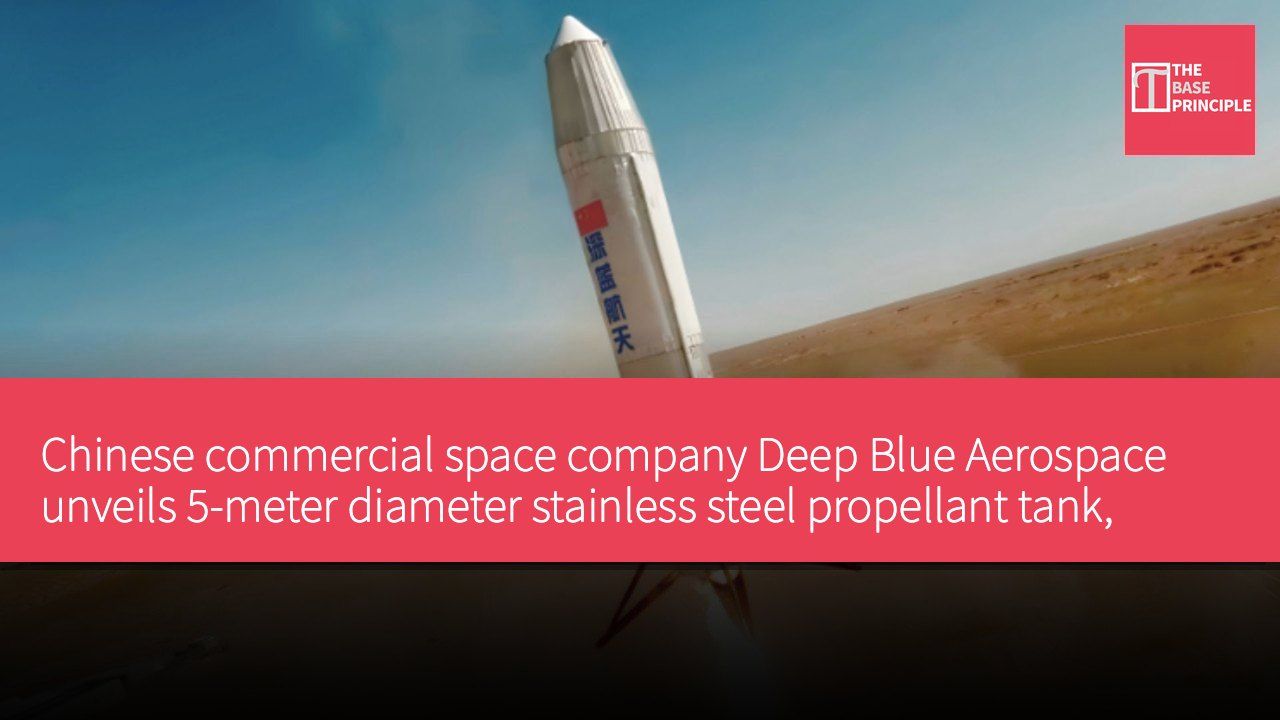
- Deep Blue Aerospace announces its 5-meter stainless steel propellant tank has rolled off the production line, marking a major advance for the Nebula-2 rocket.
- Nebula-2 is designed to be reusable over 20 times, aimed at meeting China's commercial payload needs.
- The new tank sets a record for large stainless steel tank manufacturing in China's private aerospace industry, paving the way for testing.
- Chinese companies are competing fiercely in low Earth orbit satellite internet infrastructure, and Deep Blue Aerospace is actively participating.
Nebula-2 Rocket Design and Capabilities
The Nebula-2 is designed to deliver up to 25 metric tons of payload to low Earth orbit, built for high-intensity commercial operations. Its first stage is powered by 11 Thunder-RS engines producing up to 12,446 kilonewtons of liftoff thrust, while a single vacuum-optimized engine handles the upper stage. According to the Global Times, the Nebula-2 is designed to be reusable over 20 times, aiming to become the workhorse for China's expanding satellite internet network and commercial payload needs. The newly completed 5-meter propellant tank sets a record for large stainless steel tank manufacturing in China's private aerospace industry. The tank is the structural backbone of any rocket, and completing this component paves the way for the second-stage propulsion system tests planned for later this year. The Nebula-2 is designed to combine high payload capacity with cost-effectiveness, capable of supporting a variety of space missions. The rocket will deploy large-scale satellite internet constellations and also deliver high-value payloads to medium Earth orbit, geostationary transfer orbit, and other destinations for global customers. If the design looks familiar, it's because SpaceX pioneered the technique. SpaceX demonstrated how a large rocket can land without heavy landing legs, caught by the "Mechazilla" tower arms, a design that successfully caught the 233-foot-tall Super Heavy booster during Starship Flight 5. Catching the booster directly on the launch pad reduces the need for offshore drone ship recovery. Now, Deep Blue Aerospace wants to capture that efficiency.Advances in Chinese Space Recovery Technology
The company aims to eliminate separate landing zones and reduce launch costs by installing a chopstick-style capture system on the Nebula-2 launch pad. Equipping the rocket with this mechanism enables faster turnaround times, making a streamlined recovery process a more efficient alternative to traditional offshore landings. China is actively advancing its reusable spaceflight capabilities both at sea and on land. The state-owned Long March-10B rocket achieved a major milestone on July 10, recovering its first stage at sea for the first time using an offshore platform network system. Shortly after, LandSpace's Zhuque-3 Y2 rocket completed China's first successful land-based booster recovery on August 19, using deployable landing legs. Together, these achievements demonstrate China's rapid progress in mastering diverse booster recovery technologies. Moreover, competition among companies to build the national low Earth orbit satellite internet infrastructure is fierce. Corporate rivals such as LandSpace, Space Pioneer, i-Space, and Galactic Energy are vying to win contracts for national mega-constellations like Guowang and Qianfan. Deep Blue Aerospace, alongside these competitors, is attempting to capture market share in this rapidly expanding industry.Deep Blue Aerospace's Competitive Edge in Commercial Space
Deep Blue Aerospace's propellant tank rollout demonstrates the technological progress of China's private aerospace industry, particularly in reusability. As the Nebula-2 develops, the company is not only narrowing the technological gap with Western leaders but also seeking a foothold in low Earth orbit commercial demand. As competition among multiple companies in satellite internet infrastructure intensifies, Deep Blue Aerospace's innovative strategy may win it an advantage in the market, driving further development of China's space industry.H
About the author
Henderson