
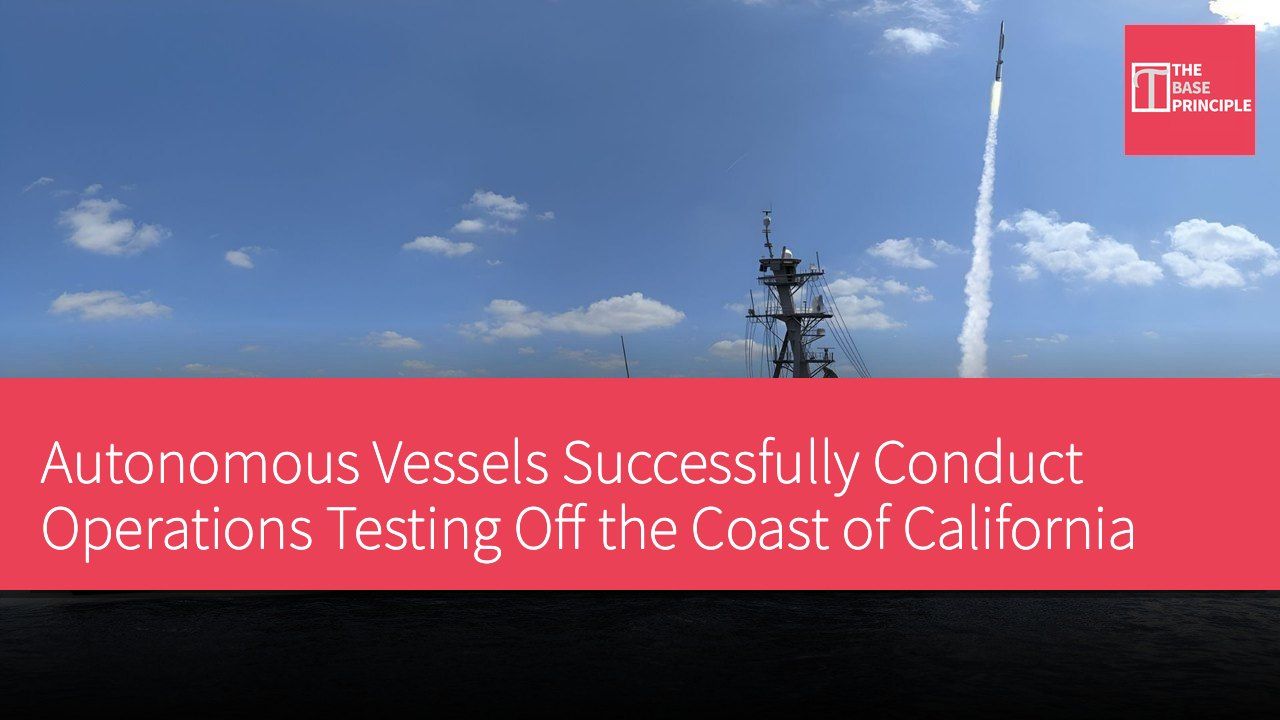
- The autonomous surface vessel successfully conducted operations testing in California, showcasing its technological potential.
- During the exercise, the vessel was able to respond to changing mission requirements and simulated failures without crew intervention.
- HD KSOE and Anduril's autonomous systems jointly enhanced the vessel's navigation capabilities.
- This demonstration could advance the U.S. unmanned surface vessel program to meet growing demands.
HD Hyundai and Anduril showcased an autonomous surface vessel in California, demonstrating technology that could support future U.S. Navy missions. The exercise, conducted on October 19, tested how the vessel responds to changing mission requirements and simulated mechanical failures without crew intervention. The demonstration took place at the Port of Long Beach, attended by approximately 40 representatives from the U.S. and South Korea, including officials from the U.S. Navy and Coast Guard, as well as representatives from the South Korean Navy and the Defense Acquisition Program Administration.
The maritime autonomous driving test was a three-and-a-half-hour exercise using a modified 368-ton unmanned surface vessel that was previously operated by the U.S. Navy. HD Korea Shipbuilding & Offshore Engineering (HD KSOE) equipped the vessel with its VAone autonomous system, while Anduril provided the Lattice mission autonomy platform. These systems demonstrated how the unmanned vessel navigates in a maritime environment and adjusts its behavior as mission conditions change. The trials included formation sailing and emergency responses to simulated mechanical failures.
Autonomous Systems Enhance Vessel Capabilities
Operators and observers remotely followed the exercise from a shore-based control station, with real-time video allowing attendees to monitor the vessel's actions and assess its ability to perform assigned tasks without continuous onboard intervention.
These scenarios not only tested autonomous navigation capabilities but also examined how the vessel could respond to mechanical issues and potential damage while maintaining operational control. The VAone developed by HD KSOE is an integrated unmanned vessel autonomy solution based on the HiNAS Prime autonomous navigation system developed by Avikus, a subsidiary of HD Hyundai. VAone also integrates an autonomous machinery management system that monitors equipment status, identifies anomalies, and initiates automatic responses. Its damage control component can detect vessel damage and take corrective actions.
Anduril's Lattice platform enhances mission-level autonomy.
HD Hyundai stated that this integration demonstrated all aspects of unmanned operations, including navigation, machinery management, damage control, and weapon autonomy. This distinction is important because operating an unmanned vessel involves more than just planning a route; the onboard systems must interpret changing conditions and coordinate responses in the event of equipment failures or changes in mission requirements. During the exercise, the vessel continuously made autonomous decisions in response to different situations. HD Hyundai indicated that the results showed its capability to handle scenarios representative of real maritime operations.
Advancing U.S. Defense Plans
This demonstration could help Anduril and HD Hyundai make progress in the U.S. unmanned surface vessel program. They also plan to target a broader international market, as demand for unmanned maritime platforms is increasing. For U.S. defense planners, autonomous surface vessels offer a potential means to execute specific maritime missions without requiring sailors to board every platform. Their effectiveness will depend on reliable navigation, robust failure response capabilities, and effective coordination among onboard systems. The exercise practically demonstrated how shipbuilding expertise and mission autonomy software can work together; however, these companies have yet to announce specific U.S. Navy procurement awards related to this trial.
Jang Kwang-bil, Executive Vice President of HD KSOE's Future Technology Research Institute, stated that this exercise confirmed the vessel's ability to handle complex tasks after leaving the port. HD Hyundai plans to further refine its autonomous technology as it seeks to gain a stronger market position in the emerging unmanned surface vessel market.
Future Prospects for Unmanned Surface Vessel Technology
This exercise demonstrated the potential of unmanned surface vessels for autonomous operations, particularly their ability to handle complex missions and failure situations. As global demand for unmanned maritime platforms increases, the development of such technologies is crucial for enhancing naval operational efficiency and safety. By integrating advanced autonomous navigation systems and machinery management technologies, unmanned vessels can execute missions without the need for continuous personnel intervention, thereby reducing labor costs and minimizing risks faced by sailors.