
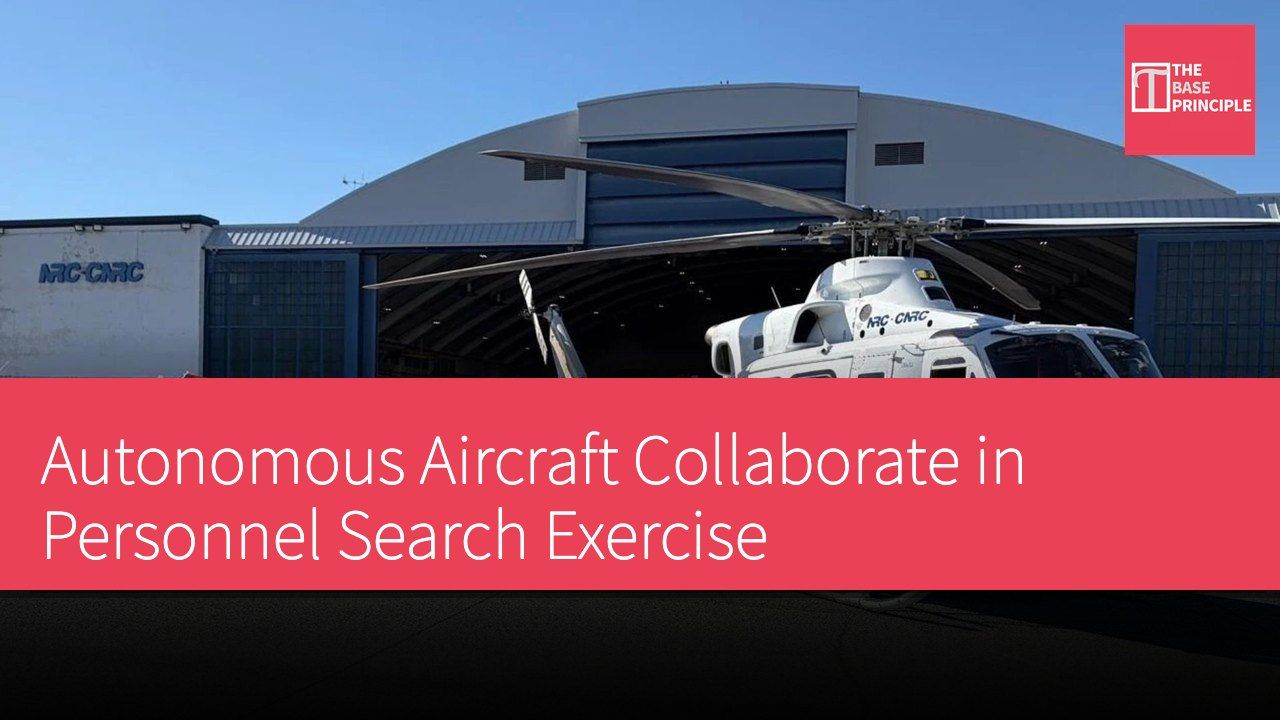
- This exercise showcased the collaborative capabilities of multiple aircraft.
- Simulated drones enhanced the complexity of the search mission.
- The demonstration marks a new advancement in aircraft autonomy.
- The collaboration highlights Canada's role in aviation technology innovation.
An aircraft is conducting a search for missing persons, with a helicopter on standby for evacuation. Above and alongside them, virtual drones participated in a coordinated rescue exercise, directed by a human overseeing the entire autonomous team. The demonstration took place in May 2026 near Ottawa, featuring a Cessna 150 operated by Ribbit, a Bell 412EP helicopter operated by the National Research Council (NRC), and several simulated drones. Ribbit announced the results on October 27, emphasizing how different aircraft collaborated to achieve a common goal.
Safety pilots remained on board the two physical aircraft, but the flying was conducted autonomously.
Exercise Tests Aircraft Coordination Capabilities
The exercise tested coordination capabilities at both the mission and platform levels, with the former managing tasks and objectives, while the latter involved the execution of flight missions by various aircraft. In the simulated mission, the Cessna flew in search mode to locate missing persons. It used a shared operational map to update and modify its flight plan, reflecting the information shared by the team. After locating individuals, the helicopter conducted the evacuation. Meanwhile, the aircraft continued to provide situational awareness from above as the helicopter executed its part of the mission. The virtual drones added more complex elements to the search effort.
These simulated aircraft flew in parallel with real helicopters and planes, increasing the number of resources involved without the need for additional physical drones.
First Collaboration of Autonomous Aircraft
The division of responsibilities demonstrated how fixed-wing and rotary-wing aircraft can contribute different capabilities within the same operation while remaining under a common human command. According to Ribbit, this demonstration marked the first time helicopters, planes, and virtual aircraft achieved a common goal through mission and platform autonomy directed by a single human. The statement focused on the demonstration of specific aircraft and autonomy combinations rather than general autonomous search and rescue. Derek Gowanlock, project director of NRC's Aurora Shield, stated, "By combining research with technology, we successfully showcased the ability of autonomous aircraft to work together towards a shared mission."
This collaboration underscores the importance of Canadian innovation in advancing next-generation aviation capabilities.
This trial combined Ribbit's fixed-wing autonomy with NRC's rotary capabilities, conducted through the council's new drone innovation center. The demonstration followed over three years of collaboration between Ribbit and NRC. During this period, Ribbit secured contracts to test autonomous technologies for priority missions, covering areas such as joint operations, tactical aviation, and public safety. These applications have made aircraft coordination and autonomous flight significant development areas. In this exercise, the search aircraft continued to support the mission after locating individuals, rather than ending its role when the helicopter took over.
Ribbit CEO Carl Pigeon stated, "Today's milestone was achieved with exceptional speed and coordination between government and industry. I am very proud of what our team has accomplished and look forward to continuing our collaboration with NRC and DND/CAF." His statement pointed to further collaboration, although the announcement did not provide a timeline for subsequent trials or operational deployments.
Breakthrough Demonstration of Multi-Aircraft Collaboration
This exercise not only showcased the collaborative capabilities of different types of aircraft but also highlighted the potential of autonomous technology in practical applications. As aviation technology advances, the ability to effectively coordinate the autonomous actions of multiple aircraft will become a significant trend in future rescue missions. Such collaborative models can enhance mission efficiency and expand rescue capabilities in resource-limited situations, which is crucial for improving public safety and emergency response capabilities.