
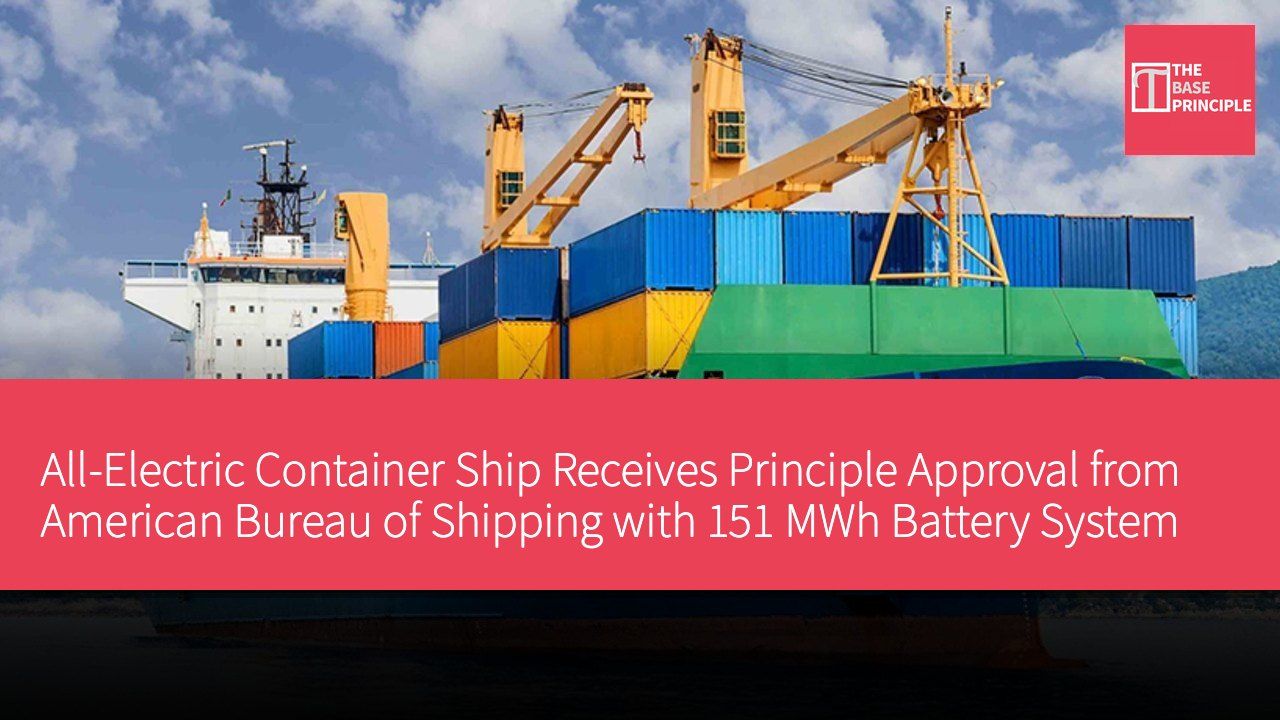
- Hanwha Power's all-electric container ship has received principle approval from the American Bureau of Shipping.
- The ship is designed to carry 1,700 TEU and will be powered by batteries.
- The containerized battery design enhances space efficiency and flexibility, reducing emissions.
- Hanwha Power plans to develop electric propulsion vessels suitable for various needs.
A container ship designed to carry 1,700 TEU will be able to operate regionally using battery power, producing no direct carbon emissions during operation. Hanwha Power announced on October 23 that the concept has received principle approval (AiP) from the American Bureau of Shipping (ABS). This all-electric design incorporates a 151 MWh energy storage system, containerized batteries, and port charging infrastructure, primarily targeting short-sea shipping and regional container transport, with battery units that can be handled and stored like standard containers.
The AiP certificate was awarded on October 22 at the Maritime Hybrid Electric and Hydrogen Fuel Cell Conference and Exhibition held in Bergen, Norway. Huang Zhongkui, Vice President of Technical Solutions at Hanwha Power, attended the event alongside senior representatives from ABS.
Core Technology of the All-Electric Design
The batteries serve as the propulsion source, with the energy stored in the containerized battery units being the primary means of propulsion for the vessel. Port charging infrastructure will provide the necessary power for operation, allowing the concept to avoid direct carbon emissions while sailing. This 151 MWh system is central to the design, introducing large battery storage systems to container ships intended for regional routes. The announcement describes a vessel concept that has received principle approval but does not state that the vessel has been delivered or put into service. Hanwha Power indicated that this approval enhances its capabilities in all-electric vessel design and expands its marine propulsion product portfolio.
The company plans to leverage this development to pursue opportunities in the next generation of zero-carbon shipping markets.
Flexible Battery Replacement System
The containerized units support flexible replacement. The containerized format of the batteries allows them to be handled and stored in the same way as standard containers. According to Hanwha Power, this arrangement improves space efficiency, maximizes cargo capacity, and optimizes overall vessel performance. This approach also supports flexible battery replacement and scalable operations. Hanwha Power views these features as practical means to reduce emissions from short-distance and regional container transport. The concept integrates electric propulsion with battery storage into a unified solution, relying on stored power onboard and port charging infrastructure for operation.
The announcement did not specify the operational range, charging time, service speed, or construction timeline for the vessel. These details were not included in the description of the newly approved design.
Additionally, Hanwha Power has completed the basic design of a 1,000 TEU battery-powered container ship. The company aims to develop a range of electric propulsion vessels suitable for various operating conditions and customer needs. Huang Zhongkui stated, "Receiving the AiP from ABS marks an important step for Hanwha Power in expanding its marine technology capabilities towards all-electric vessels powered by large battery systems. We will meet the demands of the next generation of zero-carbon shipping markets with integrated solutions that combine electric propulsion and container battery system technologies."
Both designs collectively support Hanwha Power's expansion of its electric vessel product portfolio, with the larger concept now having received principle approval from ABS.
Item Specification Energy Storage System Capacity 151 MWh Container Capacity 1,700 TEU Battery-Powered Container Ship Design 1,000 TEU
Market Potential of All-Electric Container Ships
As global demands for reducing carbon emissions grow, the development of electric container ships becomes increasingly important. Hanwha Power's all-electric container ship design not only effectively reduces carbon emissions during transport but also features a flexible battery replacement system that enhances operational efficiency. This technological innovation meets environmental requirements while opening new business opportunities for the future shipping market, particularly in the context of rising demand for zero-carbon transport.