
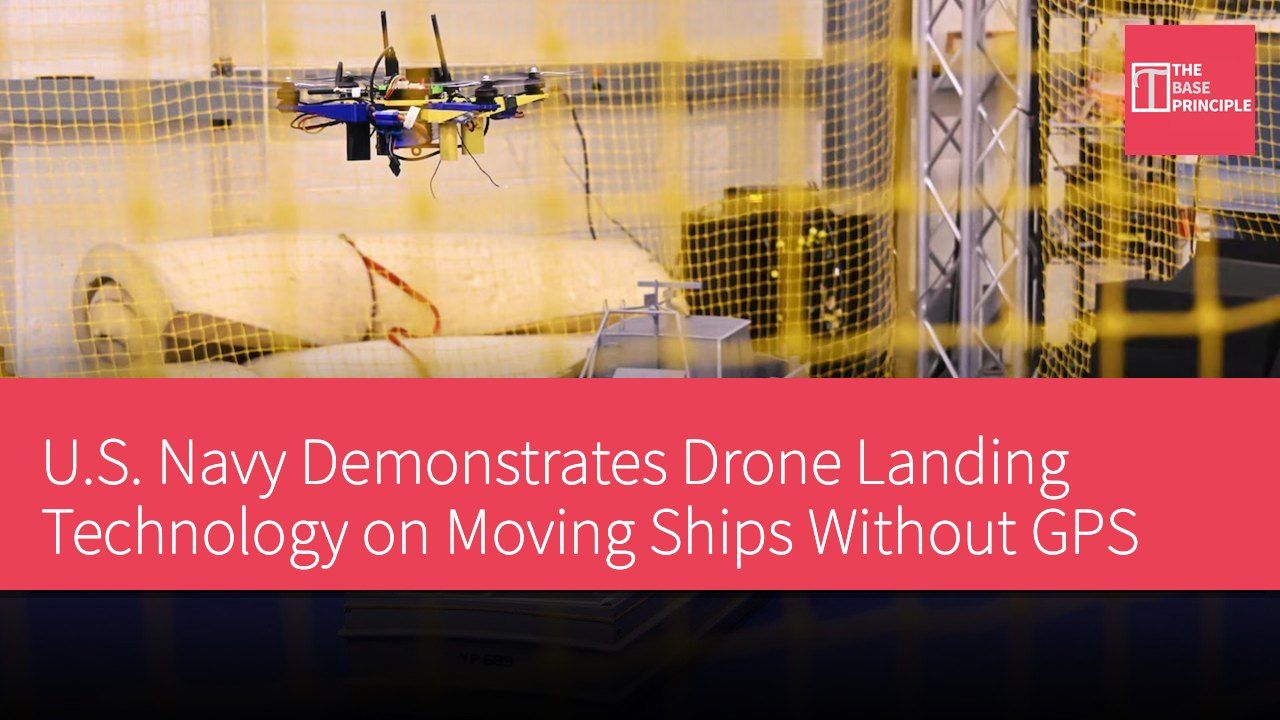
- The U.S. Navy demonstrates drone landing technology without GPS.
- The new method uses cameras and software to guide the drone during landing.
- This technology reduces reliance on expensive equipment and enhances autonomous flight capabilities.
- Plans are in place to extend this technology to larger unmanned aerial vehicles.
The U.S. Navy has showcased a new method that allows drones to land successfully on moving ships without the use of GPS, satellite navigation, or a pilot. In a recent test, the Naval Air Warfare Center Aircraft Division (NAWCAD) demonstrated a drone landing on a moving vessel after completing its mission, utilizing onboard cameras, motion sensors, and software. This technology aids the Navy in conducting drone flights in areas where adversaries may attempt to disrupt satellite signals. Located in Patuxent River, Maryland, NAWCAD stated that the technology is ready for testing on Navy aircraft.
Challenges of Drone Landings
Landing drones on moving ships is particularly challenging because the deck shifts with the waves. Previous systems required onboard radar, specialized recovery equipment, and modifications to the ship to safely guide the aircraft during landing. NAWCAD engineers developed a software-based solution that utilizes cameras already installed on the drone. The team integrated these cameras with guidance, navigation, and control algorithms in their Maritime Autonomous Guidance Navigation Control Intelligent Coupling Systems Lab. During flight, the software identifies the shape and visual features of the ship to determine its position, then guides the aircraft toward the deck while predicting the deck's movement, helping the drone time its landing successfully as the ship rises and falls.
NAWCAD Commander Rear Admiral Todd Evans stated, "Autonomous flight gives our sailors a significant advantage in contested areas where satellite and communications are disrupted." This new method reduces reliance on expensive equipment. Early Navy autonomous shipboard drone landings required additional hardware. In 2006, the RQ-8A Fire Scout made its first autonomous landing on the USS Nashville, using onboard radar to track the aircraft's position relative to the flight deck. The latest method shifts much of the workload to onboard software, utilizing commercially available cameras, motion sensors, and electronics, potentially reducing the need for costly radar installations and extensive ship modifications.
The system is also designed to be compatible with nearly any drone flight computer, which may allow the Navy to introduce this capability through software upgrades, including on ships with limited equipment.
Future Applications of the Technology
NAWCAD aerospace engineer Peter Arslanian noted, "In high-end maritime conflicts, GPS is the first operational link that adversaries attempt to sever." NAWCAD plans to extend this technology to larger unmanned aerial vehicles, including drones designed for delivering supplies to tactical forces. The center is working to transfer this capability to several projects, including the Navy's Small Tactical Unmanned Aircraft Systems Program Office and its Unmanned Wings Program. The project may also support DARPA's EVADE (Early Vertical Takeoff and Landing Aircraft Demonstration) program, which aims to develop drones capable of taking off and landing from ship decks without the need for launch or recovery equipment.
Five companies, including AeroVironment and Sikorsky, are developing designs for the program.
The Navy's Innovation Science and Engineering Program and the Office of Naval Research funded the development of this technology. With flight demonstrations completed, the technology is moving toward operational testing on fleet aircraft. If successful, the system would enable the Navy to deploy drones from ships more flexibly in environments where satellite navigation is unreliable or intentionally disrupted.
Strategic Significance of Drone Landing Technology
The U.S. Navy's drone landing technology demonstrates the importance of maintaining operational capability in hostile environments. As adversaries disrupt satellite signals, this technology can reduce reliance on traditional navigation systems and enhance the autonomous flight capabilities of drones. This not only lowers costs but also provides greater flexibility in deploying drones from ships, having far-reaching implications for future naval combat strategies. As the technology continues to expand, the Navy may benefit across various missions, particularly in tactical environments requiring rapid response.