
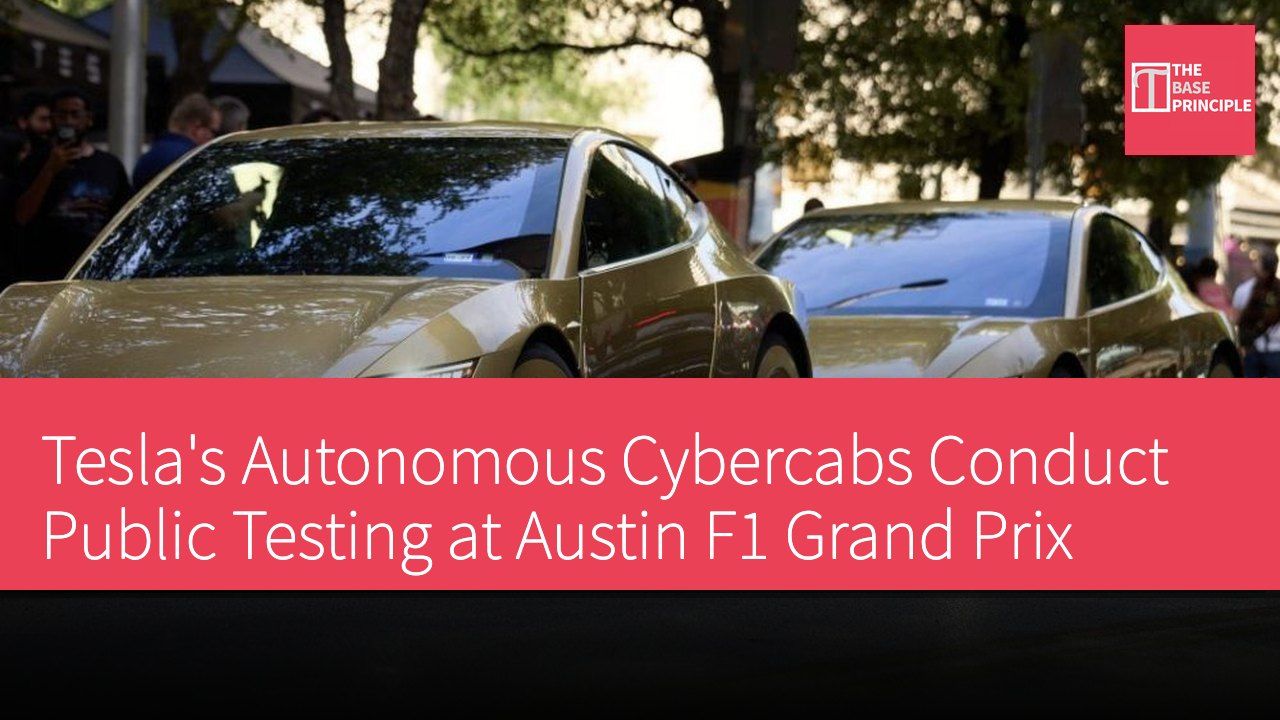
- Tesla's autonomous Cybercab conducted public testing at the Austin F1 Grand Prix.
- The Cybercab set a new activity record during the race, with 1,250 sightings.
- Texas vehicle registration records show the number of Cybercabs has increased to 463.
- Tesla plans to achieve 24/7 Robotaxi service by the end of the year.
Tesla's autonomous Cybercab underwent its largest public pressure test to date during the F1 Grand Prix held in Austin, Texas. On Sunday afternoon, Ashok Elluswamy, Tesla's head of AI software, shared a photo from user Ben Steindl on social media, showing a long line of golden Cybercabs and Model Y Robotaxis queued near the U.S. racetrack. Elluswamy wrote, "Autonomous taxis everywhere!"
Steindl's original post was more straightforward: "@Tesla @robotaxi busy at Austin F1." The fleet was also responsible for post-race returns. The race began at 3 PM Central Time, and after it concluded, the account Cybercab Spotter, which specifically tracks Cybercab sightings, reported, "People are requesting Cybercabs to go home."
Cybercab Testing Activity Record
Tesla had arranged everything a few days prior but did not announce it in advance. On the evening of October 22, passenger David Moss shared a screenshot of the Robotaxi app, showing that the service area in Austin extended around the racetrack to Elroy and FM 812, with ride requests open until 1 AM. A banner in the app stated, "Last call time is 1 AM · limited to drop-offs nearby." Rides in Austin had previously ended at 11 PM in early October, and according to Teslarati, this was extended to midnight on October 17.
Not all passengers were dropped off at the racetrack entrance. Early app searches indicated locations like COTA Karting were marked as "service blocked," while a passenger who took a Cybercab to the track on Friday noted that the rideshare area was less than a 20-minute walk from the main entrance. This weekend also set a new activity record. Cybercab Spotter recorded 1,250 Cybercab sightings on Saturday during the qualifying day, surpassing the previous record of 1,072 sightings set on October 16.
The sighting count includes multiple appearances of the same vehicle, thus measuring the fleet's busyness rather than its scale. In terms of scale, the Texas Department of Motor Vehicles listed 463 Cybercabs by noon on Sunday, an increase from the 300-plus claimed by Tesla on October 10. Elluswamy had also indicated that Dallas was the next stop for Cybercabs.
Limitations of Competitors
For Tesla's main competitors, the racetrack is out of reach. Waymo only provides service in Austin through Uber, and its service area does not cover COTA. Waymo has not announced any race day services. Tesla has not disclosed the number of rides to and from the racetrack or whether the expanded area and 1 AM cutoff will continue after the race weekend. Elluswamy stated during the third-quarter earnings call that 2 AM service would be "coming soon," and Tesla plans to achieve 24/7 Robotaxi operation by the end of the year.
The company also aims to deliver the first batch of Cybercabs to customers before the end of 2026, which would mark the first time these vehicles are available beyond Tesla's own fleet.
Tesla's Autonomous Driving Advantage at the Event
Tesla's public testing at the Austin F1 Grand Prix showcased the maturity of its autonomous driving technology and its market potential. Through this test, Tesla not only enhanced brand visibility but also demonstrated its leadership in the autonomous driving sector. Compared to competitors, Tesla's service range and operating hours are more flexible, giving it a competitive edge in the market. In the future, with the official launch of Cybercab, Tesla may trigger greater changes in the autonomous taxi market, further driving industry development.