
- The Cybercab battery design includes space for future use of LFP batteries.
- LFP batteries are cheaper but store less energy, requiring an increase in quantity to compensate for range.
- The Cybercab uses a modular design for easier maintenance, reducing overall costs.
- Tesla aims to deliver the first batch of Cybercabs by the end of 2026, with plans for most to be company-owned.
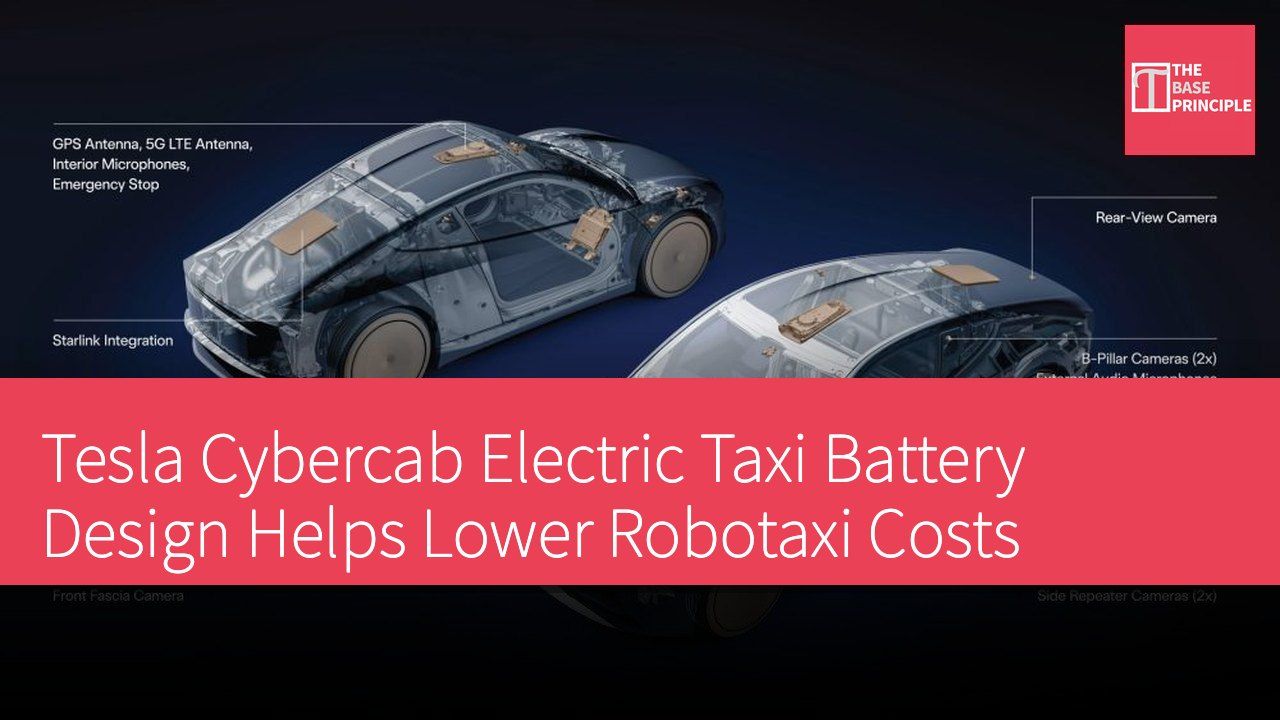
Tesla has intentionally left space in the battery pack of its Cybercab, a design aimed at facilitating the future launch of cheaper robotaxis. Robert Sumpf, the mechanical design engineering director for Tesla's battery modules and packs, stated that the additional space beside and below the Cybercab module is intended to allow the company to transition to lithium iron phosphate (LFP) batteries in the future. "Thus, we are protecting this battery pack to adopt lower energy density chemistries when scaling up, and to introduce LFP into the platform," Sumpf said during an in-depth discussion of the Cybercab with Munro Live.
Plans for Future Use of LFP Batteries
The Cybercab currently operates on Tesla's own 4680 batteries, which use nickel-based chemistry. LFP batteries store relatively less energy, so a direct replacement would reduce range. The reserved space allows Tesla to add more LFP batteries to compensate for this gap. In contrast, Tesla would benefit from a battery that is cheaper, operates at lower temperatures, and can withstand more charge cycles. Last year, LFP became the most commonly used battery chemistry for electric vehicles worldwide.
Not all of the space is planned for chemical changes. Tesla's Vice President of Vehicle Engineering, Lars Moravy, stated that some of the space exists because "we don't need as many batteries as originally anticipated." Tesla told Sandy Munro in early 2025 that their goal is for the Cybercab's battery pack to be below 50 kWh while achieving a range close to 300 miles. The design of this battery pack also differs from Tesla's structural designs in certain Model Y and Cybertruck vehicles.
Advantages of Modular Design
The Cybercab uses four independent sealed modules instead of packaging hundreds of batteries into a single block, allowing for the replacement of faulty modules without scrapping the entire battery pack. Sumpf rated the old design approach as "D-level" due to its difficulty in construction and near impossibility in repair. He estimated that a fully structured battery pack could increase battery capacity by about 10%, but noted that "the issue is the cost of repairs."
For a vehicle that is unlikely to be parked, this cost is particularly significant. Cybercab Chief Engineer Eric Earley stated that replacing the entire battery pack "is cost-prohibitive" before reaching 500,000 miles, which is why remanufacturing and repairability were considered from the outset of the design. During the same visit with Munro Live, Moravy acknowledged that the Cybercab product line at Giga Texas in Texas has now progressed beyond the deployment of Robotaxis and introduced the unconventional painting process for the robotaxis.
Tesla aims to deliver the first batch of Cybercabs to external customers by the end of 2026, although Elon Musk indicated that the vast majority will still be owned by Tesla and operated as a transportation service. Sumpf did not provide specific dates for the LFP version, nor did he mention how battery suppliers or chemical changes would affect range. Currently, vehicles in the 4680 series continue to accumulate: records from the Texas Department of Motor Vehicles show that as of Tuesday, 544 Cybercabs have been authorized to enter Tesla's Robotaxi fleet, marking the first time the number has exceeded 507 Model Ys.
Impact of Cybercab Design on Cost Control
Tesla's Cybercab electric taxi has been designed with future cost efficiency in mind, particularly through the provision of space for LFP batteries. While these batteries store less energy, they are cheaper and operate at lower temperatures, making them suitable for long-term taxi operations. Additionally, the modular design simplifies maintenance, reducing overall upkeep costs, which is especially important for a high-usage vehicle. These design decisions not only enhance the product's market competitiveness but also promote future sustainability.