
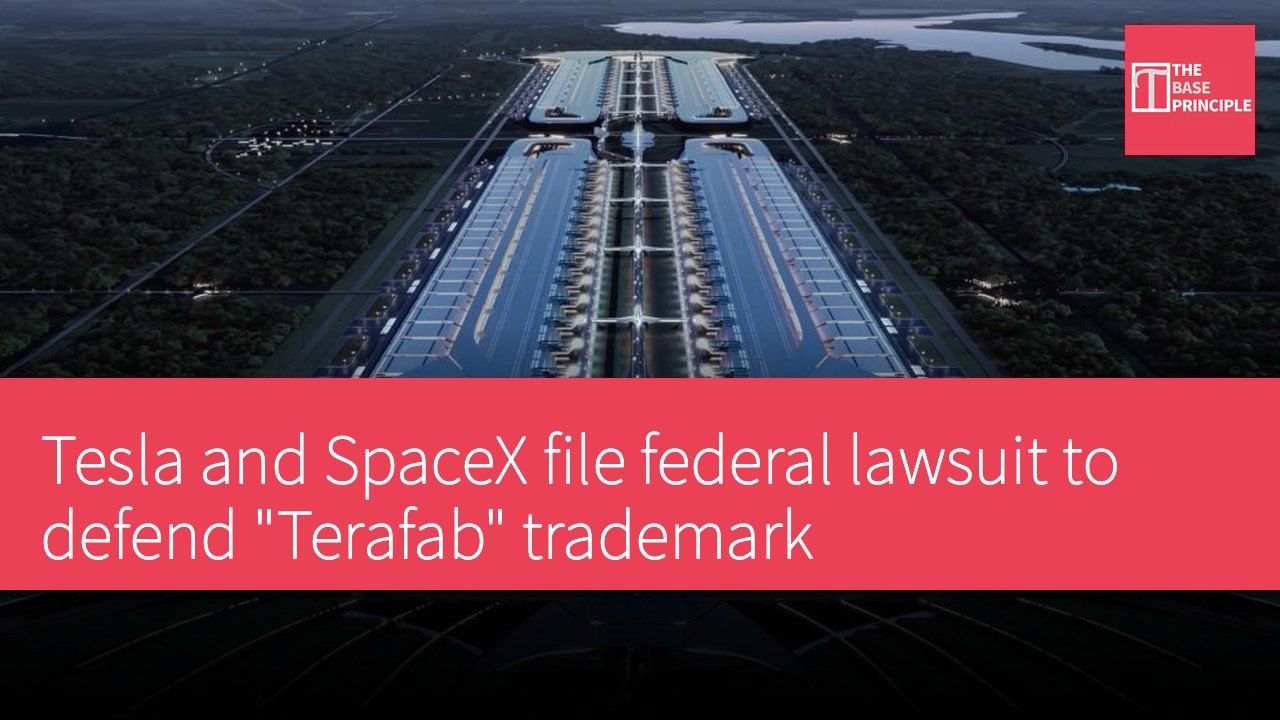
- Tesla and SpaceX are defending the Terafab trademark against claims from TERA-print.
- TERA-print alleges Tesla's use creates consumer confusion and has asserted trademark infringement.
- The two sides held multiple meetings to resolve the dispute, but talks ultimately broke down.
- Terafab is planned as a large chip factory, serving a market distinct from TERA-print's product line.
Tesla and SpaceX are asking a federal judge to rule that their planned Terafab chip factory does not infringe on a trademark held by a small Illinois company, a request that came after months of quiet talks collapsed this summer. The dispute traces back to May 18, when Tesla filed three U.S. trademark applications for "Terafab" and "Tesla Terafab," covering semiconductor chips and related chip-fabrication services. TERA-print LLC, a nanotechnology firm that holds the federal "Tera-Fab" trademark, sent a cease-and-desist letter five days later.
According to the legal filings first reported by Reuters, TERA-print argues that Tesla's and SpaceX's use of "Terafab" would confuse consumers familiar with its mark, which covers desktop lithography printers sold to researchers for sensor and bioengineering work.
TERA-print's trademark application dispute
The timing of TERA-print's filings stands out in the docket. The day before sending its cease-and-desist letter, on May 22, TERA-print filed to broaden its existing trademark registration to cover categories such as semiconductor materials, silicon wafers, nanoelectronic devices and AI-design services — categories it had not previously asserted. Tesla and SpaceX described the filing as opportunistic in their complaint, noting it came two months after Tesla announced the Terafab project and after Tesla's own trademark applications.
According to the complaint, TERA-print threatened on June 10 to file a federal lawsuit over trademark infringement, false designation of origin and unfair competition.
Failed negotiations and next steps
Tesla, SpaceX and SpaceXAI met with TERA-print six times between June and August to try to resolve the dispute directly, but the talks ultimately broke down. The companies filed a declaratory-judgment action this week in the U.S. District Court for the Western District of Texas, asking a judge to rule that "Terafab" does not infringe on TERA-print's mark so that TERA-print cannot pursue its own claims. TERA-print is not backing down. The company told PCMag that it most recently discussed a settlement with Tesla on September 2 and felt misled by what it described as Tesla's stated willingness to settle.
Its chief technology officer, Andrey Ivankin, said TERA-print holds a Department of Defense contract for chip manufacturing and part-owns Mattiq Inc., an AI company built around TERA-print's products, and will aggressively defend its rights.
Tesla and SpaceX contend that any overlap is superficial. Terafab is envisioned as a $16.8 billion complex spanning roughly 100 million square feet at the Grimes County site SpaceX confirmed last month, intended to produce chips for the Optimus robot, Tesla's AI compute needs and SpaceX's orbital data-center plans — a scale and purpose, the companies say, that a reasonable consumer would not confuse with a desktop lab printer.
TERA-print's product line has focused on lithography tools for biological and sensor research since it registered the mark in 2021. The trademark fight is the second legal dispute tied to the Terafab project; as KBTX reported, SpaceX is also pursuing a lawsuit aimed at keeping company records about the facility sealed.
Whether construction can go ahead under the Terafab name now rests with a federal judge in Austin.
Legal challenges and implications for the Terafab project
Tesla and SpaceX's Terafab project faces a legal challenge over trademark rights, one that could affect not only the chip factory's construction plans but also its future commercial operations. The timing of TERA-print's trademark filings has drawn scrutiny and underscores its sensitivity to market dynamics. As competition between the two companies intensifies in technology and markets, trademark disputes may become more common, with ripple effects on innovation and development across the tech industry. The legal fight is about more than trademark protection; it is a necessary tool for companies defending their interests in a fiercely competitive landscape.