
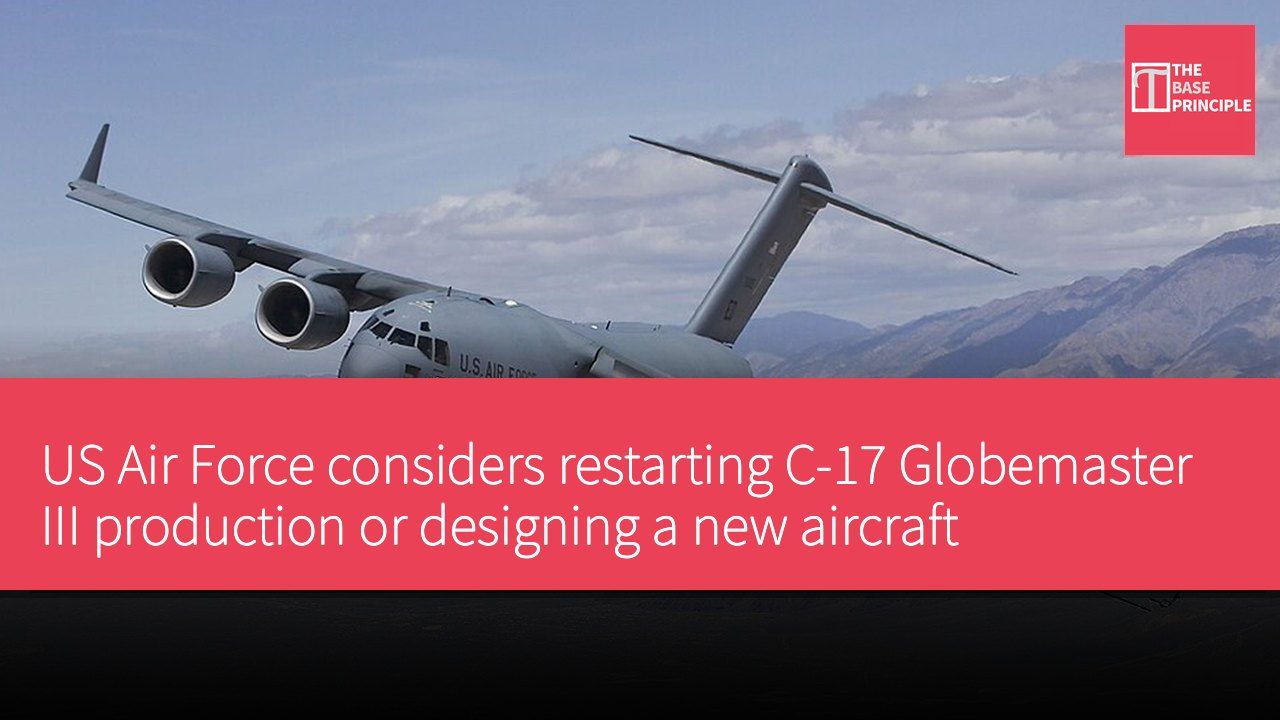
- The U.S. Air Force is considering restarting C-17 production or designing a new aircraft.
- C-17 production has been halted since 2015, and existing aircraft require ongoing maintenance.
- Restarting production could cost billions of dollars, affecting its economic viability.
- The USAF must make a difficult decision before March of next year.
The U.S. Air Force (USAF) is currently weighing whether to restart production of the C-17 Globemaster III or to design and purchase an entirely new aircraft. The decision stems from a congressional requirement for the Air Force to deliver a detailed analysis by March 1, 2027. The C-17 is an extremely versatile military logistics platform capable of carrying approximately 77.5 tons of cargo, including tanks, helicopters, troops and oversized loads. Notably, it can also operate from relatively short or rugged runways, and conduct aerial refueling and airdrop missions.
The USAF operates roughly 220 C-17s alongside 52 larger C-5Ms, and the C-17 fleet is expected to remain in service until 2075. However, no new C-17s are currently being built, and the existing fleet requires continuous maintenance and repair. The crux of the issue is that production of this multi-role aircraft ceased in 2015. This means existing spare parts are the only option for keeping the aircraft flying, with no ability to manufacture new airframes.
Challenges and Costs of Restarting Production
Should the C-17 be retained or replaced? Reopening an aircraft plant that has been dormant for 11 years is far more complicated than simply switching the machines back on. Boeing would need to assess existing equipment, rebuild jigs and tooling, locate or replace hundreds of suppliers, recertify production processes, hire skilled workers, and potentially redesign components that are no longer available. As far back as 2006, the estimated cost of stopping and then restarting C-17 production ranged from $918 million to $2 billion, and that estimate assumed a relatively short shutdown. As a result, today's costs could run into the billions before a first new aircraft ever rolls off the line.
If production does go ahead, building only a small number of new airframes would drive per-unit costs sky-high. But if third-party nations such as the United Kingdom, Australia and Canada were willing to purchase additional aircraft on their own, the economics of the decision would become significantly more attractive.
The study will compare this option against alternatives, such as improving technical support for the existing fleet and weighing the feasibility of designing and fielding a brand-new aircraft. That includes sourcing rare or discontinued component suppliers. Enhanced predictive maintenance could potentially lift the availability rate of the existing fleet by a few percentage points (a handful of airframes). Upgrades to avionics, computers and maintenance systems would also squeeze more effective capacity out of the current fleet. However, such measures can only go so far and cannot suddenly deliver 20 additional operational airframes when a major surge in military demand arises.
Considering Development of a Next-Generation Airlifter
The USAF will therefore also consider developing a C-17 successor designated Next-Generation Airlift (NGAL), with production expected to begin in 2038 and the platform reaching operational status in 2041. That means the USAF must make a difficult decision before March of next year. Is it better to retain the current fleet and improve how it is maintained and upgraded? Does it make more sense to restart production of the aircraft? Or, looking further ahead, would developing an NGAL successor prove more economical?
Next year's outcome on these questions will be one to watch.
Strategic Stakes of the C-17 Production Decision
The C-17 production decision facing the U.S. Air Force involves not only economic considerations but also the future of military airlift capability. As maintenance demands on the existing fleet grow, choosing to restart production would require substantial resources to overcome technical and supply-chain hurdles. On the other hand, developing a next-generation airlifter could offer a long-term solution and improve transport efficiency. These choices will directly affect U.S. flexibility and responsiveness in global military operations, particularly when confronted with sudden surge demands. The USAF must strike a balance between near-term and long-term needs.