
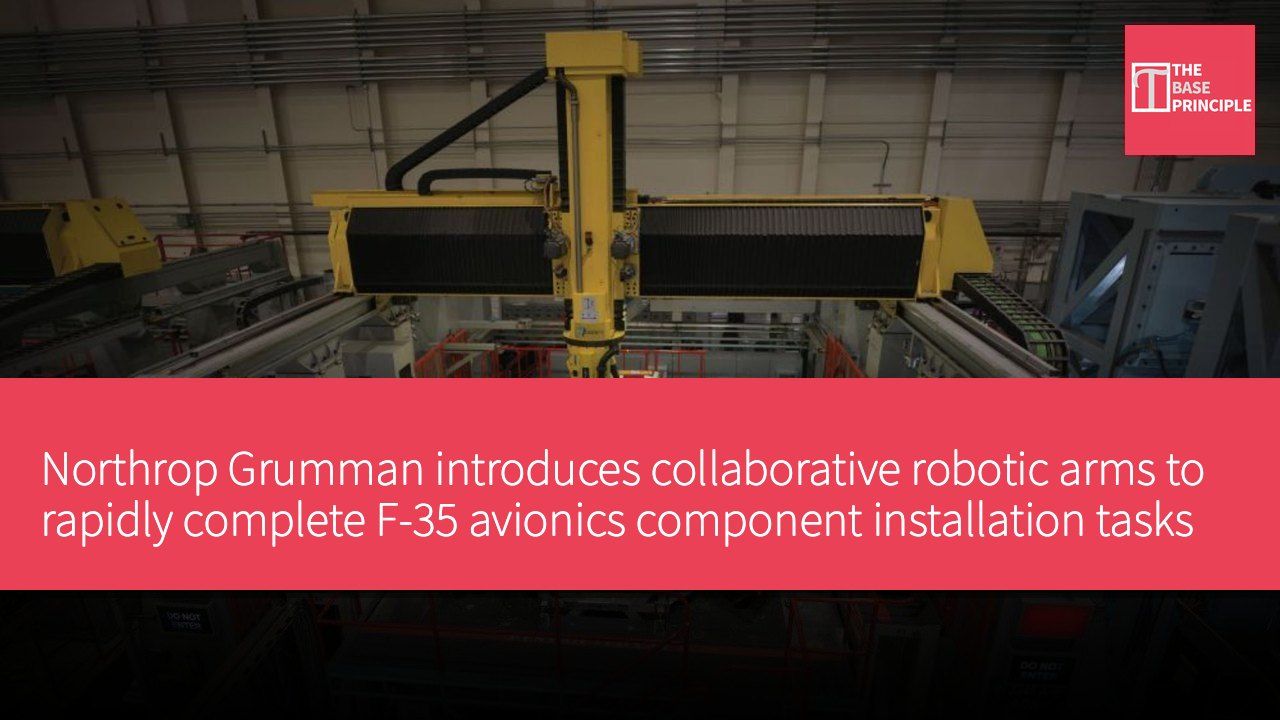
- Northrop Grumman introduces collaborative robots, reducing F-35 avionics assembly time to minutes.
- New robots assist technicians in precisely installing bolts on CNI modules.
- AI-based quality control systems can check for potential issues, improving product quality.
- These technologies reflect the broader push for automation in manufacturing.
In a recent manufacturing upgrade, Northrop Grumman has reduced the time for F-35 avionics assembly tasks from hours to minutes by introducing collaborative robots on its production line. The company is also expanding AI-based inspection tools capable of detecting potential defects in avionics modules before they leave the factory. The work focuses on the fighter's communications, navigation and identification (CNI) module, part of its integrated avionics suite. Northrop Grumman says the changes aim to improve production speed, precision and consistency.
Collaborative robots boost assembly efficiency
The new collaborative robots, or "cobots," now work alongside technicians to assemble CNI modules. The system helps workers precisely install bolts securing the module's front housing. CNI production line manufacturing manager Lavell Catlin said: "We recently installed a cobot to assist technicians in precisely installing bolts to secure the communications, navigation and identification (CNI) module's front housing. This system has reduced work that previously took hours to just minutes."
The robot is designed to assist workers, not perform assembly independently. The change also allows Northrop Grumman to reassign some employees to other manufacturing tasks. Catlin added: "Additionally, we've been able to move several employees to other critical work, increasing the speed and performance of the overall production process."
AI quality control systems
Northrop Grumman has also added AI-based quality control systems to the CNI manufacturing process. These systems inspect finished modules and flag potential issues before units ship. The company says the inspection technology can identify minute problems that might be missed in production checks. Northrop Grumman is expanding these AI-based systems to other areas of the CNI production line. Catlin added: "The integration of our AI-based quality control systems has significantly helped identify the smallest issues in completed modules, ensuring we deliver high-quality products every time."
The CNI system provides F-35 pilots with integrated information from critical aircraft systems. Northrop Grumman says its automated inspections add another layer of verification before these systems reach U.S. and allied aircraft. The avionics improvements are part of Northrop Grumman's broader automation efforts. At its integrated assembly line in Palmdale, California, the company uses robots, automation and mixed-reality tools to manufacture the F-35's center fuselage. The center fuselage is the aircraft's largest stealth-critical structural component. Northrop Grumman says its production line can deliver a center fuselage every 30 hours.
The company also uses automated composite manufacturing equipment to produce parts for all three F-35 variants, such as wing skins and engine bays. These systems support high-rate manufacturing of the aircraft's primary structures. Northrop Grumman is part of the Lockheed Martin-led F-35 program, supporting development, production and sustainment of the Lightning II. The company's work spans the center fuselage, radar and communications systems, low-observable technology and operational support. The company notes the latest manufacturing changes aim to increase factory capacity while maintaining quality as F-35 production continues to serve the U.S. military and allies.
The use of collaborative robots and AI inspection systems also reflects a broader push to automate labor-intensive manufacturing tasks. On the CNI production line, the technology is applied directly to assembly and quality checks, where small improvements can affect production time and consistency.
Automation's impact on manufacturing
Northrop Grumman's introduction of collaborative robots and AI inspection systems in F-35 production demonstrates the importance of automation in improving production efficiency and product quality. This not only reduces assembly time but also enables effective allocation of human resources to other tasks, further optimizing production processes. As manufacturing shifts toward automation, the application of these technologies will become key to improving production consistency and reducing costs, with far-reaching implications for overall industry development.