
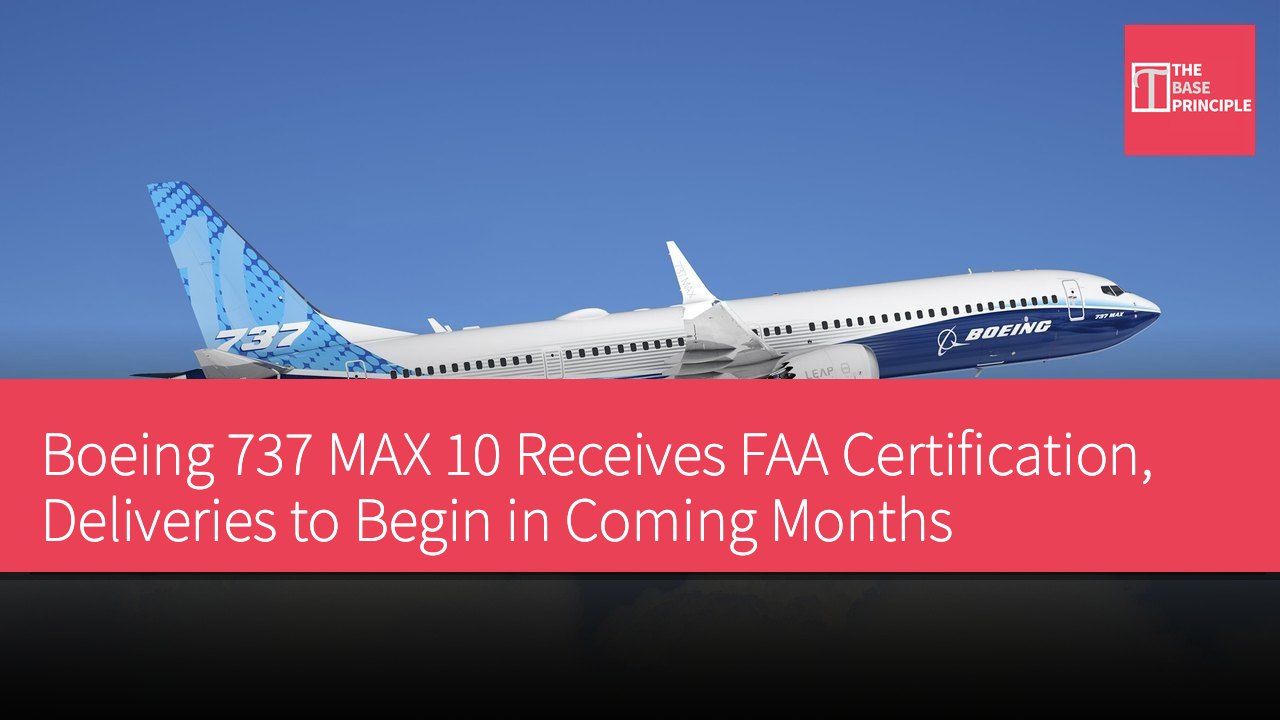
- The Boeing 737 MAX 10 has received FAA certification and will begin deliveries.
- The aircraft can accommodate up to 230 passengers, making it the highest-capacity model in the series.
- The 737-10 introduces an enhanced angle of attack system designed to reduce pilot workload.
- Airlines have shown significant interest in the 737-10, resulting in a substantial number of orders.
The Federal Aviation Administration (FAA) has certified the Boeing 737 MAX 10, the largest aircraft in the 737 MAX series, after nearly 1,000 flight tests and over 2,000 hours of flight time. This certification paves the way for Boeing to begin delivering the 737-10 in the coming months. The aircraft can accommodate up to 230 passengers, making it the highest-capacity model in the company's single-aisle 737 MAX series. The certification was granted following extensive safety assessments, design reviews, and ground tests.
The Certification Process for the 737-10
Boeing stated that the program included 1,000 hours of ground testing, tens of thousands of pages of documentation, and formal reviews with the FAA. The 737-10 is also the first commercial aircraft to receive certification under the comprehensive requirements of the 2020 Aircraft Certification, Safety, and Accountability Act. This legislation introduced stricter requirements for documenting aircraft safety assessments and evaluating how pilots interact with aircraft systems.
The aircraft's standout feature is its enhanced angle of attack system, which Boeing plans to introduce across the 737 MAX series. The angle of attack refers to the angle between the aircraft's wing and the airflow passing over it. This measurement helps pilots and onboard systems assess flight conditions, including the risk of aerodynamic stall. Boeing stated that the upgraded system is designed to reduce pilot workload. The introduction of this system in the MAX series makes the 737-10 an important step in the company's broader aircraft safety program. Chris Payne, Vice President and General Manager of Boeing Commercial Airplanes' 737 program, said, "Our flight test team conducted a disciplined, systematic effort to validate every system."
Demand for the 737-10 from Airlines
The 737-10 typically accommodates between 185 and 210 passengers in a dual-class configuration, although its maximum seating capacity can reach 230. The aircraft has a range of up to 3,100 nautical miles (5,740 kilometers). Boeing also claims that the 737-10 offers the lowest cost per passenger among currently operating single-aisle aircraft, although this comparison has not been independently verified in the announcement. According to Boeing, the aircraft's range exceeds that of competing models by 365 nautical miles without the need for auxiliary fuel tanks. Additionally, the company stated that technological improvements in the 737 MAX series have reduced fuel consumption and carbon emissions by 20%, though no specific benchmarks for comparison were provided in the announcement.
Airlines have shown significant interest in the largest MAX variant. Boeing's reports indicate that orders from over 30 customers have reached 1,555, accounting for more than 30% of the program's unfilled orders. Across the broader 737 MAX series, customers have placed 7,350 orders, with nearly 2,500 aircraft delivered as of September 2026. Earlier this year, the FAA certified the smaller 737-7. With the 737-10 now approved, Boeing has secured certification for the final member of the MAX series.
However, certification does not mean the aircraft is in commercial service. Boeing expects customer deliveries to begin in the coming months.
Significance of 737 MAX 10 Certification and Market Reaction
The certification of the 737 MAX 10 marks a significant advancement for Boeing in terms of safety assessments and design reviews, particularly under the new legislative requirements. This not only paves the way for Boeing to begin deliveries but also demonstrates strong market demand for the model, reflecting airlines' anticipation of the new aircraft. With the launch of the 737-10, Boeing is expected to enhance its competitiveness in the single-aisle aircraft market, particularly with advantages in fuel efficiency and passenger capacity, which will attract more customer orders and further drive business growth.