
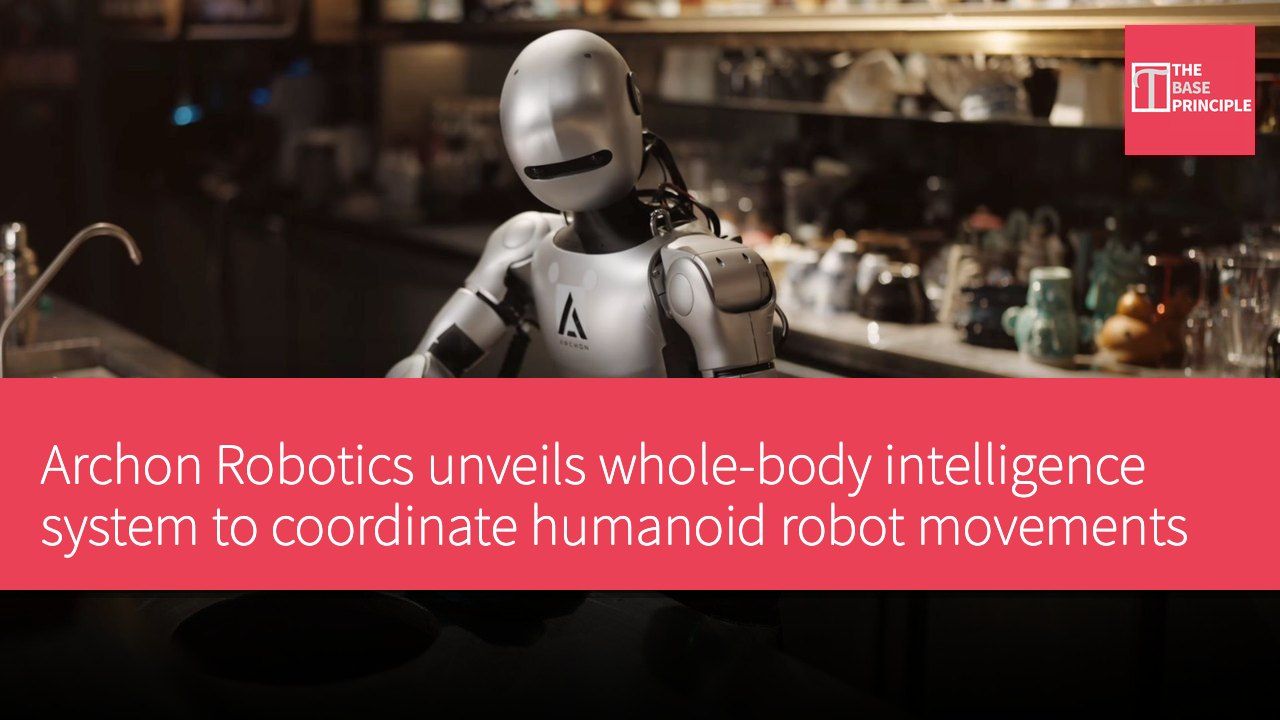
- Archon Robotics demonstrates its whole-body intelligence system, capable of coordinating humanoid robots to perform complex tasks.
- The system combines human data for pre-training and uses actual robot data for post-training.
- In the demonstration, robots operate autonomously and execute multiple tasks at normal speed.
- Experts note that data on task completion rates and human intervention frequency have not been reported.
Shanghai-based Archon Robotics has demonstrated its first Whole-Body Intelligence (WBI) system, which can coordinate humanoid robot movements and understand their tasks. The system links high-level task planning with whole-body coordinated motion, enabling robots to perform complex tasks in real-world environments. The demonstration showed several popular humanoid models performing tasks including picking up objects, climbing stairs, clearing tables, operating a dishwasher, and organizing a refrigerator.
The company said its approach uses human data for pre-training and actual robot data for post-training, and that the full-process demonstration runs autonomously at normal speed.
How the whole-body intelligence system works
Archon's whole-body intelligence framework is designed to help humanoid robots translate task instructions into coordinated physical actions. The company aims to develop a general-purpose AI model that combines task understanding, motion planning, balance, and precise execution, applicable across different humanoid platforms. The approach combines large-scale human whole-body data for pre-training with demonstrations from actual robots for post-training. In the first demonstration, humanoid robots performed tasks including picking up objects, climbing stairs, clearing tables, operating a dishwasher, and organizing a refrigerator. Archon's framework aims to coordinate the robot's entire body rather than treating various motions as isolated commands.
The demonstration highlights two components, S1 and S0, which handle different aspects of the process. S1 processes task-relevant information and supports behavioral decision-making, while S0 focuses on whole-body motion control, including coordination, stability, and precise execution.
Archon describes S0 as a cerebellum-like function that translates goals into executable actions while maintaining physical stability. The company's July technical blog described a broader four-layer architecture that also includes task planning and motion generation. However, the first video focuses on S1 and S0 without clarifying whether this represents a change to the previously described framework. Archon develops its models by combining human demonstrations with data collected from actual robots. Human whole-body data provides motion examples, while actual robot data helps adapt learned capabilities to the mechanical and control requirements of physical hardware.
The company disclosed that its data platform collects human demonstration data in multiple cities across China, and that this data undergoes automated checks, human spot-checks, and review of labeled samples before training.
Robot collaboration in the demonstration
The process also incorporates DAgger correction data to help the model learn how to respond when actions need adjustment. These demonstrations show robots correcting errors and recovering tasks, supplementing examples of successful execution. This approach aims to develop transferable physical skills rather than relying solely on demonstrations of completed tasks. However, Archon has not disclosed the size of its dataset or released quantitative results showing the model's effectiveness at transferring learned skills to unfamiliar situations. The video features the AGIBOT A3, Booster T2 humanoid robots, and a modified Unitree G1 robot.
One clip shows multiple robots simultaneously performing different activities in a shared kitchen and dining area, tasks that involve handling cleaning equipment, manipulating household objects, and interacting with kitchen appliances.
These activities require coordinated bending, reaching, balance, and object manipulation. The different platforms demonstrate Archon's operation across various hardware configurations. However, the video does not show whether all robots use the same model weights or coordinate as a team. Archon notes that its full-process demonstrations run autonomously at normal speed. Explanatory segments on S0 and the DAgger training process include teleoperation, distinguishing autonomous execution from demonstrations used to develop and refine the system. The first video outlines the company's approach to combining AI-based task understanding with coordinated humanoid motion.
However, task completion rates, frequency of human intervention, and comparative results across robot platforms have not been reported. Experts say these measurements would help establish the framework's reliability and show how well its capabilities transfer to unfamiliar tasks and environments.
Potential impact of the whole-body intelligence system
Archon Robotics' whole-body intelligence system demonstrates the potential of humanoid robots to perform complex tasks, particularly in everyday living environments. The system not only understands task instructions but also translates them into coordinated actions, which has significant implications for future home automation and service robots. Although key performance data has not yet been provided, experts consider such data crucial for assessing the system's reliability and effectiveness. As the technology advances, systems of this kind are expected to play a larger role across multiple industries.