
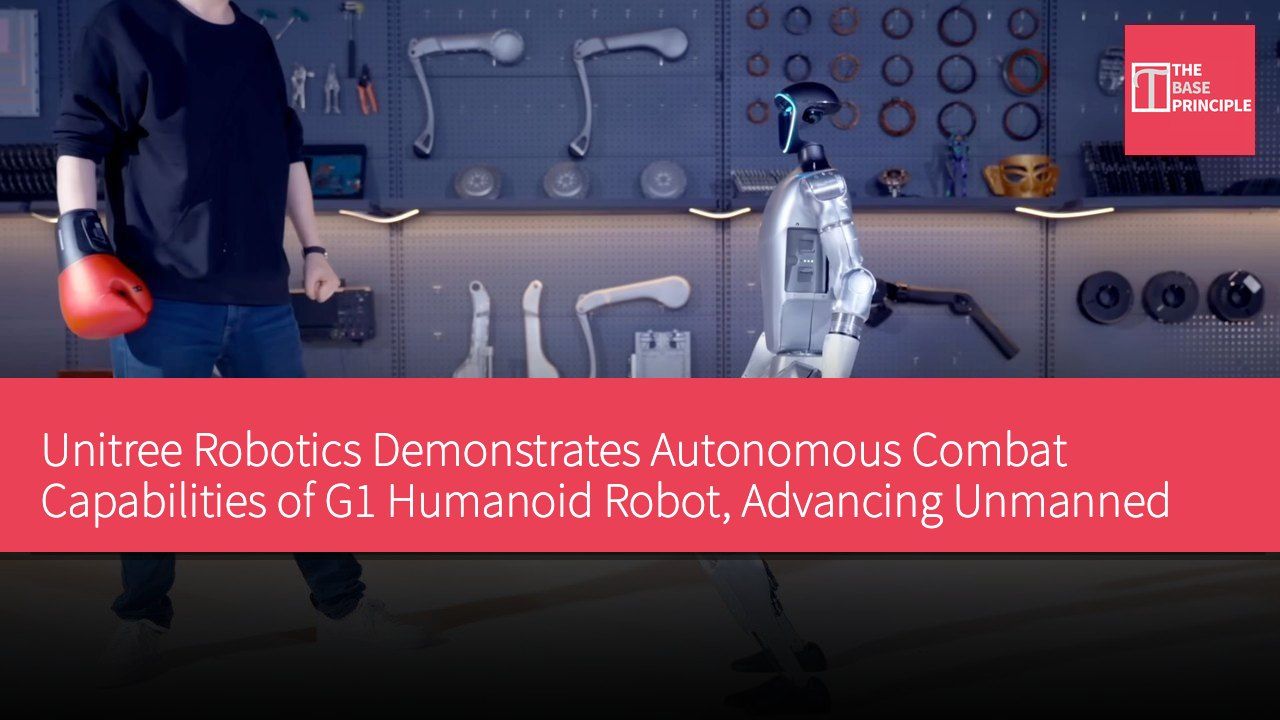
- Unitree's G1 robot demonstrates autonomous combat, showcasing advancements in AI technology.
- The UnifoLM-X2-1.0 system eliminates the need for human remote control, enabling independent combat.
- The technology aims to reduce the delay between perception, decision-making, and action, enhancing the robot's reaction speed.
- Autonomous combat technology could facilitate the safe application of robots in industrial environments.
Unitree Robotics has demonstrated a humanoid robot capable of autonomous combat, marking a significant step forward in AI systems controlling robots without human operators. The company's G1 humanoid robot utilizes a new AI model called UnifoLM-X2-1.0 to engage in real-time combat with a human partner. This demonstration highlights the effort to develop robots that can quickly respond to changing physical environments while independently planning and executing actions. Unitree stated that this system represents a shift from earlier humanoid combat demonstrations that relied on remote control or other forms of human intervention.
G1 Robot's Autonomous Combat Capabilities
The latest video shows Unitree's G1 humanoid robot autonomously engaging in combat with a human partner using UnifoLM-X2-1.0. The system is designed to eliminate the need for a human remote operator, which is typically required in combat demonstrations. Instead of converting commands from a VR headset, game controller, or other devices into actions, UnifoLM-X2-1.0 employs a predictive perception-to-action system. It continuously processes the environment, predicts changes in the scene and the opponent's behavior, and uses these predictions to plan the robot's next moves.
In the demonstration clip, G1 adjusts its posture and steps to counter an approaching opponent, evading incoming attacks while executing punches and kicks. The visualization in the clip shows the system's predictive modeling, illustrating how future interaction states are incorporated into the motion planning before the robot's actual movement.
This technology targets a major challenge in deploying AI-driven humanoid robots: reducing the delay between perception, decision-making, and physical action. Unitree claims that UnifoLM-X2-1.0's design aims to address bottlenecks in the world action model by enhancing the speed of motion planning, tactical decision-making, and closed-loop execution in highly dynamic interactions. The YouTube video description states: "UnifoLM-X2-1.0 breaks the bottleneck of the world action foundation model in real-time planning, decision-making, and dynamic interaction execution, achieving high dynamics, strong interaction, future real-time prediction and planning, and realizing full autonomous combat of humanoid robots."
Technical Challenges and Future Applications
Unitree's latest demonstration highlights how its humanoid robots are moving from remote control toward more advanced autonomous systems. The G1's autonomous combat technology is part of Unitree's growing series of foundation models, which have evolved from models designed for factory operations to newer multimodal systems. UnifoLM-X2-1.0 employs a world model approach, helping the robot understand its surroundings and predict what might happen next. Experts point out that this is particularly important in fast-moving situations, such as combat, because merely reacting to what the robot sees could be too slow.
The system can predict the opponent's actions while considering G1's own balance and position, then use these predictions to select actions and adjust behavior in real-time.
However, the demonstration footage indicates that the system may not be running entirely on the robot itself. The control console logs show commands like OBS/replan and env.step, suggesting that sensor information might be sent to a separate computer running the AI model, which then sends movement instructions back to G1. This means reducing the system's reliance on external computing remains a significant challenge. Unitree views autonomous combat as a test for physical AI. If a robot can predict actions, maintain balance, and react to unexpected contact, similar technology could eventually help humanoid robots work more safely in complex industrial environments.
The Development Significance of Autonomous Combat Technology
Unitree's G1 robot demonstrates the potential of AI in autonomous action, particularly in combat environments. The UnifoLM-X2-1.0 system's design aims to address the delay between perception and reaction, which is crucial for the rapidly changing combat scenarios. While it still faces challenges related to reliance on external computing, advancements in this technology could drive the safe and efficient use of humanoid robots in industrial and other complex environments. As the technology matures, the range of future applications will be broader, potentially transforming our understanding of robotic autonomy.