
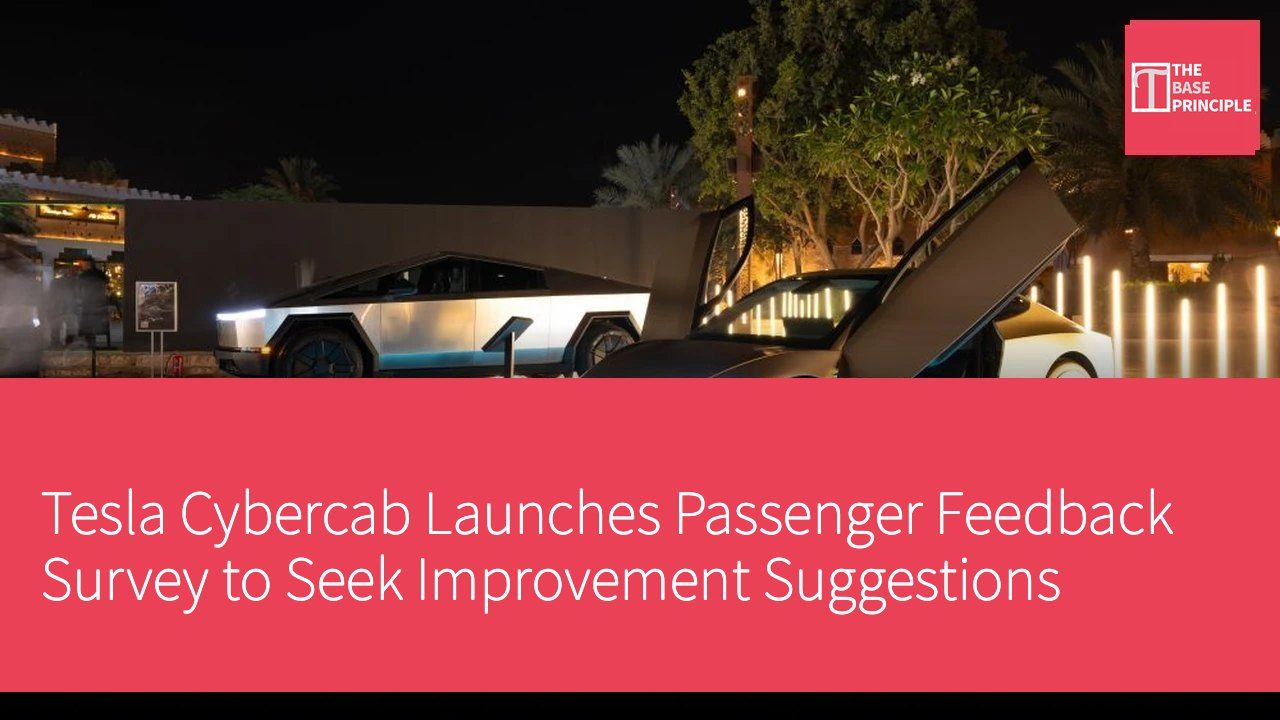
Tesla's Cybercab has recently debuted in Austin and has begun offering passenger services. As this new autonomous taxi rolls out, Tesla is actively seeking passenger feedback to understand which areas they hope to see improved. Shortly after the commencement of paid rides, Tesla sent a passenger experience survey to Cybercab riders, asking them about their satisfaction with the overall trip. The questionnaire covered multiple aspects, including availability and wait times, door functionality, vehicle touchscreen, mobile app experience, seat comfort, interior space, ride comfort, cleanliness, and luggage space, and asked passengers to provide star ratings.
The latter part of the survey inquired about the features passengers most desired, allowing them to select up to three options from heated seats, ventilated seats, fully reclining seats, tray tables, wireless chargers, and better sound systems. Passengers could also indicate if they did not need these features or suggest other ideas. The survey concluded by asking for a recommendation score on a scale of zero to ten. This prompt for feedback demonstrates Tesla's focus on early users, treating them as partners rather than mere customers. Tesla has consistently optimized its vehicles through software updates and hardware improvements, a practice that also applies to the Cybercab, designed specifically for autonomous taxis.
The questions in the survey indicate an openness to changes in the vehicle's interior design, which is unsurprising even though the first vehicles are already on the road. Tesla has always aimed to provide an exceptional experience for passengers, which is why many fan-requested features have ultimately made their way into their vehicles. Currently, the feedback circulating online shows passengers' strong interest in features like reclining seats, tray tables, wireless charging, improved sound, and additional space. These preferences point to comfort upgrades that Tesla could implement in subsequent production batches or through in-vehicle revisions. Given that the Cybercab is designed with a software-centric philosophy, many of the requested amenities could be realized faster than by traditional automakers.
Therefore, by conducting a passenger survey immediately after launch, Tesla makes it possible to implement near-term improvements to the vehicle's interior and experience. As the team reviews feedback and continues to iterate, future Cybercabs will become more refined, establishing themselves as a preferred choice for everyday transportation. Tesla's spirit of innovation and emphasis on user feedback will undoubtedly drive its growth potential in the autonomous taxi market and have a positive impact on the industry as a whole.