
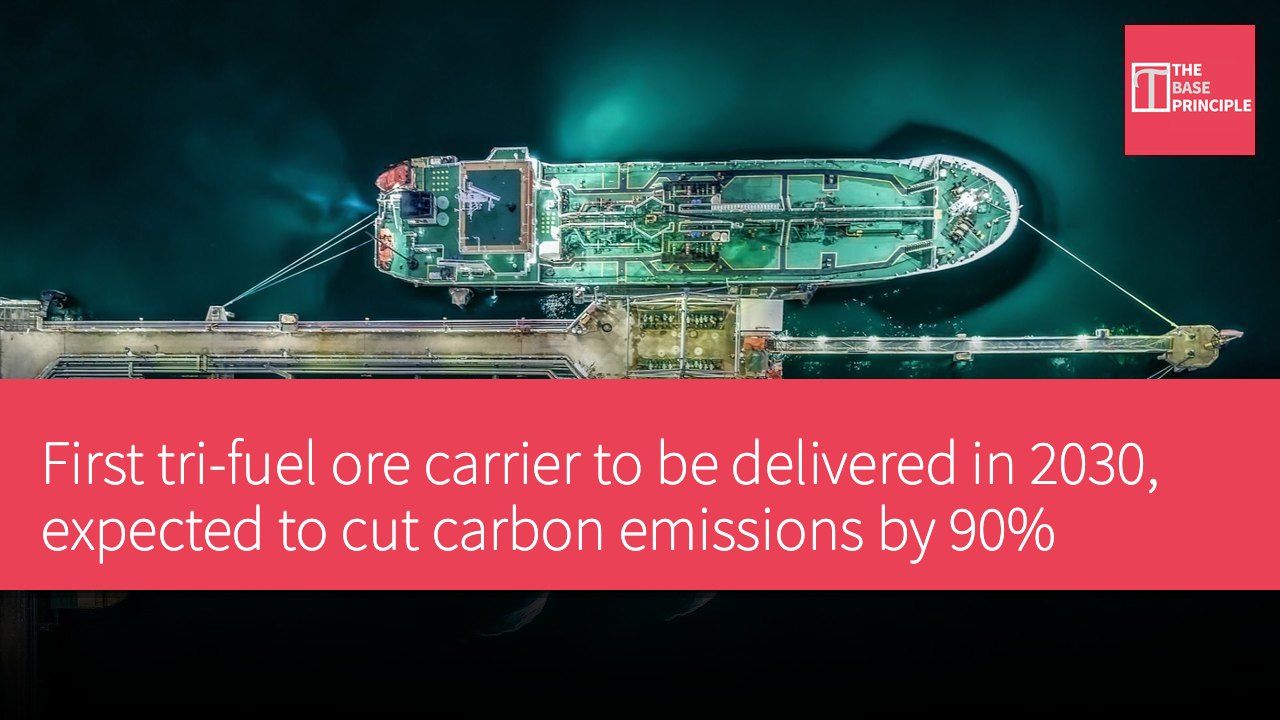
- These vessels can use ethanol, methanol or heavy fuel oil as propulsion fuel.
- Ethanol can reduce lifecycle carbon emissions by up to 90%.
- The vessels feature LNG- and ammonia-ready designs to accommodate future fuel needs.
- Mitsui O.S.K. Lines has set a target of net-zero emissions by 2050.
A pair of large ore carriers will be able to run on three different marine fuels, giving their long-haul voyages unique flexibility. The 210,000-tonne vessels will use ethanol, methanol or conventional heavy fuel oil for propulsion. Mitsui O.S.K. Lines and Vale International have signed a 25-year agreement covering the vessels. Both ships are slated for delivery in 2030 and will primarily haul iron ore from Brazil to global markets.
The design matters as the shipping industry seeks tangible emissions reductions.
Alternative-fuel flexibility
Alternative fuels are developing rapidly, but their availability and economics still vary significantly from port to port. The ships' tri-fuel engines can switch among heavy fuel oil, methanol and ethanol, giving operators another way to manage shifting fuel supplies on long voyages. Ethanol draws attention for its potential emissions reductions. Mitsui O.S.K. Lines estimates that versus heavy fuel oil, ethanol can cut lifecycle carbon emissions by up to 90%. The estimate covers emissions from fuel production through final use aboard the vessel.
Ethanol's handling requirements also make its wider marine use feasible. Methanol provides the vessels with another alternative. Heavy fuel oil remains available when low-carbon fuels are unobtainable or uneconomic. That flexibility is critical on routes spanning multiple fuel markets; a ship crossing continents cannot assume every port will offer the same alternative fuels.
The vessels will also feature LNG- and ammonia-ready designs, meaning their propulsion systems can potentially adapt to additional fuel pathways as technology and infrastructure mature. Energy-saving technologies will further complement the alternative-fuel systems; lower energy demand cuts fuel consumption regardless of the propulsion option chosen. Each carrier will measure nearly 300 metres long and 50 metres wide, dimensions that reflect the massive scale required to move bulk commodities efficiently.
Long-term fuel-technology transition
The ships will mainly carry iron ore from Brazil to global markets, with China expected to be the primary destination. Their 25-year operating agreement also gives the design room for a long-term fuel-technology transition. That matters because vessels typically serve for decades; a propulsion system built around a single fuel could become restrictive once cleaner alternatives gain wide adoption.
Vale will use the vessels as part of its effort to cut maritime transport emissions, which contribute to its Scope 3 carbon footprint. Mitsui O.S.K. Lines also plans to work across the ethanol and methanol supply chains — covering fuel procurement, supply and bunkering — as well as vessel operations. The larger challenge is making alternative fuels available at the scale shipping requires. If the ships are to rely on those options regularly, fuel infrastructure must expand alongside demand.
Mitsui O.S.K. Lines has set a 2050 net-zero greenhouse gas target. The vessels give the company a long-term platform to test multiple pathways toward that goal. The ships' greatest engineering advantage may ultimately lie in their adaptability: as fuel prices, availability and emissions rules shift, operators will have more than one propulsion option to choose from.
Item Specification Vessel weight 210,000 tonnes Vessel length Nearly 300 metres Vessel breadth 50 metres
Future potential of multi-fuel systems
As global pressure to cut carbon emissions grows, the design of these tri-fuel carriers offers the shipping industry a new way to tackle environmental challenges. This flexibility not only addresses varying fuel availability across ports but also keeps the vessels competitive as technology advances. Mitsui O.S.K. Lines' long-term operating agreement also signals a commitment to sustainability and leaves room for future fuel transitions. As alternative-fuel infrastructure gradually matures, the ships' adaptability will be key to their success.