
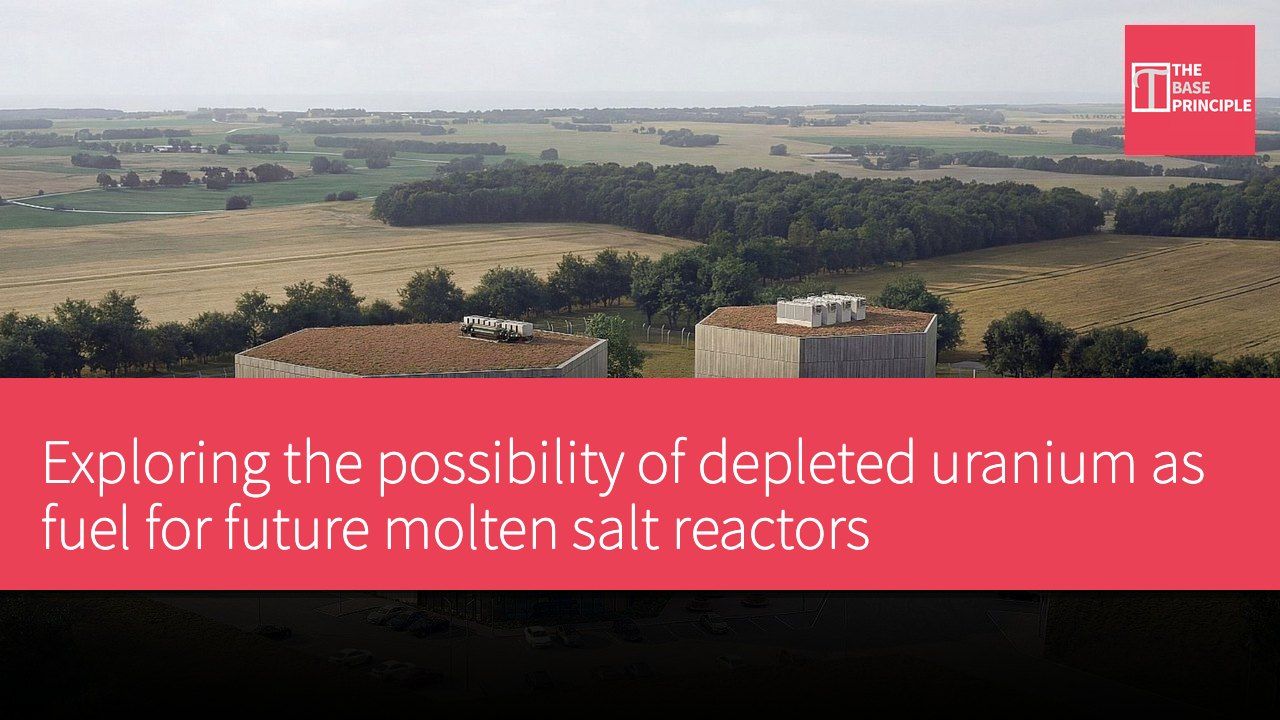
- Depleted uranium could become fuel for future molten salt reactors.
- Urenco plans to build an advanced fuel facility in the UK, with production expected to start in 2031.
- The agreement aims to establish a fuel supply chain and promote efficient use of nuclear materials.
- Urenco's enrichment capacity expansion plans depend on sustained market demand growth.
Depleted uranium, a byproduct of uranium enrichment, could become fuel for future molten salt reactors under a new cooperation agreement aimed at more efficient use of nuclear materials. European reactor developer Thorizon and uranium enrichment supplier Urenco have signed a memorandum of understanding to explore fuel supply options for reactors slated to enter service in the mid-2030s. The work includes exploring the supply of enriched uranium and investigating whether depleted uranium can fuel subsequent reactors. The agreement links reactor development with efforts to establish an advanced fuel supply chain.
Urenco's planned advanced fuel facility at Capenhurst in the UK is expected to begin producing high-assay low-enriched uranium (HALEU) in 2031.
Urenco's advanced fuel facility
Thorizon's first Thorizon One reactor requires HALEU in molten salt form. The design uses molten salt as both fuel and coolant, aiming to provide reliable carbon-free electricity and industrial heat while improving the use of nuclear materials. The parties plan to explore Urenco's potential contribution to that supply chain, including enrichment services and opportunities to improve uranium utilisation across the entire fuel cycle. Thorizon CEO Kiki Lauwers said: "Establishing a fuel supply chain is just as important as developing the reactor itself.
Urenco has decades of expertise in uranium enrichment and is investing in advanced fuels needed for Europe's next-generation reactors. Combining those capabilities with innovation in molten salt fuel can help build a robust European advanced nuclear fuel cycle."
Significance of the agreement and future outlook
For the developer, the agreement is part of assembling the industrial network needed to bring together fuel suppliers, nuclear operators, research institutions and industrial companies. Beyond supplying fuel for the first reactors, the collaboration also explores whether depleted uranium can serve as fuel for future Thorizon designs. That possibility remains under investigation. The agreement identifies a potential use for an existing enrichment byproduct, rather than confirming it is ready for reactor use. If feasible, the approach could unlock additional value from available uranium resources and support a more efficient nuclear fuel cycle.
The investigation comes against a backdrop of rising global nuclear demand and expanding nuclear capacity. Urenco is adding 460 萬 SWU of enrichment capacity across its international sites to strengthen supply to existing and potential customers. Further expansion plans depend on sustained market demand.
Urenco's advanced fuel activities include LEU+ and HALEU for next-generation reactors. The proposed collaboration explores how those capabilities can support molten-salt-supplied fuel. Urenco Chief Commercial Officer Laurent Odeh said: "Thorizon's molten salt technology creates an opportunity to utilise HALEU, while Urenco is at the forefront of advanced fuel production in the Western world. Combining innovation in fuel and reactor technology can support the commercial deployment of Thorizon reactors and others that need molten salt solutions."
The memorandum of understanding establishes a framework to explore these opportunities, covering potential enrichment services, molten salt fuel supply arrangements, and better utilisation of uranium as preparations for the mid-2030s deployment of the first reactors advance.
Future development of the fuel supply chain for molten salt reactors
As global demand for nuclear energy rises, exploring the possibility of depleted uranium as fuel for molten salt reactors takes on particular importance. The collaboration between Urenco and Thorizon not only helps establish an advanced fuel supply chain but also improves uranium utilisation efficiency, supporting a sustainable nuclear fuel cycle. As market demand evolves, Urenco's expansion plans will affect its competitiveness in the global nuclear market and may drive the development of more innovative technologies.