
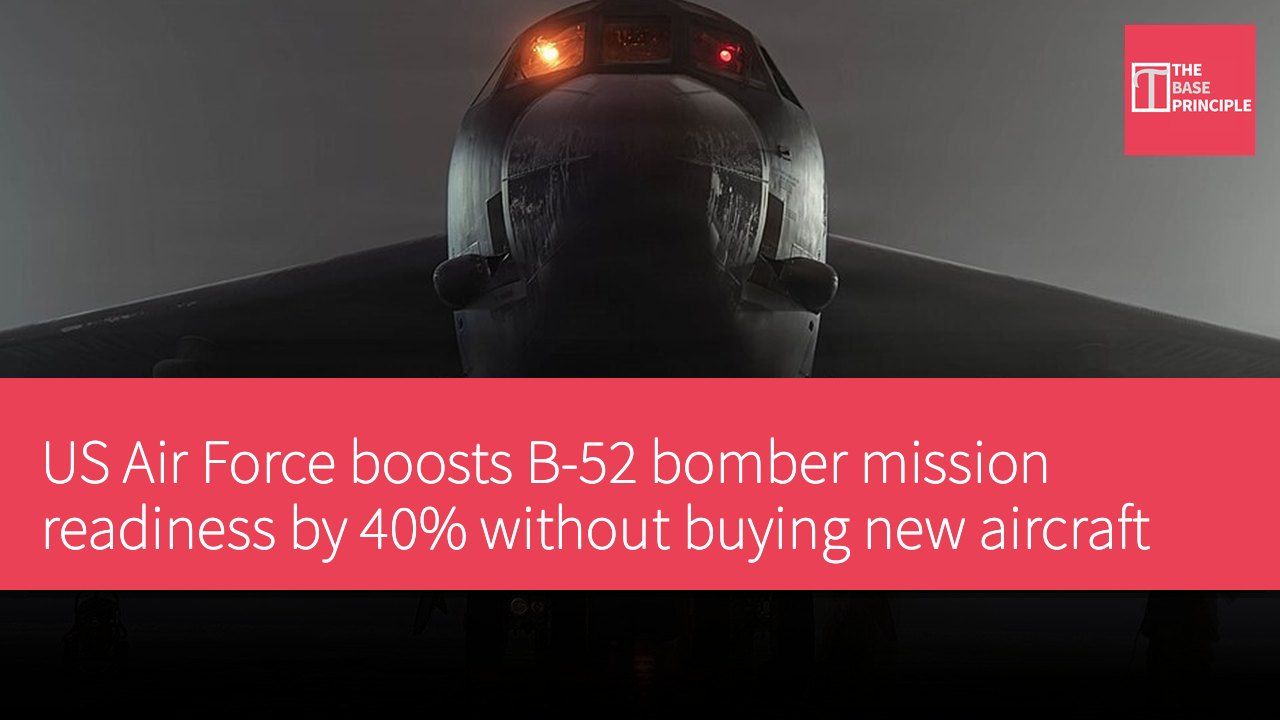
- The US Air Force's Polaris readiness program has lifted the available B-52 fleet by 40%.
- There are roughly 76 B-52s in total, with about three-quarters in active service.
- The program integrates maintenance and logistics to cut the time aircraft spend out of action.
- Logistics improvements can significantly boost mission readiness without purchasing new aircraft.
The US Air Force's Polaris readiness program has increased the number of flyable B-52 "strategic bombers" by 40%. That does not mean the service has acquired more aircraft, but rather that the number of jets grounded due to maintenance and logistics bottlenecks has dropped sharply. Aircraft like the B-52 require constant upkeep and repairs, along with other supplies to remain operational. For an aging and storied platform such as the B-52, an ample and timely supply of spare parts and consumables is essential to keeping it flying. In fact, most airframes are technically fully serviceable, yet may be unable to take off because they are waiting on parts, engineering decisions, depot work or other support.
Currently, the US Air Force operates around 76 B-52s, with roughly three-quarters in active service and the remainder held in reserve for various reasons. About 12 more airframes sit in "deep storage" at the boneyard at Davis-Monthan Air Force Base, serving as donors for spare parts or potential reserve reinforcements.
Goals of the Polaris readiness program
The Polaris readiness program is designed specifically to get more B-52s back into the air. It is a service-wide effort that addresses these bottlenecks rather than treating readiness as a flight-line maintenance issue alone. The program brings together maintenance, logistics, supply, engineering and depot organizations to accelerate the return of aircraft to service. Under the program, materiel that previously might have taken a week or more to reach an aircraft can now apparently be delivered within days. For a relatively small bomber fleet, this is a significant gain: shaving days off each repair can translate into more aircraft being available at any given moment.
The program is also delivering gains for other major aircraft such as the B-1 "Lancer." According to reports, the number of so-called Mission Impaired Capability Awaiting Parts (MICAPs) — instances in which aircraft cannot be fully operational because of parts shortages — has dropped from more than 450 to about 160. The strategic rationale for this work is the transition to the B-21 "Raider." The Air Force still needs the older B-52 and B-1 to provide long-range strike capability, particularly as some aircraft undergo maintenance and modernization at the same time that the B-21 gradually enters service.
What more available aircraft means
Freeing more aircraft from maintenance therefore gives commanders a larger pool of available airframes without actually buying any additional B-52s. For example, suppose 30 B-52s were available for active duty before Polaris was implemented. Under the program, that figure could rise to 42 — a 40% increase. This is, of course, only an illustration; the actual numbers may differ. Regardless, it is striking that something as routine as improved logistics can meaningfully boost mission readiness and, in turn, the number of aircraft on hand.
This matters especially for small fleets and for aircraft — particularly large, expensive bombers like the B-52, B-1 or B-21.
The impact of improved maintenance and logistics
The success of the Polaris readiness program shows that streamlining maintenance and logistics can significantly boost military mission readiness, an especially important point for the aging B-52 bomber. As repair efficiency improves, more aircraft can return to active service quickly, which not only strengthens the Air Force's strike capability but also reduces the need for new airframes, saving resources. Amid the current global security environment, this kind of improvement is critical to maintaining the Air Force's strategic edge.