
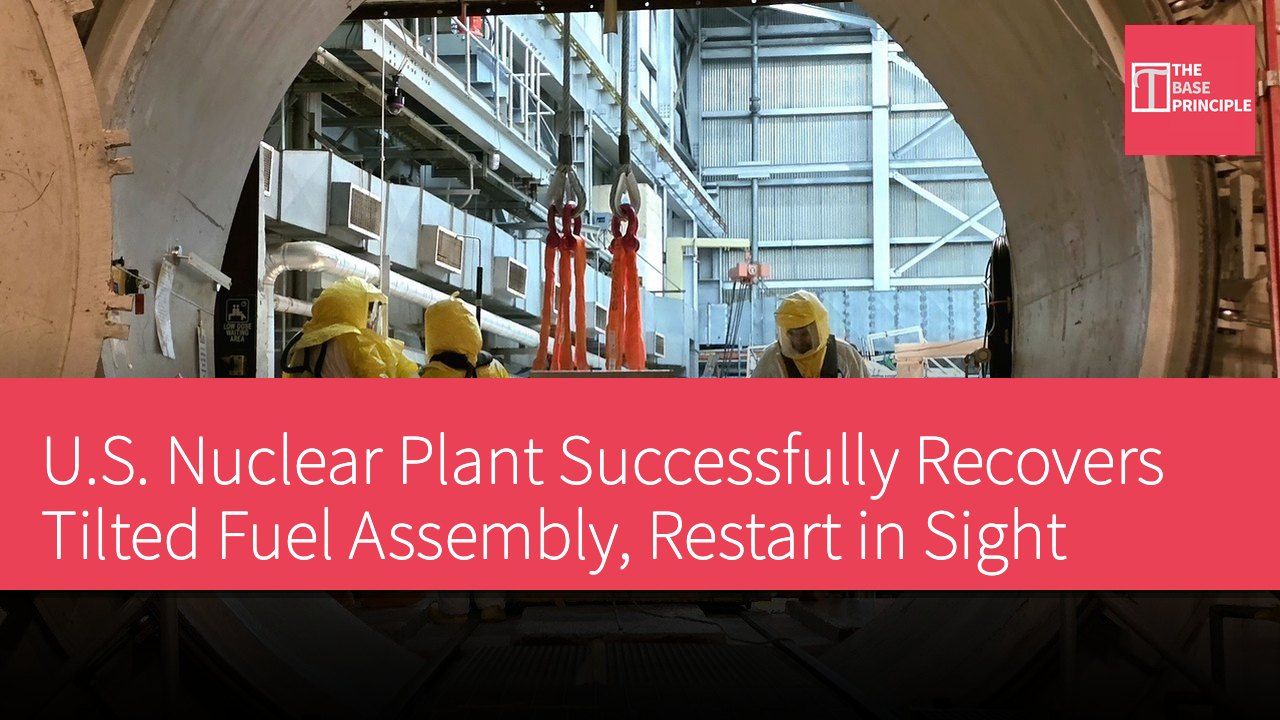
- The U.S. nuclear plant successfully recovered a tilted fuel assembly, paving the way for a restart.
- Holtec developed a specialized device to safely recover the fuel assembly, with the process executed flawlessly.
- The restart would mark the first time a permanently closed commercial nuclear plant in the U.S. returns to generating power, but several tests remain to be completed.
- The NRC has approved the recovery procedure, ensuring compliance with federal regulations.
A closed nuclear plant in the United States has overcome a significant challenge ahead of its planned restart, as engineers successfully retrieved a tilted fuel assembly from the reactor. This complex operation took place at the Palisades Nuclear Plant in Michigan. Holtec International, a Florida-based energy technology company, announced the successful completion of this task on Wednesday, October 21. To execute the procedure, the company used a specially designed Fuel Movement Device (FMD), which was developed, manufactured, and delivered in just two weeks.
Key Progress in Nuclear Plant Restart
According to Holtec, this achievement brings the nuclear plant closer to resuming operations. The facility is expected to become the first permanently closed commercial nuclear plant in the U.S. to return to power generation. Reports indicate that the fuel recovery process was executed without incident.
Fadi Diya, Holtec International's Chief Nuclear Officer, stated, "It is important how we respond when faced with challenges." The facility's restart preparations were temporarily disrupted on August 30, 2026, when a fuel bundle unexpectedly tilted 30 degrees within the reactor. Its bottom remained in the H-1 position while the top rested against the core shroud. The U.S. Nuclear Regulatory Commission (NRC) confirmed that the incident did not result in any radiation leaks or injuries to workers.
However, recovering the tilted fuel assembly required specialized engineering solutions. To address this challenge, Holtec developed a custom fuel movement device and a specially designed fuel transfer cask to safely lift, secure, and reposition the assembly.
The fuel assembly was moved to the spent fuel pool using Holtec's fuel transfer cask through the equipment hatch. The device was developed in Camden, New Jersey, while the specialized components were manufactured in Pittsburgh, Pennsylvania. Meanwhile, Palisades staff were responsible for overseeing preparations, equipment testing, training, and recovery operations. Once the equipment was ready, the technical team lifted the tilted fuel assembly from the reactor and placed it in the specially designed container. The team then secured the container's lid and transferred it to the plant's spent fuel pool. Holtec stated that the recovered assembly is now safely stored in the pool.
Challenges and Requirements in the Restart Process
The NRC has approved the recovery procedure through a license amendment. Diya stated, "Our team approached this recovery with the same commitment to safety, technical rigor, and teamwork that has guided our work in the restart process." The Michigan plant ceased operations in 2022 and is now preparing to return to commercial electricity production. Its restart would mark a first in U.S. nuclear history. However, the reactor is not yet ready. Staff still need to complete fuel loading, inspections, and safety tests. Holtec must also comply with federal regulations.
The company stated that its experience in nuclear fuel supports this recovery process.
Diya shared in a press release, "We developed a solution that executed safely and flawlessly, demonstrating the depth of expertise within our organization. I am proud of this team and grateful for their dedication to Palisades every day."
The Importance and Challenges of Nuclear Plant Restart
The restart of the nuclear plant is not only a technical challenge but also a significant test for the future of nuclear energy in the United States. The successful recovery of the tilted fuel assembly means that the facility is poised to become the first permanently closed nuclear plant to return to power generation, which is crucial for advancing the role of nuclear energy in the energy mix. Although the recovery process has received NRC approval, the restart still faces multiple challenges, including fuel loading and safety testing. The success of this process will provide valuable experience for the restart of other nuclear plants and may influence future nuclear energy policy development.