
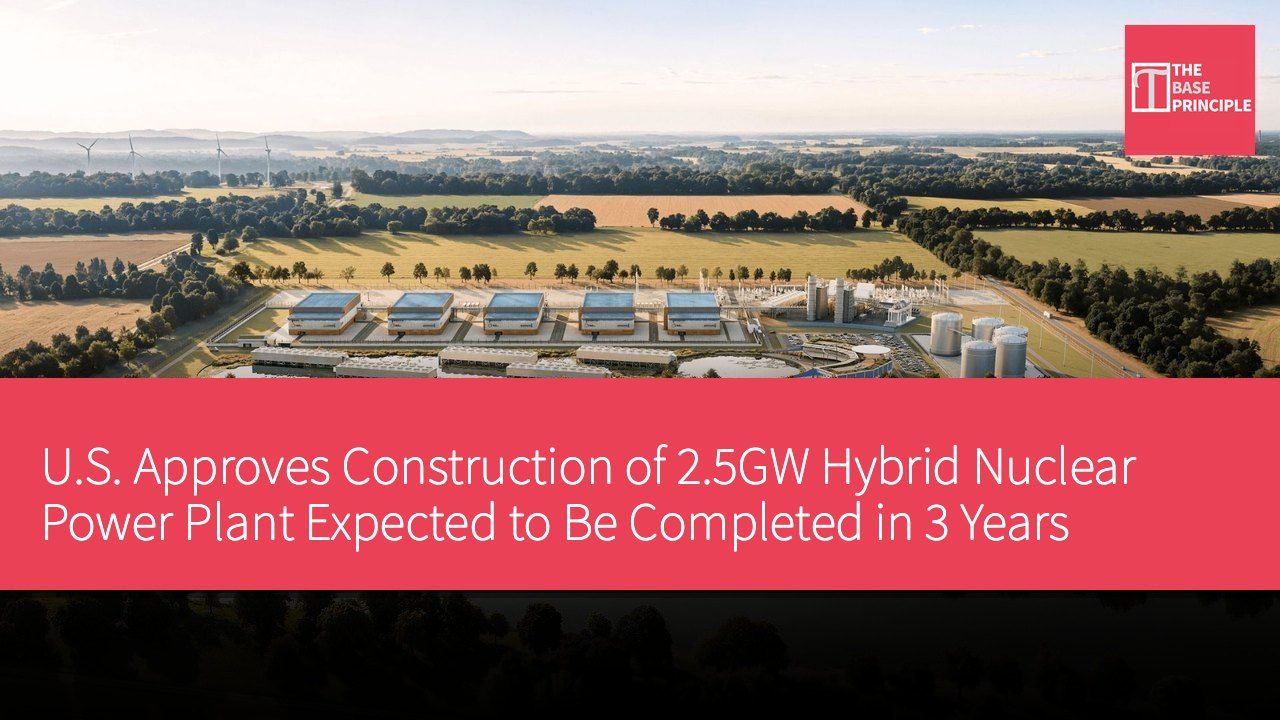
- The U.S. has approved the construction of a 2.5GW hybrid nuclear power plant, expected to be completed in three years.
- Blue Energy plans to produce prefabricated reactor components at shipyards to reduce costs.
- The plant will initially operate on natural gas before transitioning to nuclear reactors.
- Modular design will lower construction costs and support community needs.
The U.S. government has approved a new clean energy project to advance the country's nuclear energy goals. A hybrid nuclear power plant located in Victoria, Texas, is planned to be operational within five years, with an energy capacity of 2.5 gigawatts (GW). This project aims to break the traditional timeline for nuclear power construction, which typically takes over 10 years to complete. To shorten the construction time, the government is supporting clean technology startup Blue Energy, which expects to reduce the construction period to approximately 36 months.
The company plans to produce prefabricated reactor components known as "blue blocks" at shipyards to lower costs and construction timelines. According to the company, these blocks will utilize traditional reactor designs, weigh around 1,500 tons, and can be transported directly from the shipyard to the nuclear power plant site, with assembly taking no more than a year. Blue Energy founder and CEO Jake Jurewicz stated, "These 1,500-ton blue block prefabricated modules are fully operational mechanically and electrically, equipped with piping systems, and everything is ready for direct delivery to the site."
Advantages of Shipyard Prefabricated Reactors
Jurewicz noted, "The nuclear issue is essentially a construction issue," and the company plans to leverage existing manufacturing supply chains that serve the offshore oil, gas, and wind energy industries operating from shipyards. The advantages of shipyard construction include access to a large pool of skilled labor, specialized infrastructure, and higher automation opportunities due to manufacturing in a controlled environment. These blue blocks will house small modular light water reactors provided by GE Vernova Hitachi Nuclear Energy.
In addition to shipyard construction and prefabricated modules, the company also intends to initially operate its power plant on natural gas before transitioning to nuclear reactors, a strategy aimed at reducing costs and avoiding project delays. Jurewicz stated, "We have the technology to transition from natural gas to nuclear energy, allowing us to kickstart the project by immediately establishing the entire nuclear steam turbine system." This approach is expected to enable the company to not only activate the power plant earlier but also to start generating revenue within three years of construction commencement.
Strategy for Transitioning from Natural Gas to Nuclear Energy
He added, "Generating steam from gas-fired turbines means we can finance it as a natural gas power plant, thereby lowering capital costs." According to Jurewicz, this method significantly reduces project costs while minimizing financial risks. The company has received approval from the Nuclear Regulatory Commission (NRC) for its natural gas to nuclear energy strategy. Under the plan, Blue Energy's first Texas power plant is set to begin operations in 2030, with two gas turbines generating 1 GW of electricity.
Two years later, the facility will reach its maximum capacity of 2.5 GW by adding up to five small modular reactors, generating an additional 1.5 GW of electricity.
For future projects, the company anticipates reducing construction costs to US$5,000 per kilowatt (approximately HK$39,000), providing electricity at less than half the cost of existing nuclear plants. The modular design will also facilitate the easier addition of more reactors at its Texas site in the future, while supporting community needs such as desalination. Jurewicz added, "This power infrastructure is clean, reliable, and resilient enough to withstand hurricanes or any possible weather conditions."
Innovative Model for Hybrid Nuclear Power Plant Construction
The construction plan for this hybrid nuclear power plant demonstrates a new direction for nuclear energy development, particularly through the use of shipyard prefabrication technology to shorten construction time and reduce costs. Traditional nuclear power plant construction often faces challenges related to time and budget; however, Blue Energy's strategy not only accelerates construction progress but also mitigates financial risks through the initial use of natural gas. This model is unprecedented in the nuclear energy sector and may attract more investment while promoting sustainable nuclear energy development, especially in the context of addressing climate change.