
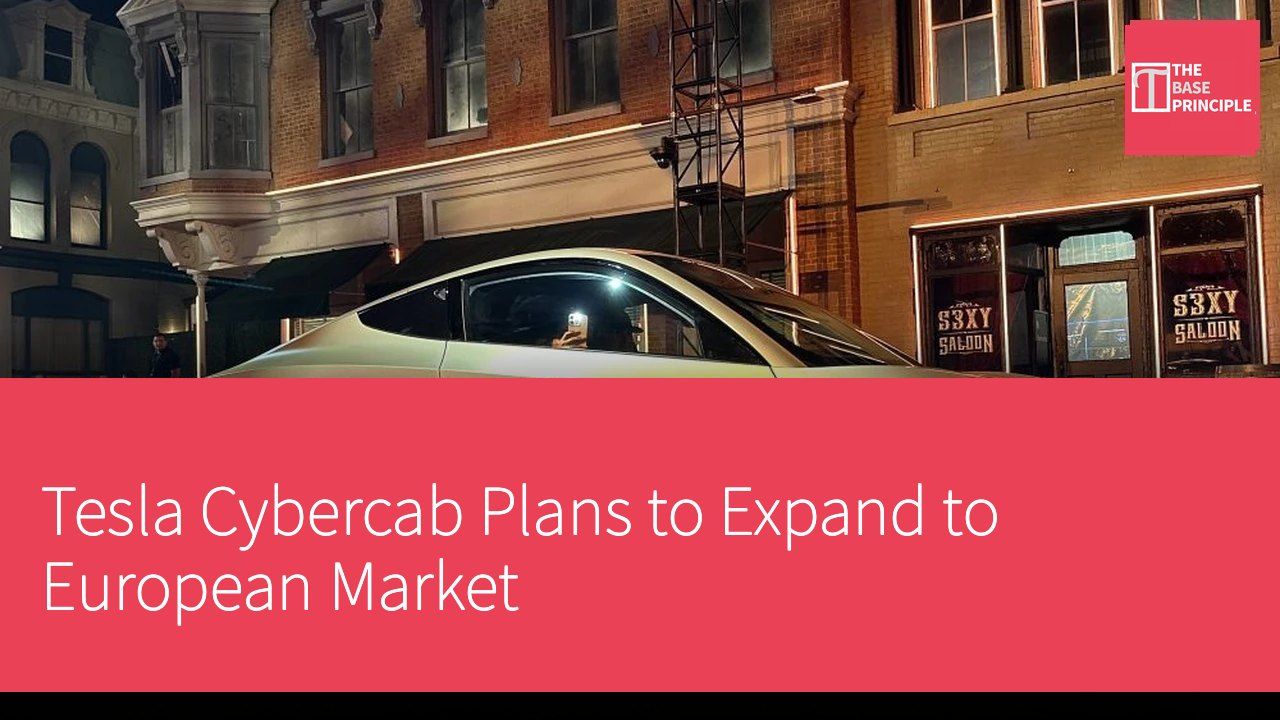
After its debut in Austin, Texas, last week, Tesla is planning to expand the Cybercab to other regions in the United States. This driverless vehicle, devoid of a steering wheel and pedals, will serve as part of a Robotaxi ride-hailing service, providing transportation for passengers. However, the expansion plans are not limited to the United States. CEO Elon Musk has revealed that he hopes Europe will be the next market for the Cybercab. Musk publicly stated his hope that Tesla's Cybercab robotaxi will enter the European market in the near future.
On September 8, Tesla's CEO quoted a German passenger who had just completed a trip in Austin and wrote that he hoped the vehicle would not take many years to arrive in Germany. Musk responded to a short but striking message: "Hope to be in Europe soon too." This comment came just days after Tesla had opened its Cybercab ride-hailing service to the public in Austin. The two-seater vehicle has no steering wheel or pedals and relies entirely on Tesla's full self-driving software. Early passengers described the ride experience as quiet, smooth, and more stylish than competitors like Waymo's robotaxis.
Austin is currently the only city where the public can hail a ride through Tesla's Robotaxi app. The initial fleet size is small, with Texas registration records showing only a few dozen vehicles built specifically for this purpose on the road. Tesla is also operating more traditional Model Y robotaxis in the same area, but the Cybercab itself represents the company's first purpose-built vehicle without control devices. The regulatory environment in Europe is different. The EU does not allow manufacturers to self-certify vehicles as they do in the United States. The entire EU is subject to type-approval rules and a small-series limitation of up to 1,500 automated vehicles per type per year.
After approval by the Dutch certification authority, regulated full self-driving has gained temporary approval in several member states, but unregulated robotaxi operations remain a separate and more distant step. Tesla has not yet announced the launch city, date, or approval pathway for the Cybercab in Europe. Musk himself has warned that the company cannot control European regulators. In an earnings call earlier in 2026, he pointed out that even regulated full self-driving took "a huge amount of time" to gain approval, while unregulated services are "somewhat dependent on the governments of Europe and the EU." Therefore, the latest social media comment is more of an expression of intent than a concrete timeline.
If the Cybercab eventually operates on European streets, it will mark Tesla's ambition in robotaxis surpassing the United States. Currently, the vehicle is still limited to the Austin experience, and the gap between Musk's hopes and actual deployment will be determined by regulators rather than engineering. As Tesla launches the Cybercab in Austin, the company is also seeking to further improve the passenger experience. Shortly after starting its paid service, Tesla sent a passenger experience survey to Cybercab riders, asking about their overall trip satisfaction and requesting ratings on availability, wait time, door functionality, vehicle touchscreen, mobile app experience, seat comfort, interior space, ride comfort, cleanliness, and luggage space.
The survey also asked passengers what features they would like to have, allowing them to choose up to three from options including heated seats, ventilated seats, fully reclining seats, tray tables, wireless chargers, and better sound systems. Respondents could also choose that they did not need these features or write down other ideas. The survey concluded by asking for a recommendation score from zero to ten. Tesla's quick request for passenger feedback shows the company's habit of treating early users as collaborators rather than mere customers. The company has long improved its vehicles through software updates and hardware changes based on the actual use of its passenger cars. This practice of collecting structured feedback shortly after the start of a commercial service shows the same mindset tailored for a self-driving taxi.
The questions themselves indicate an openness to internal changes even after the first vehicles hit the road, which is not surprising. Tesla has always aimed to provide a good experience for passengers, which is why many fan-requested features have made their way into its vehicles. Currently, the feedback circulating online leans towards reclining seats, tray tables, wireless charging, improved sound, and extra space after folding seats. These preferences point to comfort upgrades that Tesla could implement in subsequent production batches or through internal revisions. Since the Cybercab is designed with a software-first principle, many of the requested features can be realized faster than by traditional automakers.
Therefore, Tesla's immediate survey of passengers makes near-term internal and experiential improvements possible. As the team reviews feedback and moves towards more refined iterations of the robotaxi, passengers will be able to choose a higher-quality travel experience. Tesla's innovation lies not only in the forward-looking nature of its technology but also in its sensitivity to user needs, which makes its potential in the self-driving taxi market continue to grow. With the launch of the Cybercab and its future expansion, Tesla is expected to reshape travel globally and further consolidate its leadership in the electric vehicle and autonomous driving fields.