
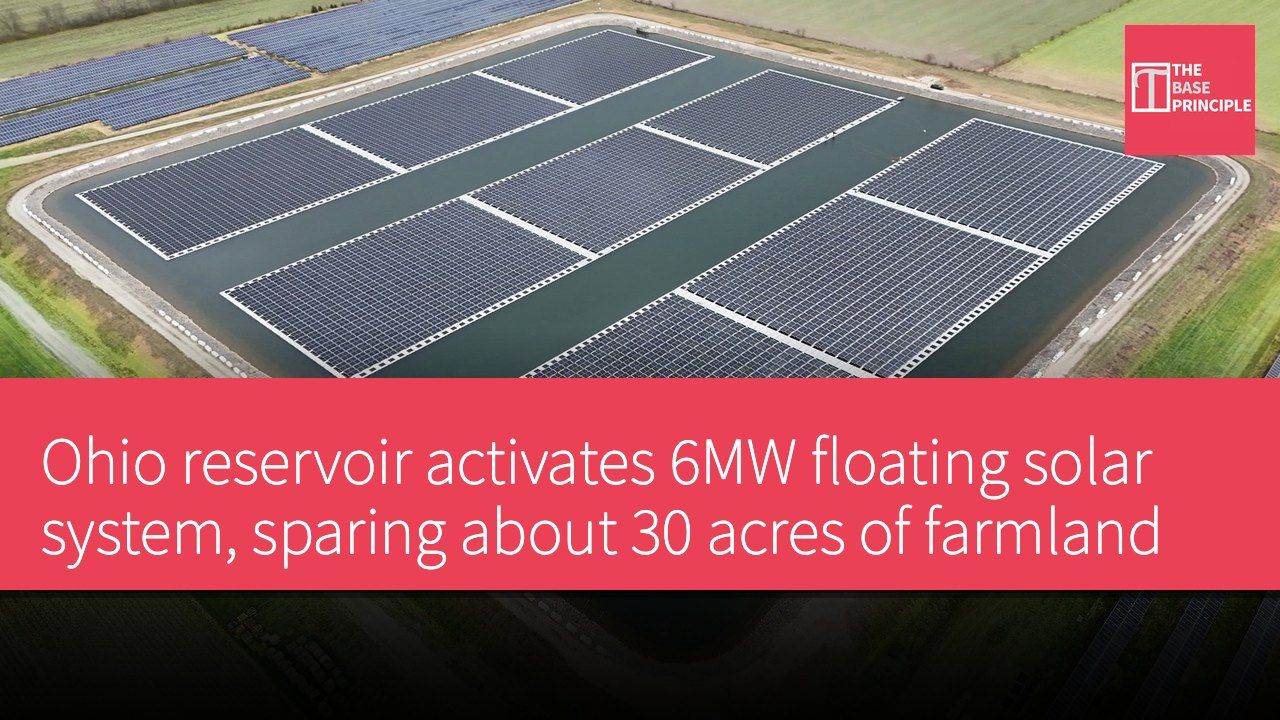
- A floating solar system in Ohio has begun operating, using a reservoir to generate electricity.
- The system avoids using about 30 acres of farmland, conserving land resources.
- Monroeville has a population of about 1,300, and the two solar projects have significantly raised per capita capacity.
- The floating array is D3Energy's third installation in Ohio, demonstrating the potential of water infrastructure.
A floating solar array in Ohio has begun operating, using a reservoir rather than farmland to generate electricity. The system is installed on the reservoir in the village of Monroeville, comprising 9,222 solar modules spread across three floating islands, and feeds power directly into the village's distribution grid. According to data from D3Energy, the developer of the array, this project is the largest floating solar installation in Ohio and ranks among the top five such systems in the United States. Beyond the sheer amount of power produced, the system's biggest advantage lies in its footprint: the floating array covers about 12 acres of water, avoiding the roughly 30 acres of farmland that a comparable ground-mounted solar project would require.
This approach to conserving land is particularly important in parts of Ohio, where utility-scale solar projects face restrictions. Under a 2021 law, roughly one-third of the state's 88 counties have placed limits on large solar installations. Monroeville, by contrast, is putting land it already owns to another use. D3Energy's managing director, Stetson Tchividjian, said: "Solar requires space, and there is no surplus land in agricultural areas. The water Monroeville owns was only doing one job; now it can do two."
The Importance of Saving Land
The floating array is the village's second solar project; an existing 4MW ground-mounted solar facility has been operating since 2017. According to D3Energy, Monroeville has a population of about 1,300, and the two projects combined give the village a per capita solar capacity roughly 13 times that of Ohio as a whole. The new installation also adds to the state's growing portfolio of floating solar projects. D3Energy has already completed floating arrays for Del-Co Water in Delaware and the Twin Lakes reservoir in the city of Lima.
These three projects bring Ohio's operating floating solar capacity close to 10MW. All three are located on water bodies owned by utilities or public institutions.
The Potential of Floating Solar
Floating solar offers developers another option, especially where suitable land is limited or competing land uses make conventional solar projects difficult to build. The Monroeville project was co-developed by D3Energy and Gardner Capital, the latter of which owns the system and sells the power to the village. Ohio-based Appalachian Renewable Power served as the contractor. D3Energy says this is its third floating solar installation in Ohio, and the company claims it has built more than half of the floating photovoltaic systems currently operating in the United States.
For Monroeville, the reservoir now serves two purposes at once, providing water while also offering space for thousands of solar panels without sacrificing farmland.
"None of this would have been possible without Monroeville's forward-thinking leadership," Tchividjian said. "Tom Gray, the recently retired village administrator, carried this project from the very first meeting to the day it was commissioned. This was his achievement." The 6MW floating array demonstrates how existing water infrastructure can be turned into additional real estate for renewable energy generation.
Future Outlook for Floating Solar Systems
Floating solar systems offer an effective solution in regions where land resources are limited, particularly in agricultural areas. As more jurisdictions place restrictions on large solar projects, this innovative technology can make productive use of water bodies and reduce dependence on farmland. In addition, as the technology spreads, it is likely to spur the development of more projects of this kind, further boosting the use of renewable energy, which is important for addressing climate change and advancing sustainable development.