
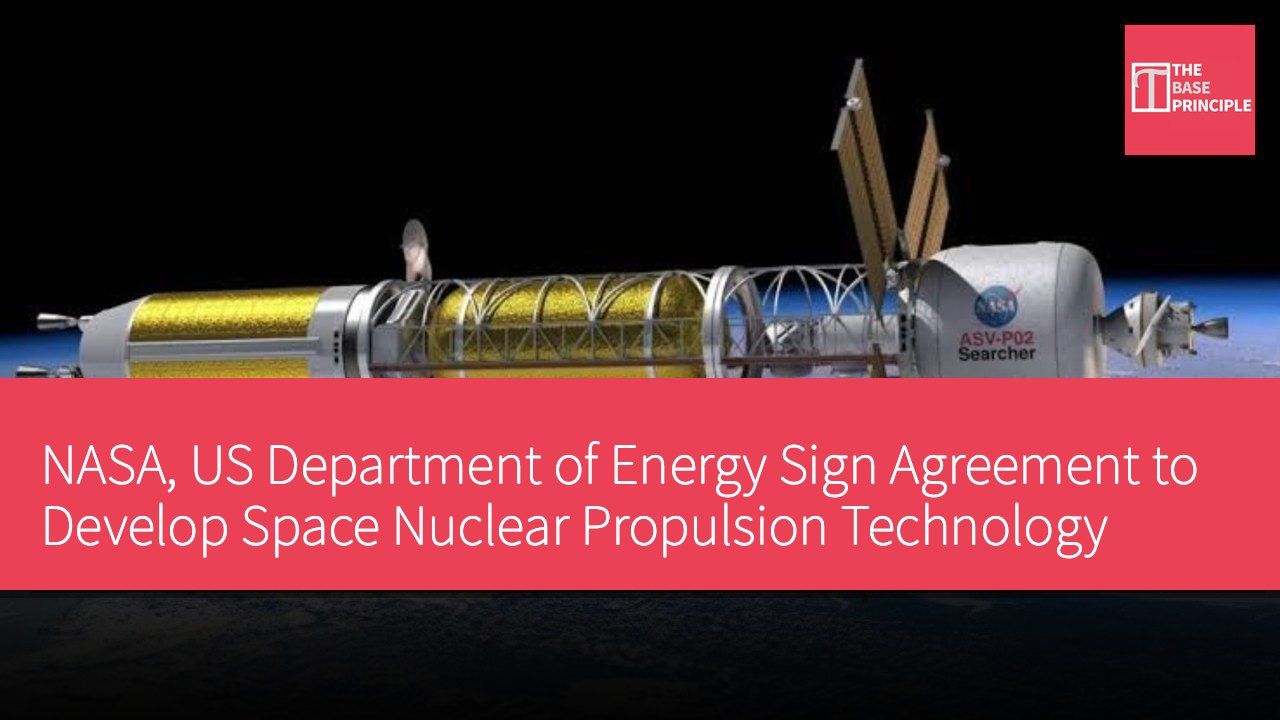
- NASA and the US Department of Energy sign agreement to develop space nuclear reactor.
- Nuclear energy will make space exploration more capable and extend operational time.
- 2028 will test deep space operational fission capability, supporting lunar base operations.
- Global interest in space nuclear technology growing rapidly, major spacefaring nations actively developing related technologies.
Transformation in Nuclear Propulsion Technology
Jared Isaacman stated: "We are entering a 'Nuclear NASA Era,' which represents a major transformation in space exploration. Nuclear energy will enable us to go farther, operate longer, and deploy spacecraft and instruments more capable than ever before. The work we do today lays the foundation for tomorrow's fission-powered spacecraft and opens an entirely new frontier of exploration and discovery." NASA and the Department of Energy are advancing a series of nuclear technologies aimed at supporting long-term space exploration. The 2028 "Space Reactor-1 Freedom Mission" will test operational fission capability in deep space on a trajectory to Mars, expected to lay the groundwork for the 2030 "Lunar Reactor-1" surface power system to support lunar base operations during periods of total darkness. Radioisotope power systems are also extending NASA's reach; the 2028 "Dragonfly" rotorcraft will use a radioisotope thermoelectric generator and 24 heating units to study the habitability of Saturn's moon Titan.
Similar radioisotope heating units will protect sensitive instruments on the European Space Agency's "Rosalind Franklin" rover, which is searching for evidence of life in the frigid Martian environment. Jared Isaacman and US Energy Secretary Chris Wright executed the agreement during the summit at the Donald J. Trump Institute for Peace in Washington. The partnership will take effect on November 1 (Sunday), establishing a formal framework for interagency space nuclear operational cooperation. Wright stated: "Thanks to President Trump, America's nuclear renaissance is reaching new frontiers.
Global Competition in Space Nuclear Technology
The Department of Energy is proud to partner with NASA to help US space missions reach the unknown." Nuclear electric propulsion technology provides higher efficiency and sustained thrust, enabling spacecraft to accelerate to higher speeds than standard chemical rockets. Accelerated operational speeds shorten overall journey times across deep space, directly reducing the amount of cosmic radiation absorbed by human crews. Additionally, nuclear systems can reduce crew exposure to long-term interstellar radiation, which will help protect the health of long-duration astronauts and enhance overall mission safety for future crewed flights to Mars.
Global interest in space nuclear technology is growing rapidly, with several major spacefaring nations developing their own reactors and propulsion systems. China is advancing compact megawatt-class fission reactors aimed at supporting high-thrust deep space travel, and is cooperating with Russia to build an automated nuclear power plant on the lunar surface to support a future joint research station. Meanwhile, Russia continues development of its "Zeus" nuclear-powered space tug, intended to use megawatt-class electric propulsion to move heavy payloads and clear orbital debris.
Future Prospects for Space Nuclear Propulsion Technology
As demand for space exploration grows, nuclear propulsion technology offers higher efficiency and sustained thrust, which is critical for long-duration space missions. US efforts in this area will not only shorten travel times but also reduce astronaut radiation exposure and enhance mission safety. Other nations such as China and Russia are also actively developing similar technologies, demonstrating global emphasis on space nuclear power. This competition may drive rapid technological advancement and influence future space exploration strategies.