
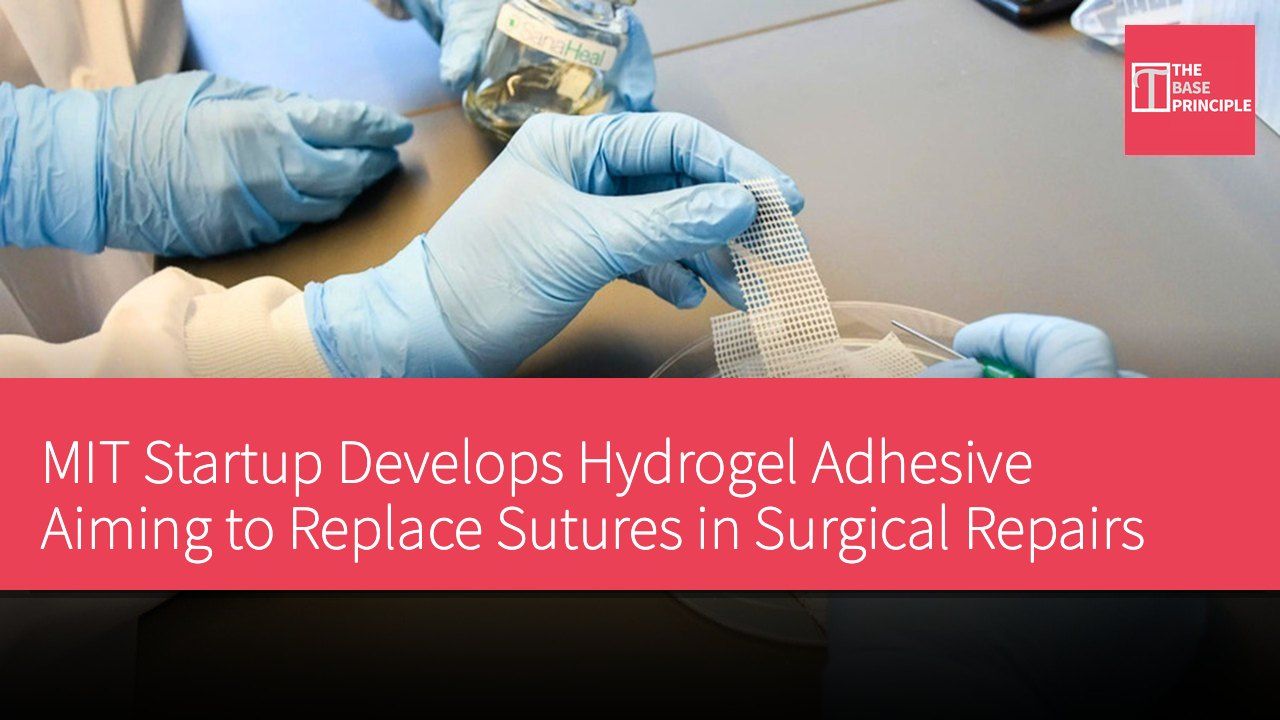
- The hydrogel adhesive developed by SanaHeal aims to replace traditional suturing techniques.
- The adhesive can seal wet tissues in seconds, reducing surgical risks.
- The technology is inspired by natural adhesive materials and is biocompatible.
- The founders chose to commercialize independently, aiming to improve bleeding issues during surgeries.
A startup derived from the Massachusetts Institute of Technology (MIT) is developing a hydrogel-based adhesive that can seal wet tissues in seconds, aiming to replace suturing and stapling techniques in procedures such as coronary artery bypass surgery and hernia repairs, according to MIT News. SanaHeal was founded by MIT alumnus Hyunwoo Yuk, and the company states that its bioglue technology has received regulatory approval to stop traumatic bleeding. Next year, the technology will enter human trials to help control bleeding during surgeries and repair various injured tissues.
Challenges of Suturing
Many surgeries require connecting two pieces of tissue, including triple coronary artery bypass surgery, cesarean sections, and hernia and tendon repairs. Most surgeries are performed by machines controlled by humans or surgeons, and small errors in suturing or stapling can lead to leaks, resulting in severe consequences. Sutures and staples can also damage tissues, trigger immune responses, and lead to scar tissue or infections. In microsurgery, Yuk noted that the diameter of the needle can be finer than a human hair.
Challenges of Suturing Techniques
How the Adhesive Works
The material is a hydrogel made of polymers and water, designed to be biocompatible to minimize immune responses and the formation of scar tissue. Early versions were similar to double-sided tape, using polyacrylic acid, a water-absorbing material also found in diapers, to draw moisture from wet tissues and bond in seconds. The company's current bioglue can adhere to wet and uneven surfaces, forming airtight and liquid-tight seals. This technology is inspired by adhesive materials in nature, such as barnacles and spider silk. Yuk stated that this method is "more like a Post-it note" rather than suturing, making it less invasive and easier to use with surgical robots.
He pointed out that faster and more efficient surgical procedures can also help reduce surgical costs.
From Laboratory to Commercialization
From Laboratory to Startup
Yuk developed this technology in the lab of Professor Xuanhe Zhao while pursuing his master's and PhD (SM ‘16, PhD ‘21). He initially focused on the mechanical properties of hydrogels but shifted to the biomedical field after discussions with doctors in the Boston area who described the frequent need for surgeons to seal or connect tissues. Yuk originally planned to remain in academia but chose to lead the translation efforts after realizing the challenges of bringing lab innovations to clinical settings. The team leveraged MIT's Deshpande Center, entrepreneurial guidance services, and technology licensing office.
Potential partners viewed early regulatory hurdles as too risky, leading the founders to choose independent commercialization. SanaHeal was established in 2021 with funding from the Deshpande Center.
Platform Approach
The company's initial focus was on trauma and bleeding, later shifting to surgical applications due to their broader scope. It offers its technology to large medical device partners developing open, laparoscopic, and endoscopic surgical products, and for seamless integration into existing devices such as hernia and nerve repair. "We have seen ourselves as a platform company from the beginning," Yuk said. After nearly a decade of effort, the pace of commercialization has been slower than Yuk anticipated. He expressed that seeing the technology benefit patients will be very rewarding.
Potential and Challenges of Hydrogel Adhesives
The development of hydrogel adhesives marks a significant advancement in surgical techniques, particularly in reducing surgical risks and improving efficiency. Traditional suturing techniques present various issues, including potential immune responses and tissue damage, while this new adhesive can create a stable seal in a short time, mitigating these risks. Additionally, the founders' decision to commercialize independently demonstrates sensitivity to market demand and confidence in the technology's practicality. As the technology matures, it is expected to play an important role in a wider range of surgical applications.