
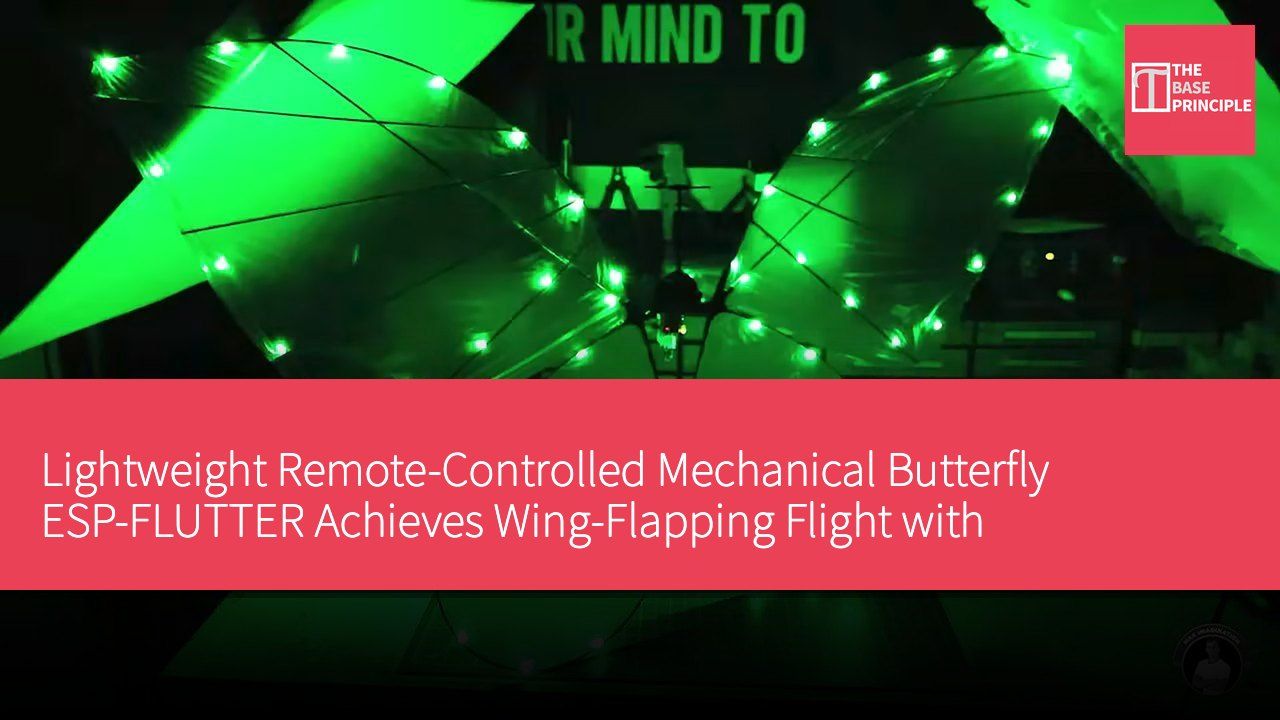
- ESP-FLUTTER is a 70-gram remote-controlled butterfly featuring an independent servo design.
- The design employs two servos for enhanced control while maintaining simplicity.
- The aircraft can be controlled via a smartphone connected to Wi-Fi, allowing adjustments to the flapping frequency and more.
- There are currently modular and compact versions available, both using readily available components.
A creator named Max Imagination has developed a remote-controlled butterfly weighing 70 grams, called ESP-FLUTTER. According to Hackster, this butterfly flies by flapping its two wings, with each wing powered by its own servo, a small motor used to set angles. The wings are made from thin plastic sourced from vegetable bags and are stretched over a carbon fiber frame, with 50 small LED lights for nighttime flight. ESP-FLUTTER is a bird-like aircraft that generates lift and thrust by flapping its wings rather than using propellers.
Advantages of Independent Servo Design
Many bird-like aircraft use a single motor and mechanical connections to move two wings, whereas this design employs two independent servos, which Hackster states provides greater control while keeping the mechanical structure simple.
A small development board called Seeed Studio XIAO ESP32C3 handles the servo signals, wireless connectivity, battery monitoring, and LEDs. Max Imagination has uploaded the firmware to GitHub and published the build files on Google Drive so that other builders can start from the same design. According to Hackster, most flying robots use rotating propellers, which is simpler than flapping a pair of wings.
Since weight is a major consideration, the total weight of the aircraft is kept at 70 grams, including the battery, as mentioned in the video description. The 3D-printed frame uses PETG plastic and is equipped with flexible TPU protective devices to safeguard the servos during crashes. Carbon fiber rods provide structural support for the wings without adding excessive weight. The wing membranes are made from thin plastic sourced from vegetable bags, secured with flexible adhesives, while lightweight kite fabric is also an option.
Hackster notes that this design does not use any special materials or expensive components. Its power comes from a custom dual-battery lithium polymer battery pack. Due to the insufficient speed and power of standard hobby servos, two high-speed servos were chosen for flapping. Max Imagination connected 50 LED lights around the wings using ultra-thin enameled copper wire, adding approximately 1 gram of weight to each wing. Hackster mentions that there are currently two versions: one is a modular version made from readily available components, while the other is a compact version built around a custom four-layer circuit board that connects the electronic components.
Smart Control and Flight Performance
The pilot of the aircraft can connect their smartphone to the butterfly's Wi-Fi network and open a browser-based control page. An optional ExpressLRS receiver can be used for flight with a standard wireless transmitter. The page allows adjustments to the flapping frequency, steering response, servo positions, and wing motion characteristics. Sine wave motion is smooth and natural, while triangular wave can generate more lift. Max Imagination found that flapping at about 4 times per second, or 4 Hz, works well at full throttle. The creator's YouTube description mentions a maximum flight time of 1 minute and 9 seconds, with a flight distance of approximately 25 meters.
Both of these figures are self-reported and do not cite any external tests or results from other builders, so actual performance has yet to be verified. Independent flight times from builders using the GitHub files will demonstrate the practicality of the design. Max Imagination stated that a video showcasing the control settings will be released.
Item Specification Weight 70 grams Battery Type Dual-battery lithium polymer Flight Time 1 minute 9 seconds Flight Distance Approximately 25 meters
How Unique Design Affects Flight Performance
The design of ESP-FLUTTER breaks through the limitations of traditional bird-like aircraft, utilizing independent servos for more flexible control, which is crucial for enhancing flight performance. The lightweight material choices and simplified structural design reduce overall weight while maintaining performance, an important consideration for small aircraft. Through smartphone control, users can flexibly adjust flight parameters, further enhancing the user experience. This innovative design not only attracts the attention of enthusiasts but also provides new ideas for future aircraft design.