
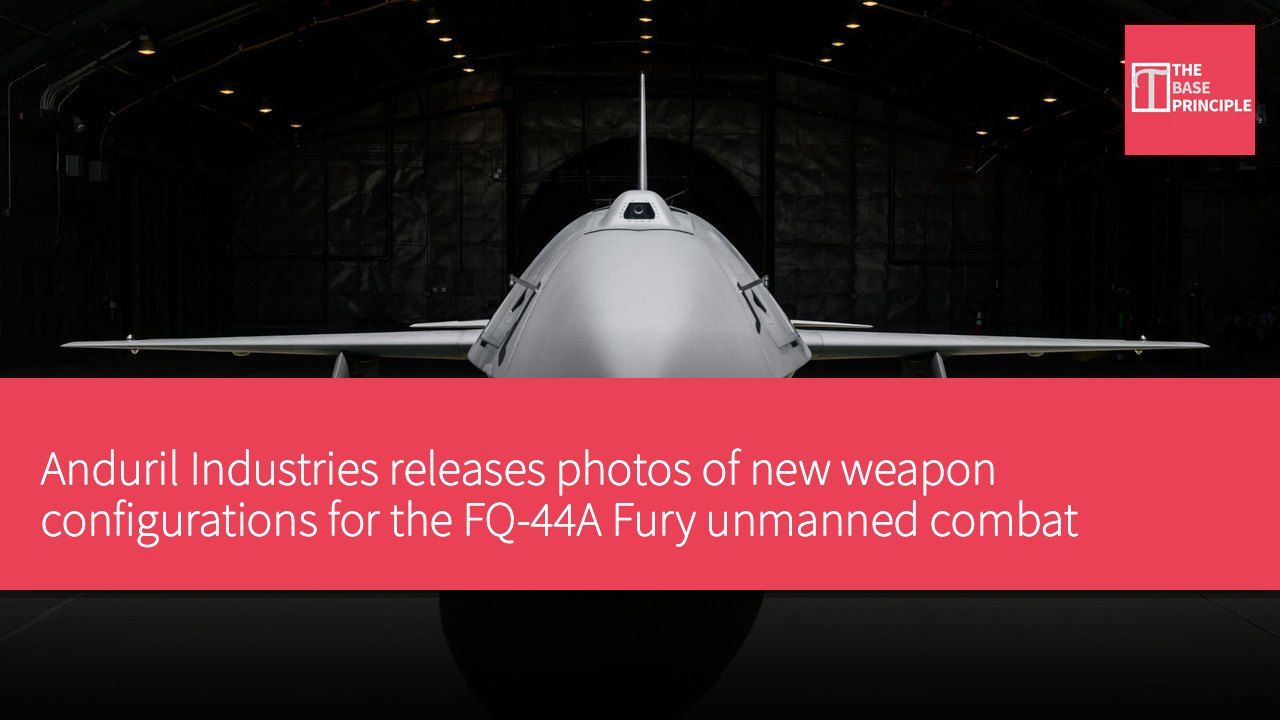
- The FQ-44A Fury unmanned combat aircraft is undergoing weapons fit checks.
- The new configuration confirms Fury's compatibility with a variety of munitions, including guided bombs and rocket launchers.
- The Air Force plans to procure at least 500 CCA aircraft, which will fly missions alongside manned fighters.
- The Netherlands formally joined the CCA program in 2025, supporting industrial cooperation.
Anduril Industries recently shared new photos of its FQ-44A Fury unmanned combat aircraft during weapons fit checks. The images, released on September 16, offer a clearer view of how the aircraft can carry guided bombs, rocket launchers and other external weapons, as it moves toward production under the U.S. Air Force's Collaborative Combat Aircraft (CCA) program. The photos show Fury still in the process of having external weapons added. Anduril is designing the aircraft so that it can carry a range of weapons and mission equipment, giving it flexibility when flying missions alongside manned fighters.
Fury's compatibility with a variety of munitions
Anduril titled its new release "Fit for Fury" and said the prototype configuration "confirms Fury's compatibility with a variety of munitions." The images show guided bombs and 70mm rocket launchers being mounted to the aircraft. Planned weapons also include air-to-air missiles and cruise missiles. Anduril said additional mission pods and systems may be added, but some details have not been disclosed. Weapons development is a key component of the CCA program, as the Air Force works to field unmanned aircraft that can fly missions alongside existing fighters.
Fury's conceptual configuration confirms its compatibility with a variety of munitions, including 500-pound-class guided bombs, small-diameter bombs, air-launched cruise missiles, rocket launchers, external targeting pods and other options. The aircraft's design traces back to the Fury concept developed by Blue Force Technologies, which Anduril further developed after acquiring the company in 2023. The FQ-44A completed ground testing at Beale Air Force Base in 2025 and made its first flight later that year from the Southern California Logistics Airport in Victorville, California.
In June 2026, the Air Force selected Anduril to move into the production phase, pushing Fury toward testing of its first aircraft and future operational use.
The value and scale of the current order have not been disclosed. The latest fit check follows earlier weapons testing of Fury. Anduril and the Department of Defense have already conducted trials, including the launch of an RTX AIM-120 Advanced Medium-Range Air-to-Air Missile. The Air Force plans to procure a total of at least 500 CCA aircraft to fly alongside manned fighters. In the first tranche, however, the service has said it may order 100 to 150 aircraft, but has not disclosed what portion of those will be FQ-44s versus YFQ-42As.
International partner interest
The new images suggest how Fury could support strike missions once in service. The CCA program has also drawn interest from international partners. The Netherlands formally joined in October 2025, opening the door for Dutch defense companies to take part in the program. The Netherlands' involvement could ultimately support industrial cooperation and possible co-production of series-production aircraft. For the Air Force, progress on weapons integration provides an early indication of how CCA aircraft may be used beyond an airborne sensor role. The range of weapons being evaluated shows that Fury is being prepared to carry out missions requiring different types of ordnance, while operating as part of larger manned-unmaned formations.
Strategic significance of the FQ-44A Fury
Progress on weapons integration for the FQ-44A Fury points to its potential in modern warfare, particularly in teaming with manned fighters. As the Air Force's demand for unmanned aircraft grows, Fury's diverse weapons configurations can meet the requirements of different missions and boost operational flexibility. In addition, the involvement of international partners, such as the Netherlands' accession, is likely to promote technology sharing and production capacity, further enhancing the program's global reach.