- AEVEX wins a US$92.2 million contract to support the SkyRange hypersonic test program.
- SkyRange is designed to streamline instrumentation for challenging military flight tests.
- Range Hawk unmanned aircraft will serve as aerial test platforms, offering flexibility.
- AEVEX will support the build-out of airborne telemetry and resilient communications architecture.
AEVEX has secured a potential US$92.2 million (about HK$720 million) contract to support the U.S. military's SkyRange hypersonic test program. The three-year award puts AEVEX into flight operations across U.S. Western and Pacific test corridors. Its engineers will handle airborne telemetry, communications, payload integration and distributed range systems.
Purpose of the SkyRange program
SkyRange is designed to streamline how the military instruments challenging flight tests. Instead of fixing key tracking equipment at fixed locations, the program puts most of the equipment on aircraft, giving test teams flexible platforms that can follow demanding flight trajectories and deliver data from closer to the action.
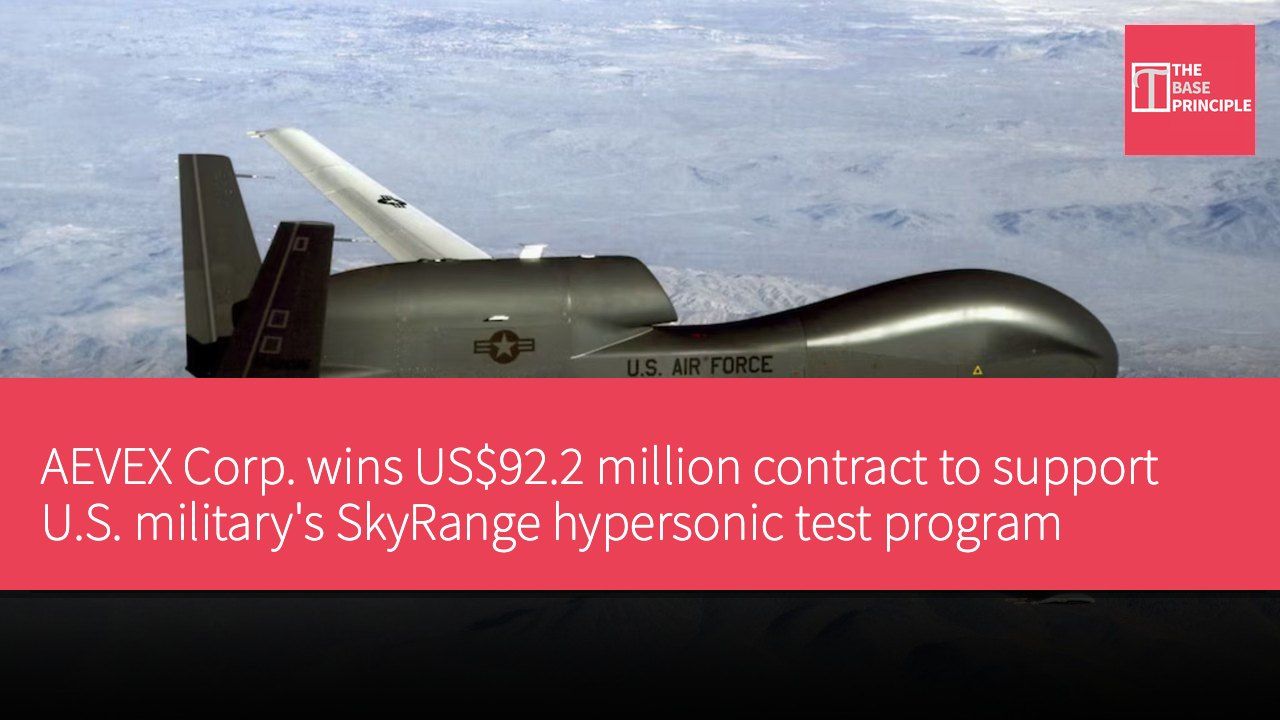
The program uses unmanned aircraft as aerial test platforms, called Range Hawks, including modified RQ-4 Global Hawks. These aircraft can carry specialized sensors and instrumentation designed to track hypersonic vehicles in flight. Their altitude and maneuverability give engineers additional coverage across expansive test corridors. The flexibility matters because hypersonic vehicles can cross large distances in minutes, limiting what fixed sites can collect in useful data.
Ships also provide instrumentation for flight tests, but aircraft can be more easily reconfigured between different missions and test areas. AEVEX will provide the engineering support needed to integrate airborne range equipment with the broader SkyRange architecture. Its teams will also support flight operations in designated U.S. and Pacific corridors. The company's role extends to linking the airborne platforms with the analysts working on the flight data.
AEVEX's engineering support role
SkyRange needs more than airborne sensors to make those platforms work for hypersonic testing. It also needs communications systems that can reliably transmit telemetry data during flight. AEVEX will support the build-out of airborne telemetry relay and resilient communications architecture under this contract. Its work will also cover distributed range networks, mission data and payload integration. Telemetry gives engineers access to measurements collected during flight, helping them check vehicle performance and reconstruct test events. In hypersonic testing, this data matters especially because vehicles move quickly across large ranges and test windows are hard to repeat.
Mike Jackson, senior vice president of global solutions at AEVEX, said "rapid hypersonic development depends on scalable airborne infrastructure." He added that resilient telemetry architecture and fast collection of operational test data are important requirements for hypersonic development. AEVEX will help connect airborne instrumentation to the wider test network, allowing mission data to flow between platforms and test personnel.
TRMC set up SkyRange to expand the infrastructure available for hypersonic flight testing. The program turns large unmanned aircraft into mobile nodes that can support individual test missions. Retired RQ-4 Global Hawks offer the size and endurance needed to carry specialized range equipment. Engineers can equip them with upward-pointing sensors designed to observe vehicles in flight. The resulting Range Hawks can move between test areas rather than staying fixed at a single location. That gives range planners more ways to position instrumentation around a vehicle's planned trajectory.
AEVEX will support these aircraft through engineering, systems integration, flight operations, communications and mission data work.
Technical demands and challenges of hypersonic testing
As hypersonic technology advances rapidly, the military's need for flexible and efficient test platforms is growing. The SkyRange program delivers greater coverage through unmanned aircraft, which is critical for fast-moving hypersonic vehicles. AEVEX's role goes beyond providing technical support to include integrating various systems to ensure reliable data transmission. This integration capability helps engineers collect critical data within brief test windows, which is important for improving the reliability and safety of hypersonic technology.