
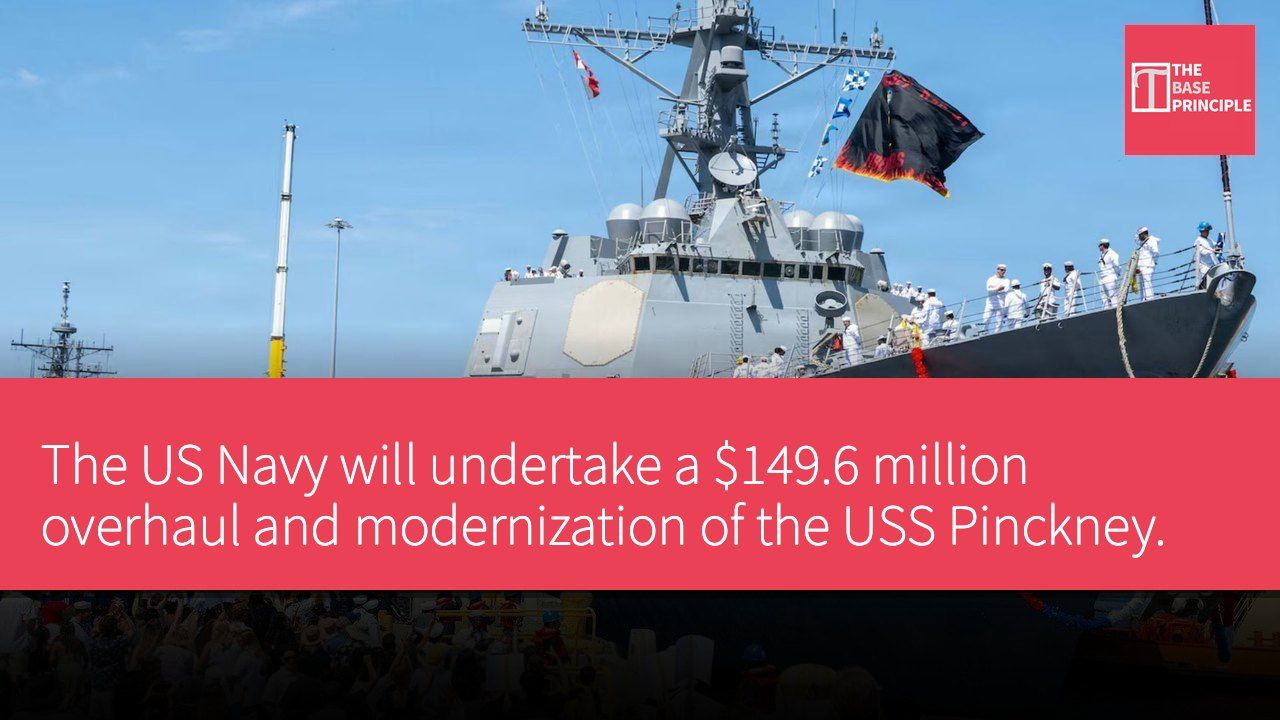
- The US Navy is conducting a $149.6 million overhaul and modernization of the USS Pinckney.
- The contract includes labor, equipment, and quality assurance, with a potential increase to $149.9 million.
- The USS Pinckney is an IIA variant of the Arleigh Burke-class missile destroyer, commissioned in 2004.
- The Navy's modernization plan aims to address issues from earlier cruiser upgrades.
The US Navy has awarded General Dynamics NASSCO a $149.6 million contract to overhaul the USS Pinckney, initiating another major maintenance period for the destroyer, which plays a key role in the Navy's broader modernization plans, particularly for the IIA variant of the Arleigh Burke-class ships. The Navy awarded the contract last week, covering a scheduled Chief of Naval Operations Availability at NASSCO's shipyard in San Diego. The availability will involve repairs, testing, equipment work, and modernization activities, expected to last until September 2028.
The firm-fixed-price incentive contract includes the required labor, equipment, facilities, testing, and quality assurance. Contract options could raise its total value to $149.9 million. The Navy will provide 91% of the initial funding through fiscal year 2026 other procurement funds, totaling $135.8 million. Additional funding comes from the operations and maintenance account and weapons procurement funds. If not obligated, approximately $12.9 million in funding may expire at the end of the fiscal year. The contract was awarded non-competitively under federal terms because only one contractor could meet the government's requirements, with the Naval Sea Systems Command overseeing the contract.
Background on the USS Pinckney
The USS Pinckney (DDG 91) is an IIA variant of the Arleigh Burke-class missile destroyer, built by Ingalls Shipbuilding and commissioned in 2004. The San Diego-based warship is part of Destroyer Squadron 23. The ship is named after William Pinckney, a Navy Cross recipient who saved a comrade during the World War II Battle of Santa Cruz. Pinckney previously served as a pioneer for the Navy's DDG Modernization 2.0 program, which targets about 20 IIA destroyers with an estimated total cost of $17 billion.
Challenges of the Modernization Plan
Pinckney was the lead ship for the initial modernization phase of the program. The work included Northrop Grumman's AN/SLQ-32(V)7 SEWIP Block 3 electronic warfare system, designed to enhance the destroyer's ability to detect and counter anti-ship missile threats. NASSCO completed this modernization work over approximately two years, ending in November 2023. The Navy's modernization approach uses a second phase following the SEWIP upgrade, which will add Raytheon's SPY-6(V)4 radar and updated combat system software.
Two other IIA destroyers, the USS Chung-Hoon and the USS James E. Williams, have completed modernization ahead of schedule, while the USS Halsey is still undergoing modernization.
The Navy designed the DDG Modernization 2.0 program to address issues encountered in the earlier modernization of the Ticonderoga-class cruisers. The program spent nearly $4 billion to upgrade seven cruisers but failed to extend their service lives as originally intended. The Navy has not disclosed whether the $149.6 million maintenance period for Pinckney will include the second phase SPY-6 radar installation. It is also unclear whether the work will focus on maintenance and repairs rather than the broader modernization sequence. The overhaul is expected to keep the destroyer at NASSCO's San Diego facility until September 2028.
The Importance of USS Pinckney's Modernization
The overhaul and modernization maintenance of the USS Pinckney is not only a necessary update for the ship but also a crucial component of the US Navy's modernization plans. As the global security environment evolves, the Navy needs to ensure its ships are equipped with the latest technology and combat capabilities to address potential threats. The ship's modernization work includes advanced electronic warfare systems and radar technology, demonstrating the Navy's emphasis on enhancing missile defense capabilities. Additionally, this maintenance work reflects the Navy's long-term planning for ship maintenance and upgrades, aimed at improving overall combat efficiency.