
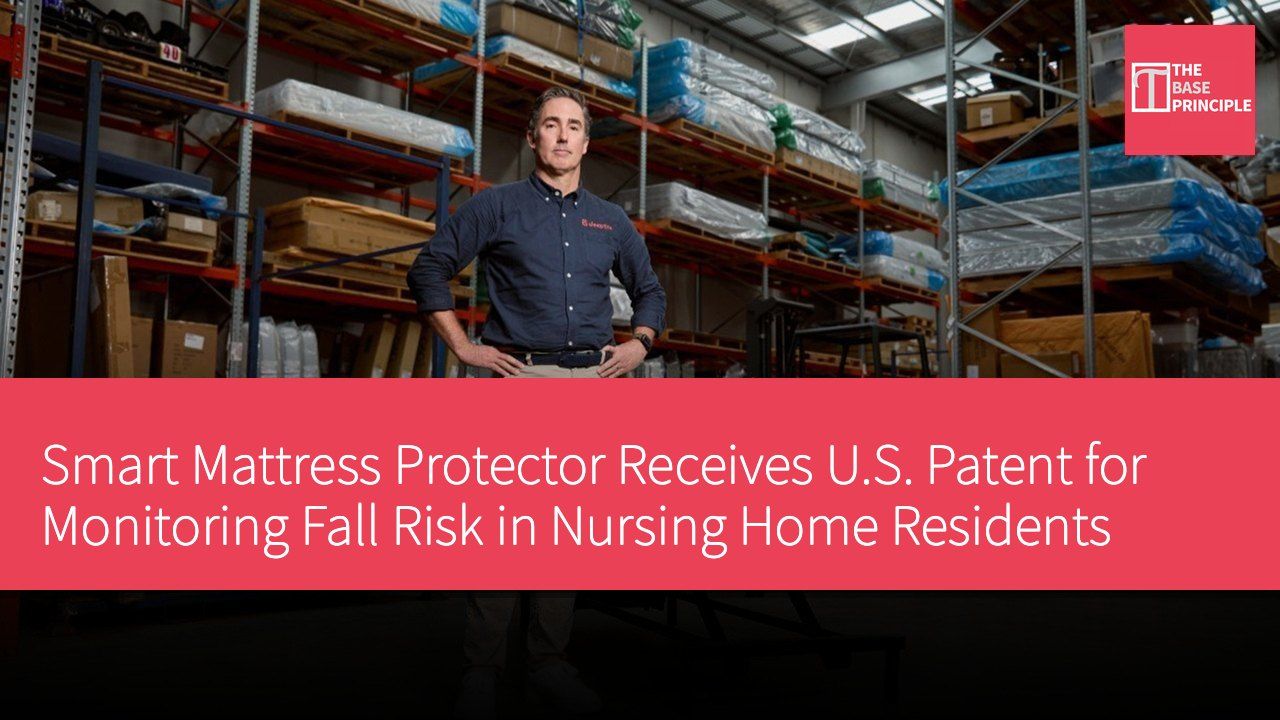
- The FlexiSense technology can detect the risk of nursing home residents falling out of bed and has received a U.S. patent.
- The system provides additional monitoring for caregivers without the need for cameras.
- The sensors are made from silver and carbon ink, effectively detecting changes in applied force.
- Sleeptite plans to apply the technology to its REMi in-bed monitoring system and has received design awards.
A smart mattress protector capable of detecting the risk of nursing home residents falling out of bed has recently received a U.S. patent, as reported by RMIT University. This technology, named FlexiSense, was developed in collaboration between medical technology company Sleeptite and RMIT researchers over nearly a decade. The device measures bed position and posture through flexible electronic components embedded in the mattress protector, helping caregivers intervene in a timely manner before residents fall. Currently, the pressure ulcer risk detection feature is still under development.
Sleeptite founder and CEO Cameron van den Dungen stated that caregivers cannot be in every room every minute. This system provides them with "extra eyes" without the need to place cameras in the room. Unlike photographic systems or wearable devices, the system is embedded in bedding, ensuring that residents' daily routines are not disrupted.
Sensor Technology and Applications
The sensor is printed with silver and carbon ink on a flexible polyurethane film and can detect changes in applied force through its piezoresistive properties, meaning its resistance changes with pressure. RMIT distinguished professor Madhu Bhaskaran, who is responsible for the design, stated that these sensors can be applied to various types of mattresses, making them easier and cheaper to implement. A wireless module can transmit data to the cloud for continuous monitoring and recording.
Rigorous testing under a roller machine has shown that these soon-to-be-produced sensors are durable, sensitive, and robust, accurately detecting body movements while consuming very little power, according to Bhaskaran. In a field trial at a nursing home, six residents were monitored over more than 250 nights, accumulating over 6,100 hours of bed data. According to a peer-reviewed study published in the journal Flexible and Printed Electronics, these sensors can be manufactured using scalable production techniques while maintaining their performance and durability.
The results of whether this technology effectively reduces falls have yet to be reported.
Patent and Production Plans
The patent covers the design and manufacturing method of the FlexiSense sensor, following a provisional application submitted in Australia in 2020, and is the first patent granted in ten jurisdictions worldwide. Van den Dungen stated that this manufacturing coverage allows the company to establish its first production line in Melbourne and then replicate small-scale production in markets close to customers, such as the United States. Sleeptite showcased the technology at a medical technology conference in Boston and participated in an Australian trade delegation led by AUScelerate.
The company plans to apply this technology to its REMi in-bed monitoring system, which has received two Australian Good Design Awards for 2024. The project began about eight years ago as a government-funded cooperative research center initiative that brought together experts in sensing, data analysis, healthcare, and bedding manufacturing. Sleepeezee Bedding Australia is the manufacturing partner for this project, which has also received awards for industry collaboration and health technology innovation.
Impact of Smart Monitoring Technology on the Care Industry
As the population ages, the risk of falls among nursing home residents has become a significant issue. The development of FlexiSense technology offers a monitoring method that does not disrupt residents' daily lives, providing early warnings of potential fall risks without increasing the burden on caregivers. The patent acquisition and production plans for this technology demonstrate the market's demand for innovative medical technology and may drive the global adoption of related products. Through continuous data monitoring, care facilities can manage residents' safety more effectively, enhancing overall care quality.