
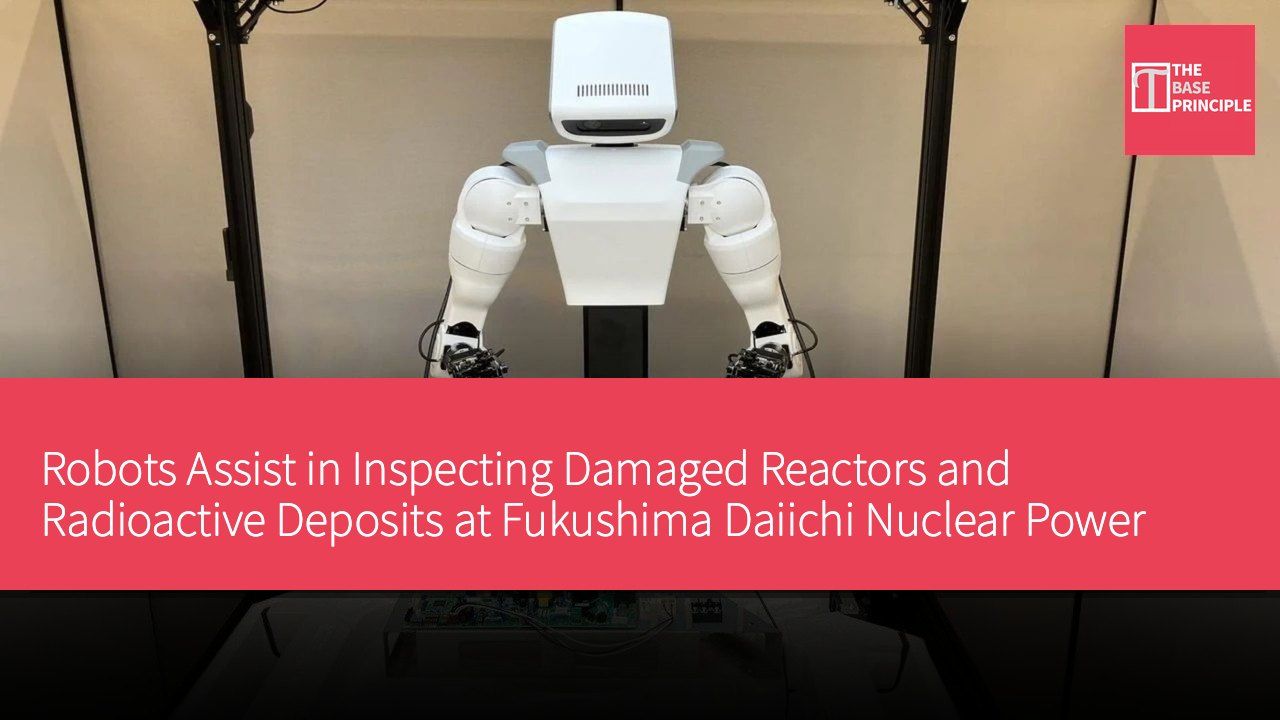
- Robots assist in the cleanup at the Fukushima nuclear plant, reducing human workload.
- The PMORPH system developed by Hitachi can operate in high-radiation areas.
- Underwater remote-operated vehicles can create 3D maps of deposits and measure radiation levels.
- The HUMALT flexible robotic arm is designed to tackle challenges in high-radiation environments.
Robots are assisting engineers in managing the complex cleanup operations at the Fukushima Daiichi Nuclear Power Plant in Japan, alleviating human workload by inspecting damaged reactors and investigating radioactive deposits. Hitachi has developed specialized robotic systems capable of operating in confined spaces, underwater environments, and high-radiation areas, thereby reducing the need for workers to enter hazardous locations. One of these systems, PMORPH, is a deformable crawler designed to inspect the primary containment structure of the reactor and assess its internal condition. Another system, HUMALT, employs a flexible robotic arm to operate in high-radiation environments and has potential applications in recovering nuclear fuel debris.
According to recent reports, since 2011, over 53,000 workers involved in the Fukushima cleanup have exceeded an annual radiation exposure of 5 millisieverts, with 17 cases of occupational disease confirmed. The PMORPH system can pass through a pipe with a diameter of about 10 centimeters in a Type I configuration and then deform into a U shape inside the containment structure. The first PMORPH unit entered the Unit 1 containment structure in April 2015, using cameras, thermometers, and radiation dosimeters to inspect the condition outside the reactor's base. The second version was deployed in March 2017, utilizing a sensor unit lowered by a winch to investigate underwater deposits and measure radiation levels on the basement floor.
Introduction to Hitachi's Robotic Systems
To examine these deposits more closely, Hitachi has developed six types of underwater remote-operated vehicles (ROVs) that can create 3D maps of the sediment surface, measure sediment thickness and radiation levels, prevent cable entanglement, and collect physical samples.
During investigations from February 2022 to March 2023, these vehicles collected information necessary for developing methods to recover sediment from inside the Unit 1 containment structure. Hitachi has also developed a telescopic camera (TASC) to access curved pipes and assist in the removal of contaminated water. Inside the heat exchanger of Unit 1, highly contaminated water has raised the surrounding radiation levels. TASC propels itself using short bristles covered on a hose, driven by vibrations generated by a motor, while wheels at the front control its direction, and the internal hose is responsible for drainage. The telescopic camera allows operators to monitor the condition at the front of the device as it moves through the pipes.
Features of the HUMALT System
The HUMALT system is another flexible robotic arm designed for high-radiation environments, with potential capabilities for fuel debris recovery operations. This system does not place radiation-sensitive electronic components within its body but instead uses multiple cylindrical hydraulic actuators to move its arms. Its joints combine bending and rotational movements, enabling controlled operations while minimizing the risk of damage from contact with surrounding structures. The system uses water as hydraulic fluid, which reduces environmental impact in the event of a pipeline failure. Operators remotely control the system via a hose connected to a pump unit and control panel.
The predecessor of this system was deployed in 2019 in the turbine building of Unit 3 at the Fukushima Daiichi Nuclear Power Plant to clear obstacles. Radiation remains a significant challenge for these machines. Hitachi employs radiation-resistant sensors, shielding materials, and designs that separate sensitive electronic components from the machine body. When components approach their accumulated radiation dose limits, replacement may be necessary. The company is developing automation technologies for lower-radiation areas to perform repetitive tasks such as debris removal. For more complex tasks, operators still rely on remote control. Hitachi is also developing systems that use external stereoscopic cameras to estimate the three-dimensional positions of robots, their surrounding environments, and their joint arms when sensors cannot be directly mounted on the machines.
Hitachi plans to integrate these robotic platforms with artificial intelligence, sensor data, worker expertise, and digital twin technology. The goal is to enable robots to autonomously assess their surroundings and execute designated tasks while personnel supervise operations and make decisions when necessary. By combining specialized hardware with remote operation and AI-assisted control, these systems are expected to enhance worker safety and assist engineers in managing the complex, long-term process of nuclear decommissioning.
Prospects for Robotic Technology in Nuclear Cleanup
The cleanup operations at the Fukushima Daiichi Nuclear Power Plant face challenges from high radiation and complex environments, where Hitachi's robotic systems play a crucial role. These systems not only reduce workers' radiation exposure but also perform precise operations in hazardous environments, improving work efficiency. As technology advances, particularly with the integration of artificial intelligence and digital twin technology, future robots will be able to execute tasks more autonomously, further enhancing worker safety and the long-term management of nuclear decommissioning.