
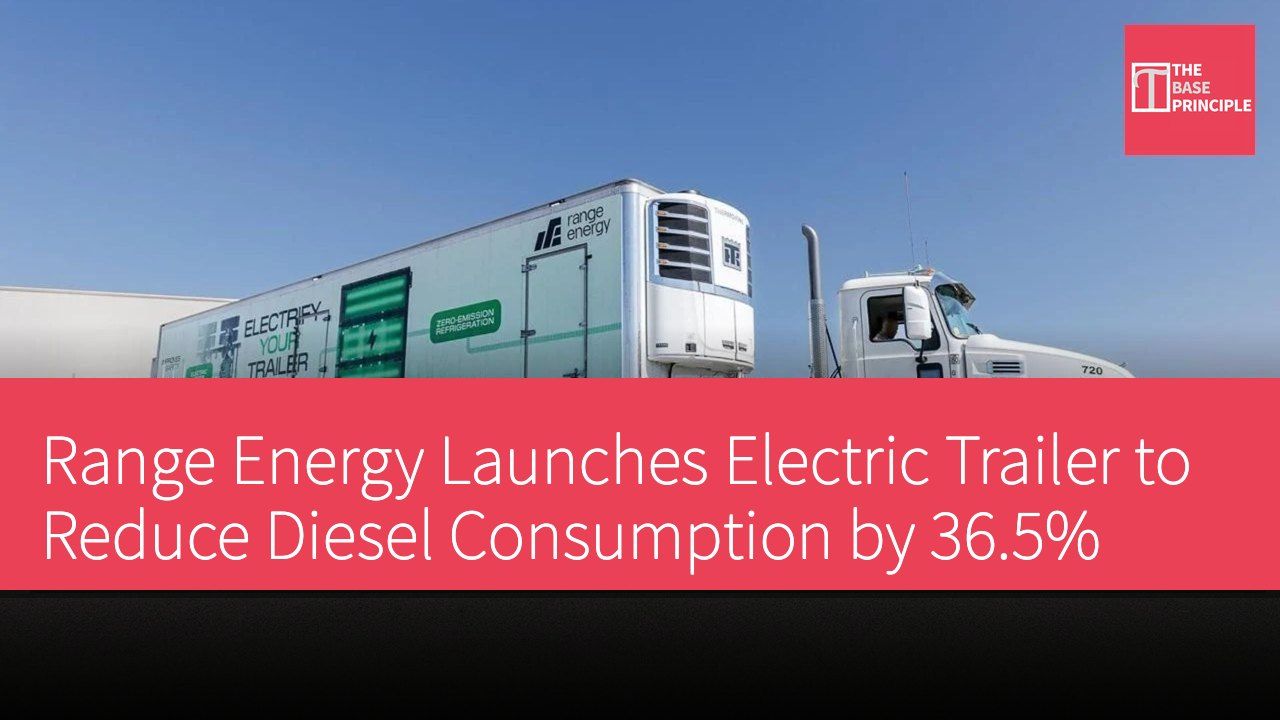
- Range Energy's electric trailer can reduce fuel consumption by 36.5%.
- eTrailer outperformed Tesla Semi in financial outcomes in 61% of simulated scenarios.
- The system connects to existing tractors without modifications.
- Installation costs for eTrailer are significantly lower than those for Tesla Semi's dedicated charger.
In 1,000 simulated scenarios, eTrailer provided better financial outcomes than the Tesla Semi equipped with a dedicated charger in 61% of cases. These results stem from Range's modeling, with production deliveries expected to begin by the end of 2027. Range's electric trailer solution adds an electric power system to an 8-class semi-trailer, allowing fleets to retain their existing tractors without the need to purchase electric alternatives. According to the company, eTrailer can connect to any tractor without any modifications or special driver training.
Financial Benefits of eTrailer
Once its battery is depleted, the truck can continue to operate using diesel. For refrigerated fleets, the system addresses two sources of diesel consumption, commonly referred to as refrigeration trucks. The reported 36.5% reduction in tractor fuel consumption particularly applies to assisted driving mileage. This translates to approximately 57% better fuel economy during those miles while the refrigeration truck operates on electricity. Range's CEO Kyle Foley stated, "Fleets need to see maximum fuel savings for every dollar invested, and the equipment must fit their existing operational model, while current diesel alternatives are mostly framed as a choice between staying put and purchasing new electric trucks." Range's engineering team employed Monte Carlo analysis, a method that tests various combinations of uncertain inputs rather than relying on a single forecast. Its 1,000 scenarios varied diesel and electricity prices, charger installation costs, insurance, resale values, and eTrailer fuel savings based on pilot data.
Installation Cost Comparison
The baseline scenario assumes a diesel price of US$5.07 per gallon (approximately HK$40), without considering purchase incentives for either option. Under these assumptions, both eTrailer and a Tesla Semi equipped with a dedicated charger achieve payback within six years. Over the seven-year period, the analysis estimates that eTrailer avoids 387 gallons of diesel consumption for every US$1,000 (approximately HK$7,800) invested, while the Semi configuration avoids 358 gallons. eTrailer uses standard 480-volt dock circuits. Range estimates the typical installation cost to be around US$5,200 (approximately HK$40,560), taking about a month, which is significantly more economical compared to the average installation cost of US$51,500 (approximately HK$401,700) for Tesla Semi's dedicated charger.
The study also simulated that existing dock power could support about eight eTrailers, while individual chargers could only support about three Semis, requiring additional utility services thereafter. Range indicated that the trailer can also work with electric tractors, extending the driving range by at least 100 miles without relying on the truck's battery, while providing power for refrigeration. For fleets considering the system, the white paper offers cost calculations and pilot-based savings data to prepare for planned production deliveries in 2027.
Market Potential of Electric Trailer Technology
Range Energy's electric trailer technology offers an innovative solution for traditional diesel trucks, capable of reducing fuel consumption while retaining existing fleets. This not only helps fleets lower operational costs but also reduces environmental impact. As global demand for sustainable transportation solutions increases, the market potential for this technology becomes particularly significant. The design of eTrailer facilitates a smoother transition, allowing fleets to gradually shift towards electrification without the need for large-scale investments, which is positively significant for the long-term development of the industry.