- Kairos Power completes first phase of Hermes 2 reactor mockup testing.
- Tests focused on modular radiation shielding and remote maintenance systems.
- ETU 3 will serve as a platform for designing and maintaining future reactors.
- The facility will also be used as a training environment for future operators.
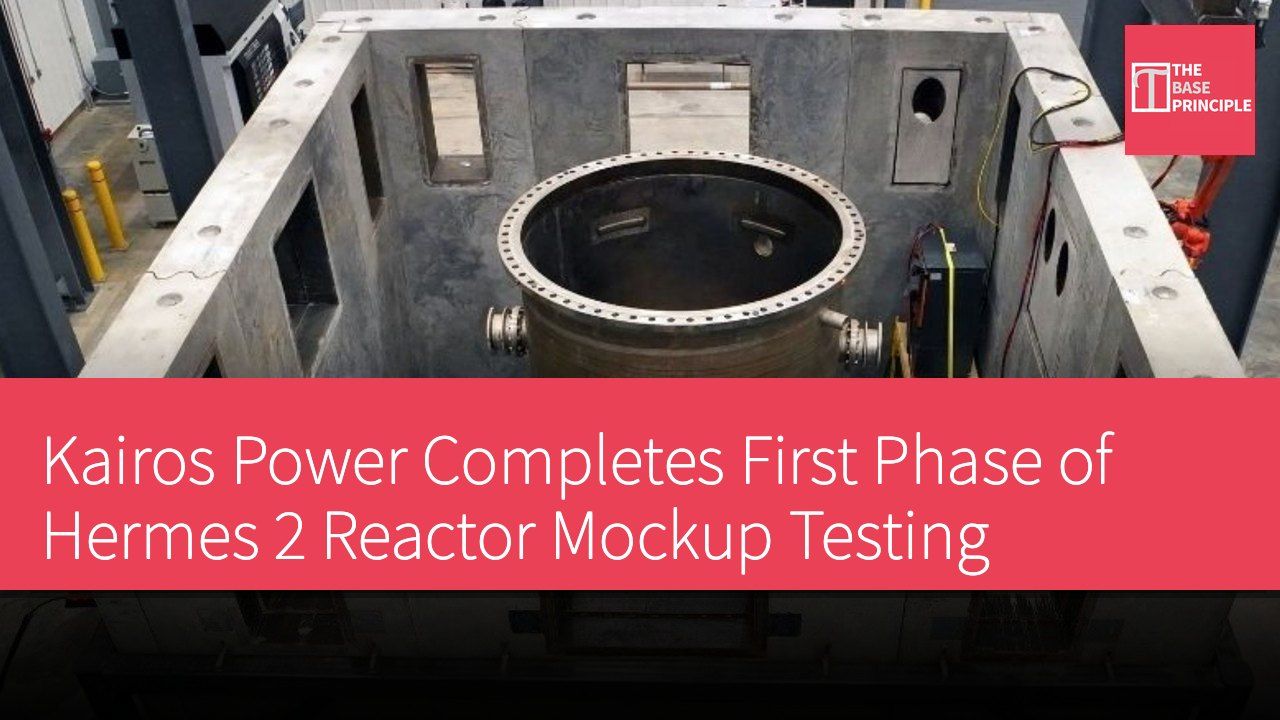
Kairos Power has completed the first phase of testing for the non-nuclear reactor cavity mockup at its Hermes 2 demonstration facility in Tennessee. The tests focused on modular radiation shielding and remote maintenance systems, which could eventually be standardized in its commercial reactors. The testing took place at the Oak Ridge Engineering Test Unit 3 (ETU 3) in Tennessee, as part of Kairos Power's iterative development program for its Fluoride Salt-Cooled High-Temperature Reactor (KP-FHR). ETU 3 provides a benign environment for the company to test how equipment and structures around the reactor are built, operated, and maintained.
In the first phase, Kairos constructed a scaled-down model of the Hermes 2 reactor cavity. This model consisted of a reactor vessel and a surrounding design of prefabricated concrete shielding structures supported by a steel frame. The company installed 12 modular wall elements using four different designs, including stepped and sinusoidal wave joint geometries, to prevent radiation from leaking through the seams between panels. The modular approach is crucial because the reactor cavity cannot be viewed simply as a solid concrete box; pipes and other process lines need to pass through the reactor and other parts of the plant, creating openings that need to be adequately protected within the shielding.
The Importance of Modular Design
Kairos used the ETU 3 model to test various shielding plug designs for these openings. The company also tested systems for remotely connecting and disconnecting process lines to reduce the need for workers to enter potentially radioactive areas during future reactor operations.
The concrete shielding panels themselves incorporated another manufacturing experiment. Kairos collaborated with the Manufacturing Demonstration Facility at Oak Ridge National Laboratory to develop and produce 3D-printed polymer composite molds for fabricating the prefabricated panels. These panels were manufactured by Tindall Corporation in South Carolina and installed at ETU 3 by Barnard Construction. This approach is part of Kairos's broader effort to develop construction and manufacturing methods that can be reused in future reactor projects.
The company does not want to wait until the entire nuclear power plant is built to discover construction issues but instead aims to identify and resolve problems early through continuous engineering test units.
Maintenance Methods for Future Reactors
Kairos's co-founder and Chief Technology Officer, Ed Blandford, stated that the latest demonstration will help the company develop sustainable maintenance methods for its future reactor fleet. The tests for shielding interfaces and remote operation tools are aimed at helping establish design features that can eventually be standardized in commercial KP-FHR plants.
ETU 3 is the third major engineering test unit in Kairos's development program. The first, ETU 1.0, was a full-scale, electrically heated prototype reactor that completed over 2,000 hours of pumping molten salt operation. This allowed Kairos to test major reactor systems, develop its supply chain, and establish the production of high-purity Fluoride Lithium Beryllium (FLiBe) salt coolant. The subsequent ETU 2.0 was a non-power unit focused on modular construction methods. ETU 3 will then advance the program into civil construction, reactor maintenance, and remote operations, while also providing a training platform for future operators.
This approach aims to reduce uncertainty and pave the way for Kairos to deploy its commercial-scale technology.
This process has already begun. Kairos broke ground on the Hermes 2 demonstration facility at Oak Ridge in April 2026, with plans for it to become the company's first commercial-scale KP-FHR deployment. It will be based on the lessons learned from the Hermes low-power demonstration reactor, which is also under construction at the site. Hermes 2 is designed to generate electricity for the Tennessee Valley Authority grid. The ETU 3 demonstration will further advance the iterative design of the Hermes 2 reactor cavity.
In addition to testing hardware, the facility is also expected to serve as a training environment for future operators, providing Kairos with another opportunity to understand the maintenance procedures that must be performed in an operating nuclear power plant.
The Impact of Modular Design on Nuclear Development
Kairos Power's Hermes 2 reactor mockup testing demonstrates the importance of modular design in nuclear technology. By testing different shielding plug designs and remote maintenance systems, Kairos aims to reduce radiation risks during operations and enhance safety and efficiency. This continuous process of testing and improvement not only helps identify construction issues early but also provides sustainable maintenance methods for future commercial reactors. As the demand for nuclear energy increases, these innovations will have a profound impact on the industry, promoting safer and more reliable nuclear energy development.