
Key points
- An eastern Canadian community will build the world's first transportable nuclear power plant.
- The plant is expected to supply clean electricity to the local grid in the early 2030s.
- Designed capacity of up to 50 megawatts, will use BWXT's advanced nuclear reactor units.
- Success could open commercial opportunities in the Canadian Arctic and international markets.
Design and operation of the transportable nuclear power plant
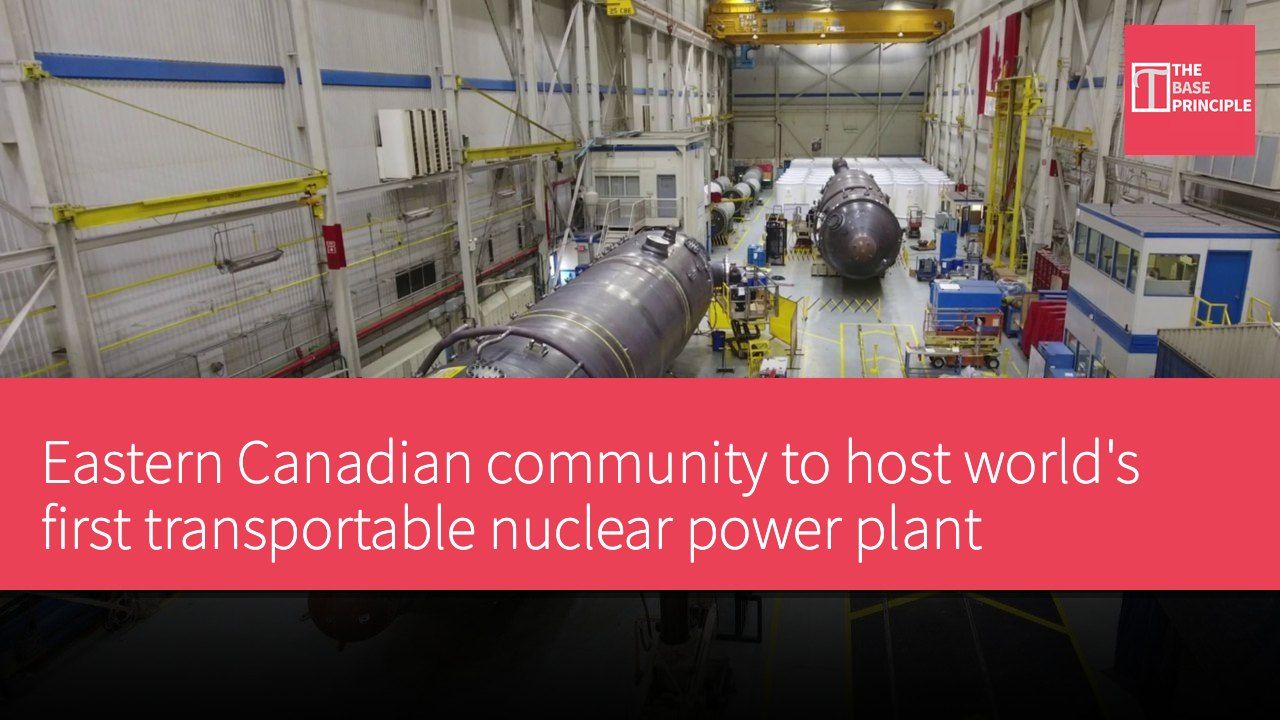
If approved, the facility is expected to supply clean electricity to the local grid in the early 2030s. Remote northern towns and heavy-industrial regions have long relied on diesel generators for heat and power, and shipping fossil fuels to isolated areas is costly and emissions-intensive. Prodigy aims to replace that model with a Transportable Nuclear Power Plant (TNPP). Engineers build the reactor in a factory rather than spending years pouring concrete at a remote site. The fully assembled modular plant will be transported directly to its destination. Once delivered, on-site installation and fuel commissioning take about 18 months, a fraction of the typical nuclear construction timeline. To meet real-world needs, the Belledune facility is designed for a capacity of up to 50 megawatts of electricity. It will rely on two BWXT advanced nuclear reactor units, known as BANR. BWXT Commercial Operations President John MacQuarrie said: "The BWXT team is designing BANR to meet a variety of real-world heat and power needs that currently cannot be met without relying on carbon-emitting sources and complex fuel logistics. By partnering with Prodigy and integrating BANR with Prodigy's transportable platform design, we are truly expanding BWXT's horizon for future customers while strengthening Canada's role in innovative, deployable advanced nuclear solutions." Each BANR unit is a high-temperature gas-cooled reactor capable of producing 22 megawatts of electricity and 75 megawatts of thermal energy. The system uses high-assay low-enriched uranium packaged into ceramic TRISO fuel particles. These tiny fuel kernels retain radioactive material even at extreme temperatures. The design relies on passive safety systems, using natural convection and radiative heat transfer instead of powered mechanical pumps to remove heat during a power outage.Impact on Canada's nuclear market
The New Brunswick government has signed a letter of intent to purchase power from the plant. Prodigy and BWXT view Belledune as a demonstration pilot; success in New Brunswick could open commercial doors in the Canadian Arctic and international markets. Prodigy Clean Energy CEO Mathias Trojer summarized: "BWXT's BANR is a best-in-class advanced nuclear technology." He noted that the pilot provides a practical pathway toward deploying the G7's first commercial fleet of transportable reactors. Manufacturing will lean heavily on Ontario's nuclear supply chain. BWXT Canada and its subsidiary Kinectrics plan to leverage teams trained during recent commercial reactor refurbishments to build reactor components. Ontario Energy Minister Stephen Lecce welcomed the partnership, saying investment in modular reactors will support domestic jobs and cement Canada's standing in advanced nuclear engineering. The two companies are now drafting a final agreement covering licensing, supply chain, and private capital. Future variants of the platform could serve civilian industry, mining projects, and defense installations. For BWXT, the Canadian deal caps an active month. In September, the U.S. National Nuclear Security Administration selected the company to design a modular lithium production facility at the Y-12 National Security Complex in Tennessee. That facility produces critical components needed to maintain the U.S. nuclear weapons stockpile.Potential impact of transportable nuclear power plants
The construction of a transportable nuclear power plant marks a major advance in nuclear technology, particularly for applications in remote areas. The design enables rapid deployment and significantly reduces reliance on fossil fuels, cutting emissions. As energy demand grows, especially in northern towns and heavy-industrial regions, such solutions are increasingly critical. Moreover, if the pilot succeeds, it will bolster Canada's competitiveness in the global nuclear market and could encourage other countries to adopt similar technology, advancing sustainable development.H
About the author
Henderson