
- The new radar is embedded within the aircraft's wings, expanding surveillance range.
- This design helps address the core challenges of airborne early warning.
- Multiple aircraft can operate as a distributed radar network, enhancing efficiency.
- Smaller drones may offer greater flexibility and detection performance.
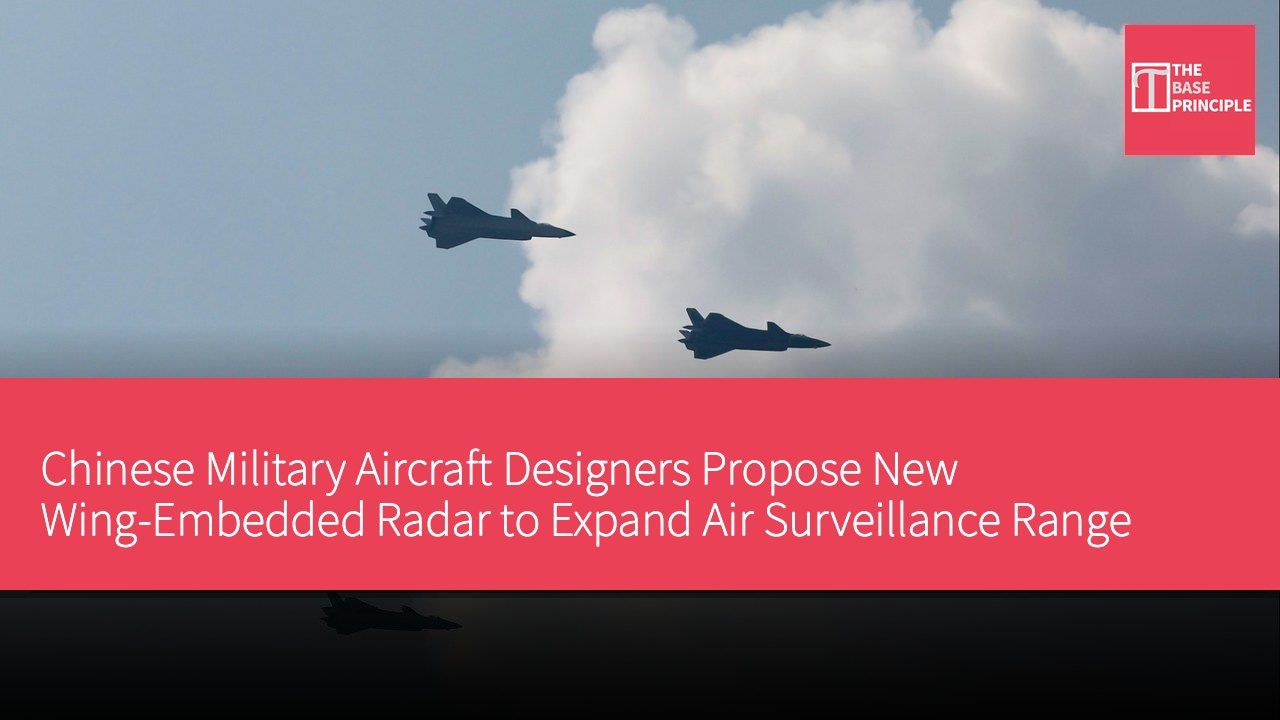
Chinese military aircraft designers have proposed a new type of airborne early warning radar that will be embedded within the wings of the aircraft, rather than using traditional nose-mounted radar domes or large radar domes positioned above the fuselage. This concept utilizes changes in flight posture and coordination among multiple drones to expand surveillance range, potentially enabling smaller devices to possess certain capabilities traditionally associated with dedicated airborne early warning aircraft. The design was published in the peer-reviewed journal "Measurement and Control Technology," with authors including Ren Yunsong and researchers associated with the Chengdu Aircraft Design Institute of the Aviation Industry Corporation of China, which developed China's J-20 stealth fighter and designed the two-seat J-20S variant intended for coordinated operations with drones.
Advantages of the New Radar Design
The radar array is embedded within the wings, whereas traditional fighters typically install their main radar in the nose, equipped with protective radar domes. Meanwhile, airborne early warning aircraft usually employ large radar arrays mounted above the fuselage to provide extensive surveillance coverage. Both methods have their limitations: the nose of a fighter restricts the size of the antenna, while large radar structures add weight, drag, and complexity. The Chinese team proposed embedding radar antennas, control components, and related equipment within the internal structure of the aircraft's wings. The radiation surface of the antenna will face downward, and the protective cover will be designed according to the external contour of the wing.
This configuration can provide a larger antenna aperture without the need for significant external radar domes, as reported by the South China Morning Post.
The main challenge is that while the wings provide a considerable surface area, their relatively thin cross-section limits the volume available for radar hardware. Therefore, the design aims to utilize the wing surface more effectively while relying on the aircraft's maneuverability to guide the radar coverage. In a proposed operational mode, drones would roll more than 45 degrees, tilting the antennas on the wings to one side of the aircraft. By changing the flight posture, the platform can redirect the radar beam to different areas without fully relying on mechanically rotating antennas.
Potential of Distributed Radar Networks
Multiple aircraft can operate as a distributed radar network, based on the concept of distributed air operations, which was explored by DARPA in 2014. Distributed operations no longer rely on a single expensive aircraft to provide wide-area surveillance but instead utilize multiple smaller platforms to share detection and tracking tasks. Researchers described four operational modes for wing-mounted radar, covering omnidirectional and multi-directional detection, wide-area surveillance, focused searches for specific targets, and coordinated operations designed to counter electronic interference. Multiple aircraft can share surveillance tasks or combine their efforts to improve coverage in specific areas.
This approach helps address the core challenge of airborne early warning, which is to provide extensive detection coverage without relying on a few large, expensive platforms.
Traditional airborne early warning aircraft have sufficient space to install large radar arrays and powerful onboard systems, but their size and cost may limit the number of units that can be deployed. Therefore, if sufficient detection performance can be achieved and reliable coordination is maintained, smaller drones may offer greater flexibility. This concept may ultimately be considered for future Chinese fighter aircraft, including the J-20 and the next-generation designs commonly referred to as J-36 and J-50. However, the paper did not specify these aircraft as concrete platforms for the technology, nor did it disclose development timelines or flight test results.
Impact of the New Radar Design on Air Surveillance
This new radar design not only effectively expands the air surveillance range but also reduces reliance on expensive large platforms. By embedding the radar within the wings, this design can respond more flexibly to different operational needs and, in scenarios involving multiple aircraft working together, can share surveillance tasks, enhancing overall operational efficiency. This could provide significant strategic advantages for future military applications, especially in the context of increasingly mature drone technology.