
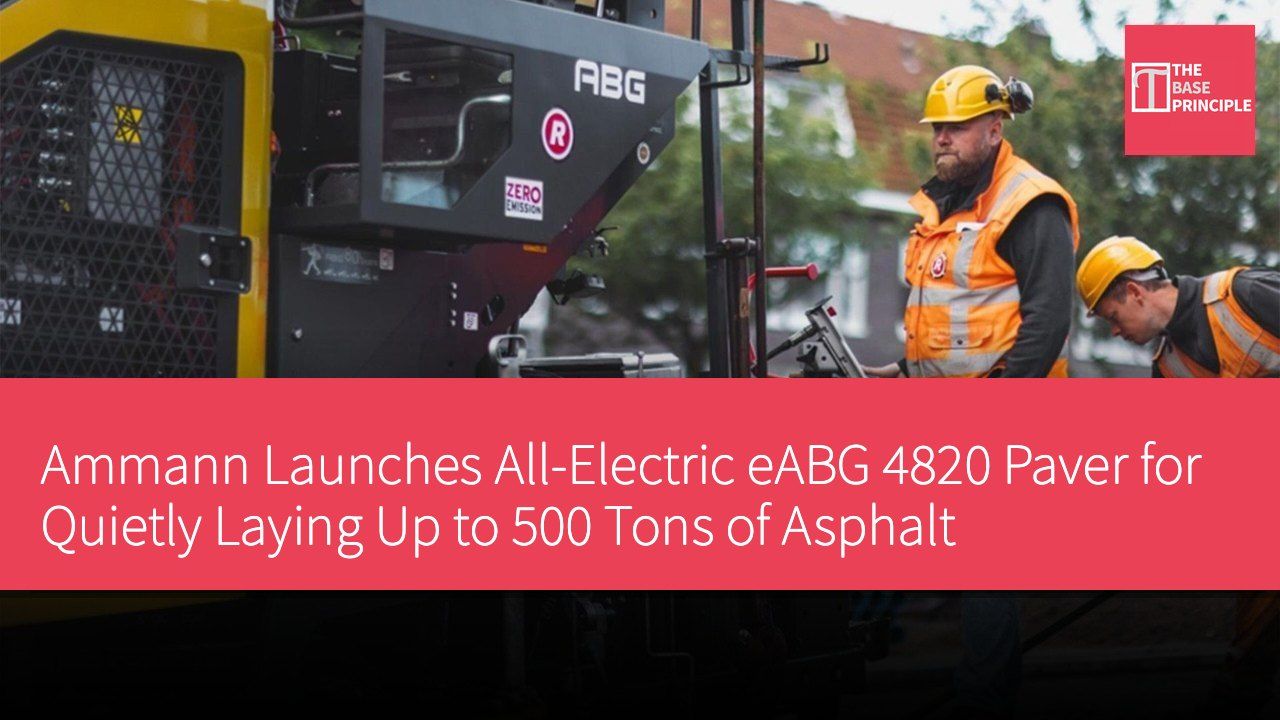
- Ammann's all-electric eABG 4820 asphalt paver operates in the Netherlands with zero exhaust emissions.
- The machine can lay up to 500 tons of asphalt per hour while reducing operational noise.
- The electric motor provides instant response for precise and stable paving control.
- This paver is suitable for urban road projects, especially applications near residential areas.
Ammann's all-electric eABG 4820 asphalt paver has been utilized in the construction of bike lanes in Groningen, Netherlands, according to Volvo Penta. The machine features a Volvo Penta electric drive system, capable of laying up to 551 US tons (500 tons) of asphalt per hour, while producing no exhaust emissions on site. Ammann designed this paver specifically for urban road projects and bike lanes close to residential and commercial areas. This battery-powered machine aims to achieve the surface quality of traditional asphalt pavers while reducing operational noise.
Albert Santing, an asphalt contractor with 28 years of industry experience, noted that the quieter operation has improved the working environment for the Groningen project. He stated, "We work 10 hours a day, and with this machine, we don’t go home with headaches from noise. You can hear everything around you."
Quiet Design Enhancing the Work Environment
The eABG 4820 paver can lay asphalt up to 21 feet (6.5 meters) wide. Ammann developed this machine to meet the demand for quieter equipment, allowing it to operate without producing direct exhaust emissions while maintaining the precision and stability required for uniform paving. The electric motor delivers torque instantly when the operator moves the control lever, enabling the machine to respond quickly without waiting for an internal combustion engine to accelerate. Santing described it as, "It doesn’t increase any RPMs, but when you move the lever, the machine responds."
“It’s like a giant sports car, just much slower.”
Advanced Battery and Control System
Ammann has installed three battery units with a total capacity of 270 kWh. These batteries utilize technology from the Volvo Group that has been applied in road vehicles. The integrated drive system from Volvo Penta also includes the electric motor, power electronics, and control system. This control system coordinates the energy supply to the hydraulic system driving the machine. Different machine functions require energy at different points during the paving process, so the system adjusts the power supply based on demand. Philipp Bramer, who is responsible for the development of Ammann's electric paver, stated, "This involves energy management and architecture."
The electric drive system not only powers the machine but also communicates seamlessly with the hydraulic system.” He added, “At the same time, the intelligent control system ensures that the correct energy is provided to the machine."
Bramer also mentioned that coordination is part of how the machine combines the electric motor's instant response with the controlled movements required for paving asphalt. Removing the internal combustion engine can reduce some engine-related maintenance tasks. The electric drive system has fewer moving parts, which may also simplify certain maintenance procedures. Volvo Penta stated that actual maintenance needs and costs will depend on the machine's usage. The bike lane in Groningen has been completed, serving as an example of the machine's application in urban projects. Bicycles account for over half of daily travel in the city.
Volvo Penta also noted that road projects near residential and commercial areas are potential application areas for this quiet paver.
Impact of Electric Pavers on Urban Construction
Ammann's eABG 4820 electric paver represents the future trend of construction equipment, particularly in urban environments. As urbanization accelerates, the demand for reducing noise and exhaust emissions is increasing. This paver not only provides efficient construction performance but also improves the working environment at construction sites, minimizing the impact on surrounding residents. The high efficiency of the electric drive system and intelligent control technology can simplify maintenance processes, further enhancing its competitiveness in the market.