
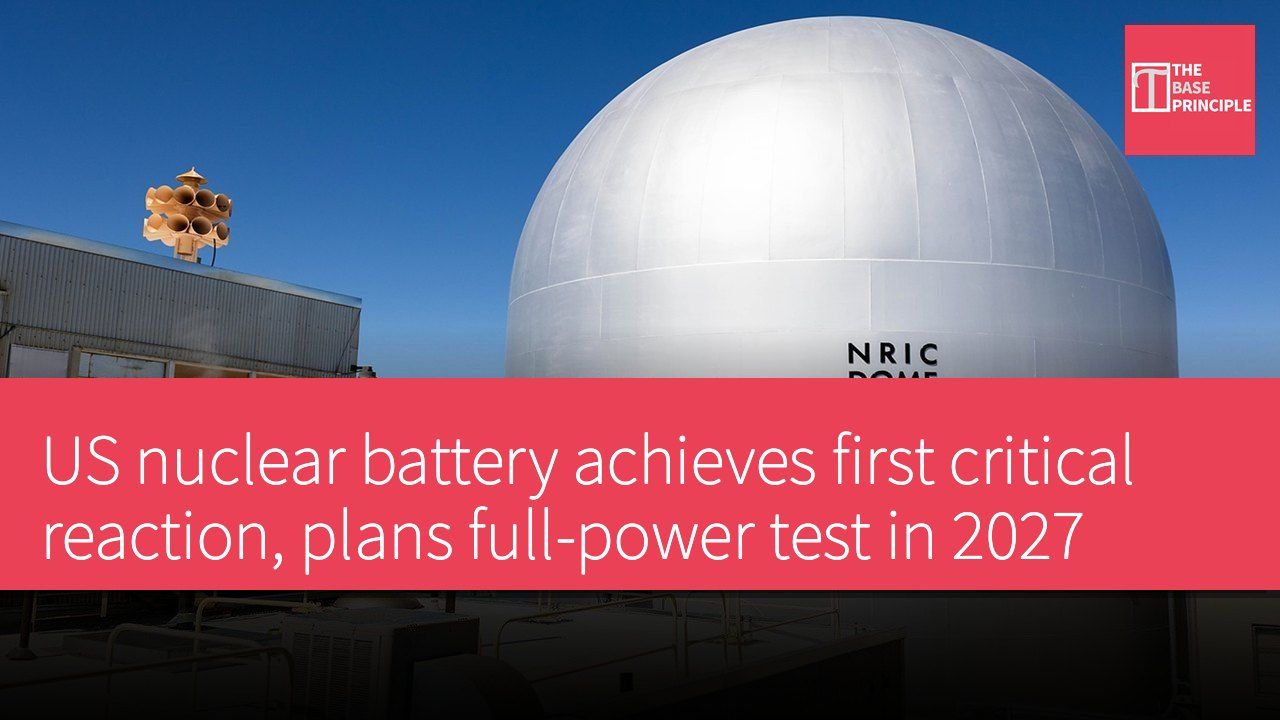
- US nuclear battery achieves first controlled chain reaction, full-power test planned for 2027.
- Unity nuclear battery aims to provide continuous power for industrial sites and remote areas.
- Test will verify reactor's transport, installation and operational capabilities, crucial for future nuclear energy systems.
- Project supports future licensing discussions but does not constitute commercial regulatory approval.
Purpose and significance of test plan
Reaching criticality confirms the reactor can sustain a chain reaction, but it does not mean the system can deliver its intended power output under operating conditions. The 2027 test plan aims to verify the next phase. Deployable Energy plans to fuel Unity at the factory, then transport the fueled reactor to INL, install it in DOME and operate it at full power. After testing, the company intends to move the reactor to another location within the laboratory and complete the nuclear fuel management process. These steps will test not only the reactor itself but also provide data on transport, installation, operation and redeployment — crucial for systems designed to avoid building traditional nuclear plants at every site. DOME is housed within the containment structure of INL's former Experimental Breeder Reactor II, and the facility can accommodate experimental reactors producing up to 20 megawatts thermal. That figure describes the test facility's capacity, not Unity's expected output. "Build the reactor, learn fast, and pivot to manufacturing: that's the model the advanced nuclear industry needs," said Bobby Gallagher, co-founder and CEO of Deployable Energy.Potential applications for modular system
Unlike large nuclear plants built at fixed sites, Unity is being developed as a modular system that can be manufactured and transported to locations needing reliable power. Potential applications include industrial facilities, maritime operations and remote areas where conventional power infrastructure may be unavailable or impractical. The demonstration will also test whether a fueled reactor can be moved and installed through a repeatable process, rather than requiring large-scale construction at each deployment site. Deployable Energy said the Nuclear Regulatory Commission (NRC), which regulates nuclear energy, has observed its early criticality testing and will continue observing these demonstrations. The planned tests will support future licensing discussions but do not themselves constitute commercial regulatory approval. The company will work with NRIC and INL over the coming months on engineering, fuel preparation, safety reviews and test planning. Deployable Energy also said it has been selected to participate in a separate DOE-authorized commercial nuclear maritime demonstration project. That project is independent of the 2027 DOME test plan. The full-power test remains a future milestone, and its results will help determine whether Unity's reactor design and proposed deployment process can support repeatable manufacturing and commercial use.
Item Specification Full-power test timing 2027 Thermal power output Up to 20 megawatts Time to achieve criticality About 150 days
Unity nuclear battery's innovation and challenges
The development of the Unity nuclear battery marks a significant advance in nuclear energy technology, particularly in modularity and mobility. This design enables manufacturing and transport to locations where power is needed, reducing the need for traditional nuclear plant construction. Future tests will not only evaluate reactor performance but also provide data on transport and installation, which is critical for advancing nuclear energy commercialization. With continued regulatory attention, whether the project successfully achieves commercialization will influence the future development of the nuclear industry.