
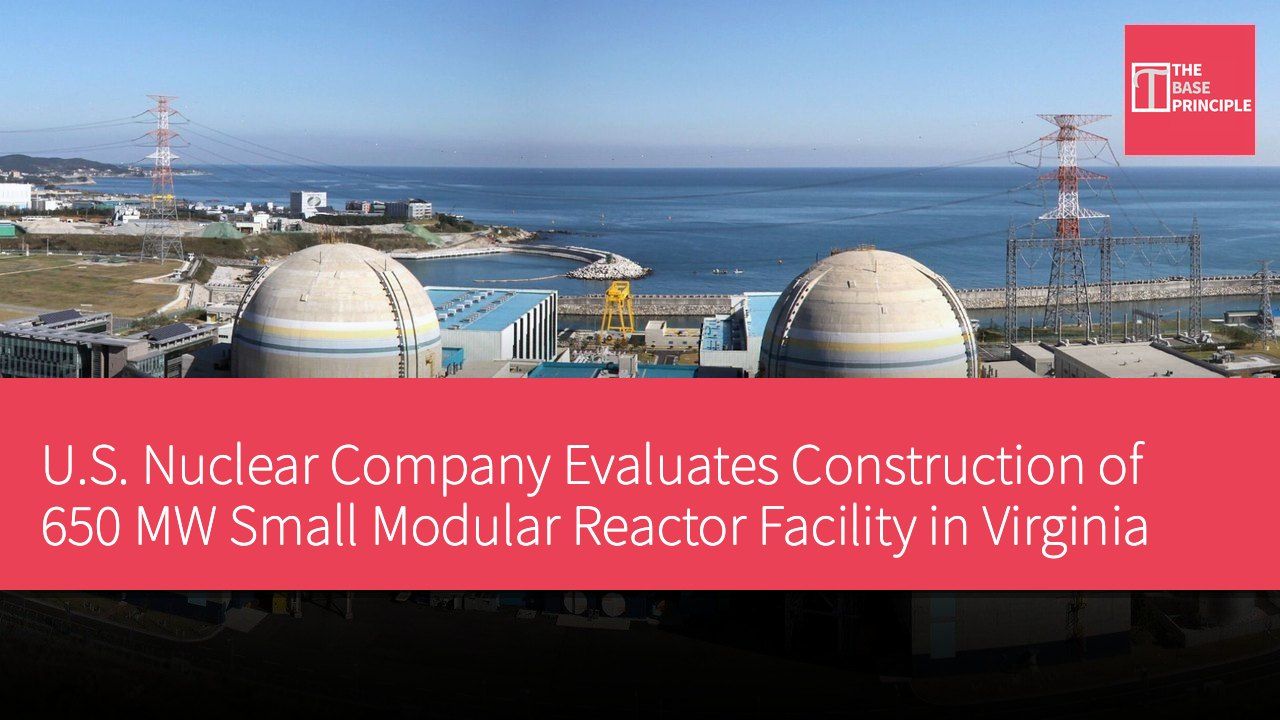
- The facility could provide up to 650 MW of power to the regional grid.
- Geenex is assessing the land's capacity for power generation, with an initial estimate of 650 MW.
- The project is still in the early evaluation phase, and specific reactor technology has not yet been determined.
- An economic impact analysis is underway, aimed at promoting local job creation.
A tract of farmland along the James River in Virginia is being assessed for the establishment of a small modular reactor facility that could provide up to 650 MW of power to the regional grid. The Beck Creek Energy Project proposed by Geenex Power will occupy a portion of the Traver family farm in Amherst County's District 1, near the Joshua Falls Appalachian Power substation. The developer estimates that the facility could create over 200 permanent local jobs.
The existing transmission infrastructure prompted the company to choose this location, providing potential connection to the PJM regional power market. The preliminary goal for construction and operation is set for the early 2030s, although the proposal is still in the early site evaluation phase.
Project Progress and Technology Selection
The power from the proposed facility will enter the PJM market, rather than solely supplying Amherst County or a specific customer. Geenex is assessing how much power generation the site can accommodate, with an initial estimated potential capacity of 650 MW, but further investigation may alter this figure. "What we currently see is that the land and region can support up to 650 MW of generation," said Delaney Bolton, project manager at Geenex Power. "This number may change based on our technology due diligence studies," she added.
Although the proposal identifies small modular reactors as its technology category, Geenex has not yet selected specific reactor technology or finalized the layout of the facility. Technical and environmental studies are ongoing to determine the project's design and potential impacts on the surrounding area, including the nearby James River. "We are still developing what the site might look like through preliminary and conceptual site designs, so I can't tell you what the final outcome will be," Bolton said. She noted that the company plans to comply with state and federal environmental requirements and will share research findings with residents as studies progress.
She also stated that advanced nuclear technologies incorporate improvements developed from decades of industry experience.
Local Community Impact and Collaboration
If the project moves forward, Geenex plans to collaborate with future technology partners to operate the plant and train local workers for positions in the nuclear industry. Additionally, an economic impact analysis is also underway. "We really want to keep local jobs and advance the entire community together during the construction of this plant," Bolton said. Amherst County Administrator Jeremy Bryant told 10 News that Geenex has not yet submitted an application to the county. The company hopes to begin discussions regarding land use and rezoning applications in early to mid-2027.
State and federal permits, including nuclear regulatory approvals, also present obstacles between the proposal and construction. The early 2030s timeline remains tentative as planning and regulatory requirements continue to evolve. Residents can submit questions and concerns during the evaluation period through the Beck Creek Energy Project website.
Potential Economic Impact of Nuclear Facility on Local Economy
The construction of the small modular reactor facility could not only provide a substantial power supply but also create numerous job opportunities locally. With advancements in nuclear technology, the project has the potential to be part of Virginia's energy transition. However, changes in planning and regulatory requirements may affect the pace of the project's advancement, particularly in obtaining necessary permits. Local residents' engagement and concerns also indicate the community's investment in the project, which could foster more transparent communication and collaboration.