
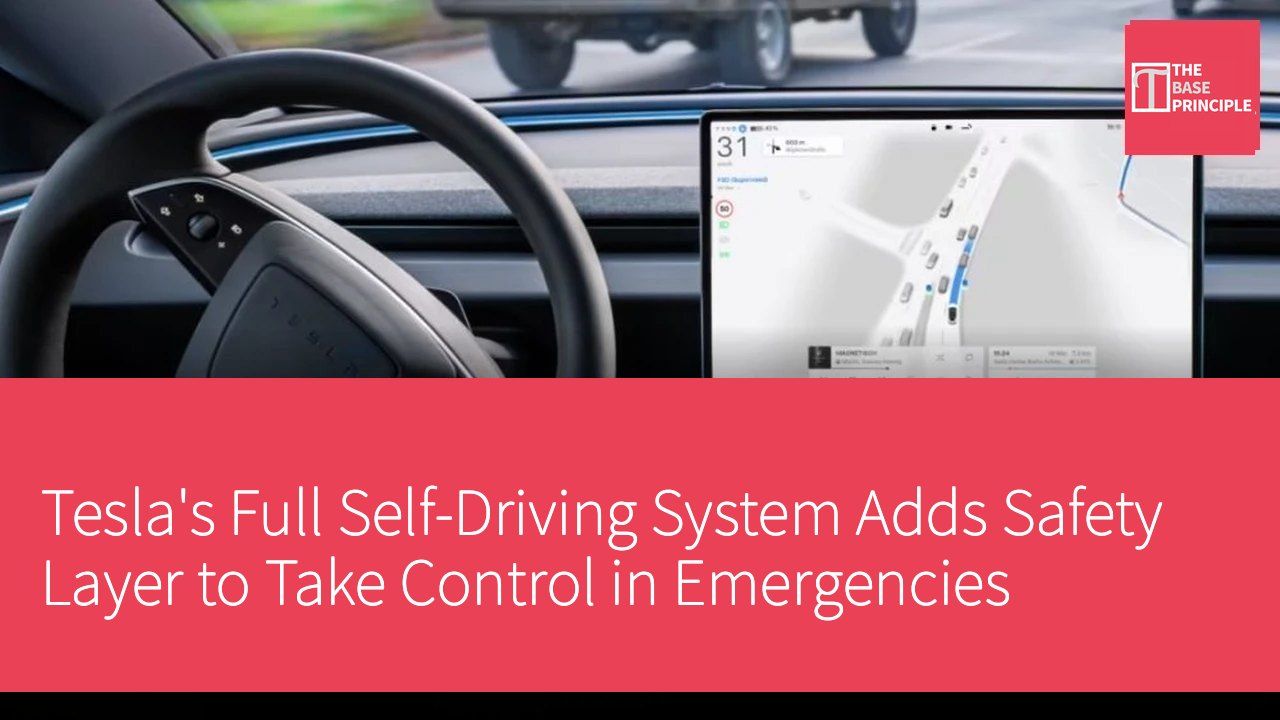
Tesla has recently begun rolling out **Full Self-Driving Supervised v14.3.9**, which adds an active safety layer capable of intervening even when the driver is manually operating the vehicle. According to Tesla AI, the software can initiate FSD on behalf of the driver when the system detects an imminent collision and the Automatic Emergency Braking (AEB) may be insufficient to avoid an accident. Additionally, the feature may intervene if the system detects that the driver is severely distracted or if FSD is accidentally turned off.
Details of the New Feature
The newly introduced feature is essentially an "automatic collision avoidance" technology. Unlike traditional AEB, which primarily brakes in a straight line, the new feature employs a combination of steering, braking, and acceleration as needed. If the car calculates that simply stopping won't prevent a collision and a safer path exists, the system may change lanes or move toward the shoulder before continuing once the immediate threat is resolved, rather than just coming to a halt. This intervention is seen as a last-resort safety net, not a replacement for the driver's attentive driving.
| Feature | Description |
|---|---|
| Automatic Collision Avoidance | When an impending collision is detected, the system uses steering, braking, and acceleration to avoid the accident. |
| Driver Distraction Monitoring | If the system detects that the driver is severely distracted or if FSD is accidentally turned off, it will automatically take control. |
| Emergency Situation Handling | In emergency situations, the system will request the driver to retake control of the vehicle. |
Impact on Driving Safety
Tesla's description of FSD still positions it as an assisted driving feature. According to internal release notes, the feature can activate while the driver is manually driving if the in-car camera detects that the driver is not paying sufficient attention, such as reaching to the back seat, or if FSD appears to have been accidentally turned off. After emergency intervention, the car will alert the driver and request manual control to be reestablished.
The logic behind this safety mechanism is straightforward: many collisions occur in the final seconds due to driver distraction, operational errors, or obstacles that braking alone cannot fully resolve. A system that can recognize when AEB is insufficient and execute a coordinated avoidance path can reduce the occurrence of these high-severity events. The re-intervention feature also addresses a practical failure mode: a minor steering wheel movement that inadvertently turns off FSD at the worst possible moment. Its advantage lies in using the same visual stack running in v14 as a background safety net, rather than relying solely on emergency braking after the driver has lost control.
Regulators' Concerns
However, the rollout of this technology has also caught the attention of regulators. The U.S. National Highway Traffic Safety Administration (NHTSA) has launched an audit inquiry into Tesla's Federal Motor Vehicle Safety Standards (FMVSS) certification for the Cybercab vehicle. The Cybercab is a fully electric vehicle without a steering wheel and pedals, and it is part of Tesla's Robotaxi platform. The NHTSA stated that they need more information about how Tesla certifies these vehicles, as they lack traditional vehicle control mechanisms.
| Regulatory Body | Action |
|---|---|
| NHTSA | Launched an audit inquiry into the FMVSS certification of the Cybercab, seeking more technical data. |
While this may be seen as negative news by some media outlets, it is actually a normal regulatory review of the groundbreaking technology Tesla has been developing for years. To ensure the safety of passengers, pedestrians, and property, Tesla will likely share all data from these initial runs with the NHTSA to help shape broader deployment strategies in the future.
Conclusion
Through continuous innovation and improvement of its autonomous driving technology, Tesla has demonstrated its leadership in the electric vehicle sector. Despite facing scrutiny from regulatory bodies, these innovations not only enhance vehicle safety but also offer new possibilities for future transportation. As technology advances and the market embraces these changes, Tesla's innovations will continue to drive the entire industry forward, providing consumers with safer and more efficient travel experiences.