
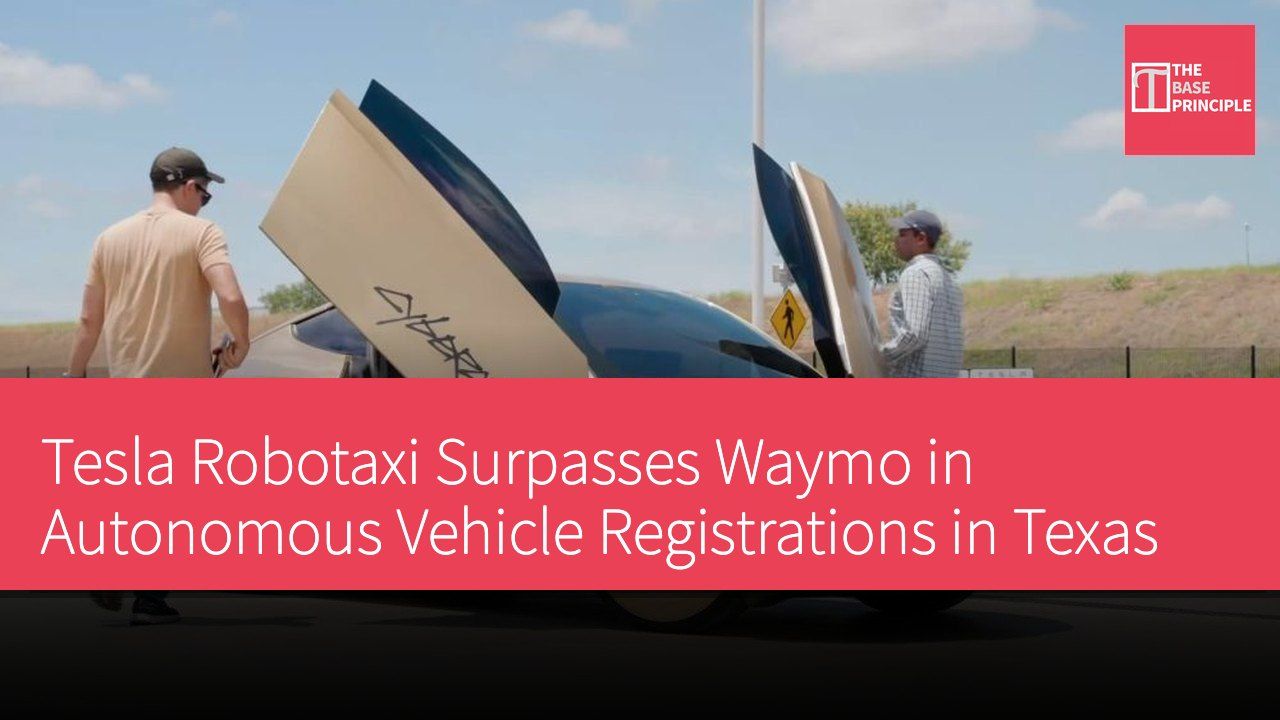
- Tesla's Robotaxi has surpassed Waymo in autonomous vehicle registrations in Texas.
- As of November 10, Tesla has registered 1,302 vehicles, while Waymo has 1,297.
- The growth of Tesla's fleet is primarily attributed to the increase in Model Y and Cybercab vehicles.
- The number of registrations does not equate to the actual operational fleet, reflecting operational capacity and regulatory positioning.
Tesla's Robotaxi has surpassed Waymo in the autonomous vehicle registrations at the Texas Department of Motor Vehicles for the first time. As of November 10, Tesla has registered 1,302 vehicles under its Tesla Robotaxi, LLC, while Waymo has 1,297. Although this change is relatively small, it has indeed occurred according to state records. Tesla's fleet in Texas has expanded after November 10, currently comprising 729 Model Y vehicles and 573 Cybercab vehicles designed for ride-hailing services.
Waymo's fleet primarily consists of Jaguar I-PACE vehicles, with a gradual increase in Zeekr-based Ojai vans.
Significant Growth for Tesla's Fleet
Tesla's Robotaxi recently added 20 Tesla Model Y vehicles, bringing the total fleet size in Texas to 1,302. This data comes from the autonomous vehicle registration list maintained by the Texas Department of Motor Vehicles, which has been continuously monitored by independent trackers since Texas law requires operators to disclose fleet size. The scale of Tesla's fleet growth is quite remarkable, demonstrating the company's expansion efforts for its autonomous ride-hailing service over the past few months. When the registration list was first made public at the end of May 2026, Tesla had only listed 42 vehicles, while Waymo already had hundreds of registered vehicles.
Tesla CEO Elon Musk had previously stated to Waymo, "There is no chance." Since then, Tesla's authorized fleet in Texas has grown more than thirtyfold, primarily due to the continuous increase in Model Y and steady growth of Cybercab vehicles. While Waymo is also expanding, its growth rate has not matched that of Tesla. It is important to note that the number of registrations does not necessarily equate to the actual operational fleet. The Texas Department of Motor Vehicles list shows the number of vehicles each company is authorized to operate but does not report how many vehicles are actually carrying passengers, the cities served, or the volume of trips.
Both companies schedule vehicles and operate mixed fleets, which may include units that are being tested or temporarily offline. Therefore, the lead in registrations reflects operational capacity and regulatory positioning more than immediate passenger volume.
Expansion of Operations by Both Companies
Tesla is leveraging its growing authorized fleet to expand its unmonitored service beyond the original Austin area, now entering cities like San Antonio and Dallas. The company has emphasized plans to further expand the deployment of Cybercab, ultimately extending into new states and regions. Waymo is also operating in multiple markets in Texas and other parts of the U.S. Currently, the five-vehicle gap between the two is small and could be reversed with either party's next large-scale registration. However, according to current public records, Tesla has a larger authorized Robotaxi fleet in the state.
Tesla's Competitive Advantage in Autonomous Driving
Tesla's Robotaxi fleet registration numbers in Texas surpassing Waymo indicates its advantage in autonomous driving technology and market expansion. Although the number of registrations does not represent actual operational status, this change reflects Tesla's efforts to promote unmonitored autonomous driving services. As Tesla continues to expand its services to new cities, this may further strengthen its market position. While Waymo is also expanding, its growth rate is relatively slower, which may impact its competitive performance.