
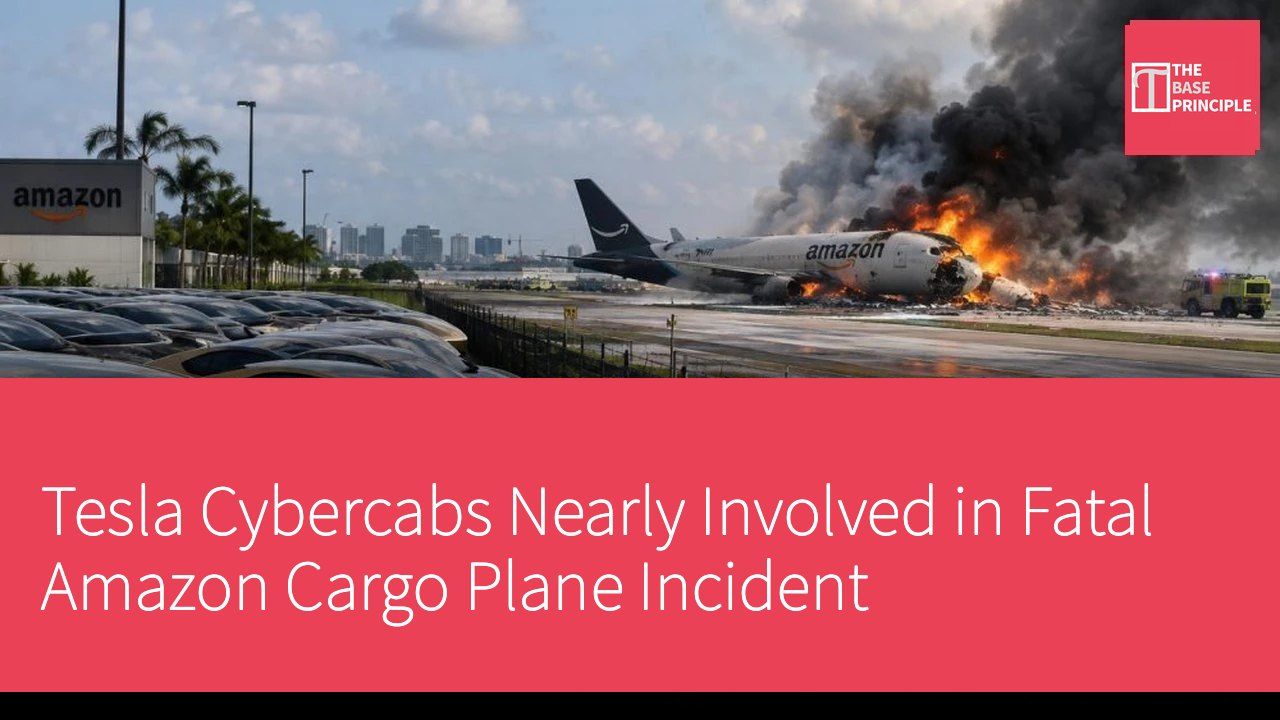
On September 6, 2026, an Amazon Prime Air Boeing 767 cargo plane crashed at Miami International Airport, resulting in five fatalities and five injuries. Operated by 21 Air, a North Carolina-based airline, flight 7598 arrived from San Juan, Puerto Rico, at 2 p.m. before it overran the runway, breached the airport perimeter fence, crossed NW 67th Avenue, and collided with multiple vehicles before catching fire, according to the Associated Press. Photos and videos from the scene show the aircraft's nose just meters away from a fenced parking area containing dozens of gold Tesla Cybercabs, the company's recently deployed autonomous taxis on Austin roads.
The Miami-Dade Fire Rescue Department confirmed the plane struck multiple vehicles, but it is unclear if any Cybercabs were affected, and Tesla and airport officials have not directly addressed the fleet. These Cybercabs have yet to enter commercial service in Miami, while Tesla's autonomous taxi operations in the area are based on modified Model Y vehicles, which have operated without regulation since Ashok Elluswamy confirmed them on the X platform in July. Elon Musk's response to the incident was notably brief, replying with a single word, "Odd," to a Zero Hedge post mentioning Cybercabs near the crash site.
He did not elaborate further, and Tesla has yet to release a statement. The incident comes as Tesla launches its latest vehicle model, which has already drawn scrutiny from federal regulators following its debut in Austin. The National Highway Traffic Safety Administration has begun reviewing how Tesla certifies the Cybercab to meet federal vehicle safety standards, a process that gained attention after Tesla's September 3rd event. The investigation primarily focuses on the vehicle's lack of a steering wheel and pedals, rather than the Miami air disaster. Federal Aviation Administration and National Transportation Safety Board investigators are currently focused on the aircraft accident, not the vehicles parked nearby.
Flight data from multiple outlets, including Simple Flying, indicates the 767 aircraft's landing speed was around 170 knots, significantly higher than the typical range of 135 to 140 knots, though investigators have yet to determine the cause of the accident. Amazon stated it is cooperating with authorities and emphasized its priority is ensuring the safety of all affected individuals. Whether the Cybercabs parked near one of the busiest airports in the United States were damaged and what Tesla's plans are for the fleet remain unanswered questions. Tesla's innovations are not only leading the way in autonomous driving technology but also continuing to expand its market presence.
With the introduction of the Cybercab, Tesla is redefining the future of transportation, which will have a profound impact on the industry as a whole. Whether facing challenges or opportunities, Tesla's continuous innovation and commitment to safety will play a crucial role in the market of the future.