
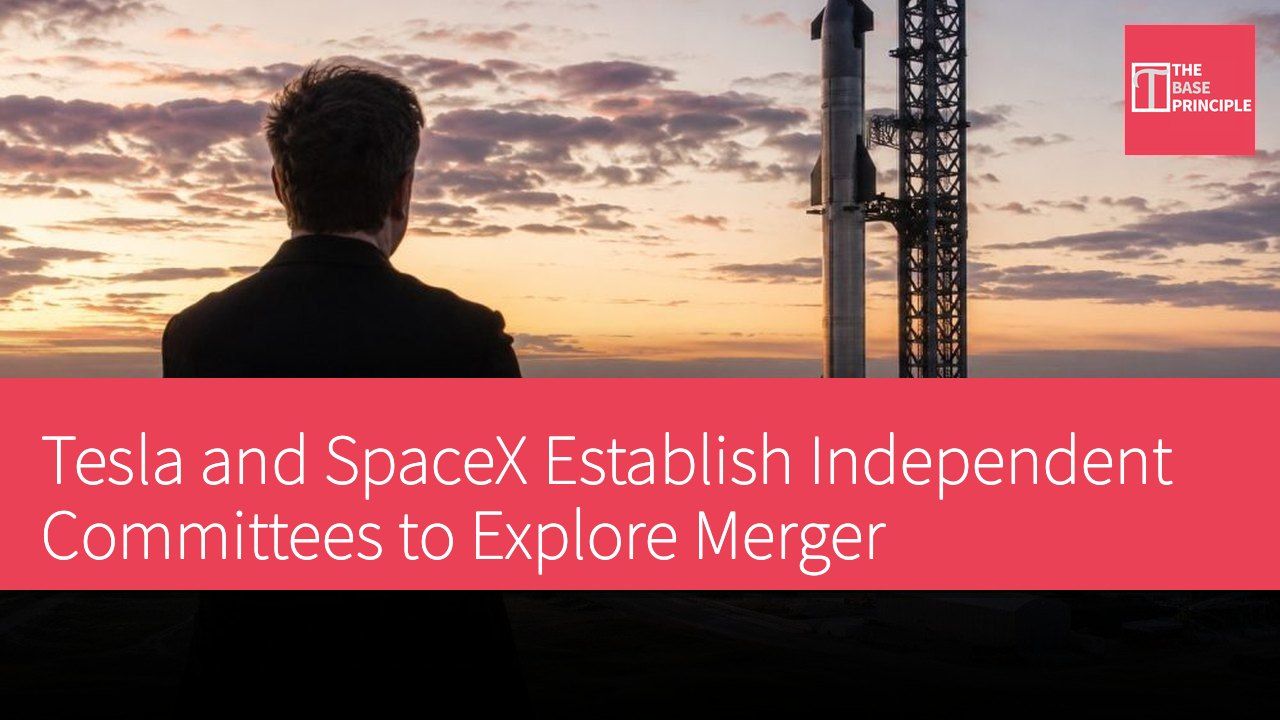
- Tesla and SpaceX have established independent committees to explore merger possibilities.
- Musk believes there are many advantages to a merger, but it requires shareholder approval.
- Any transaction must receive broad institutional support and retail grassroots backing.
- The timeline for a merger remains unclear and a special meeting will be necessary.
Elon Musk confirmed on Tuesday that Tesla and SpaceX have each established independent special committees to study the potential merger of the two companies, marking the first formal step after months of speculation. Musk revealed during SpaceX's third-quarter earnings call, "At the request of shareholders, both SpaceX and Tesla have formed special committees to discuss this idea." He stated, "Because I am in a conflict of interest, I cannot actually participate in the discussions of the special committee."
He described the situation as "a strange Kabuki dance, with two groups of people talking, and I cannot participate in the conversation." Musk did not hide his stance, saying, "Do I think this is a good idea? Yes." He pointed out that both companies have common work in areas such as superintelligent software, chip design, the Terafab facility in Austin, robotics, quality entering orbit, and connectivity. "I do believe there are many advantages to combining these two companies, as we are at the singularity of superintelligence."
Merger Requires Shareholder Approval
Musk also attempted to temper expectations. He noted that these committees have not yet reached an agreement on any terms of a transaction, stating that assuming a merger is inevitable "would be an exaggeration." Any transaction would need to be submitted to shareholders, and for Tesla, it would require the approval of 50% of the unissued shares, not just the voting shares. Musk described this as a "rather high threshold." This standard previously caused Tesla to fail; the company's attempt to declassify its board in 2025 received only 39.4% support from unissued shares and ultimately failed.
Musk's own voting interest is approximately 20% after exercising his 2018 options in June, meaning any transaction would need broad institutional support as well as backing from frequently non-voting retail shareholders.
Unclear Timeline for Merger
The timeline is another unresolved issue. Tesla submitted its proxy statement for its annual meeting on December 3 on Monday, with only three items on the ballot: elections for Musk, Robyn Denholm, and JB Straubel, a compensation vote, and auditor ratification. Barclays analyst Dan Levy pointed out that, according to Teslarati's report in its SpaceX earnings preview, an announcement must be made by late October or early November to align with the annual meeting schedule.
As no terms have been reached, any voting may require a special meeting.
Musk has been pushing in this direction over the past few weeks. At the All-In Summit in September, he asked, "Who can imagine what actions might be taken under such close collaboration?" Teslarati reported. Last week's Roadster launch event, centered around SpaceX-derived cold gas thrusters, further advanced this topic. The two companies have already shared the Terafab chip project, and Tesla holds a small stake in SpaceX, stemming from its early investment in xAI.
SpaceX brought strong data to this discussion. The company reported third-quarter revenue of RMB¥14.58 billion (approximately HK$15.93 billion), a year-on-year increase of 161%, with its superintelligent division now the largest, generating RMB¥7.56 billion (approximately HK$8.25 billion) in revenue. A higher valuation for SpaceX will impact any exchange ratio for Tesla holders. Tesla is set to report its third-quarter results after the market closes on Wednesday, October 21.
Investors have already prioritized the timeline for the merger as a key retail issue in the SpaceX earnings call, and these committees are almost certain to reappear in Tesla's meeting.
Complexities and Challenges of Merger Discussions
The merger discussions between Tesla and SpaceX reflect the potential for collaboration between tech companies, but also highlight the complexities involved in achieving this goal. Musk emphasizes the advantages of a merger, but shareholder approval and high threshold requirements make the process challenging. Additionally, the uncertainty surrounding the timeline may affect investor confidence, further complicating the feasibility of the merger. As the technological intersections between the two companies increase, future developments are worth monitoring.