
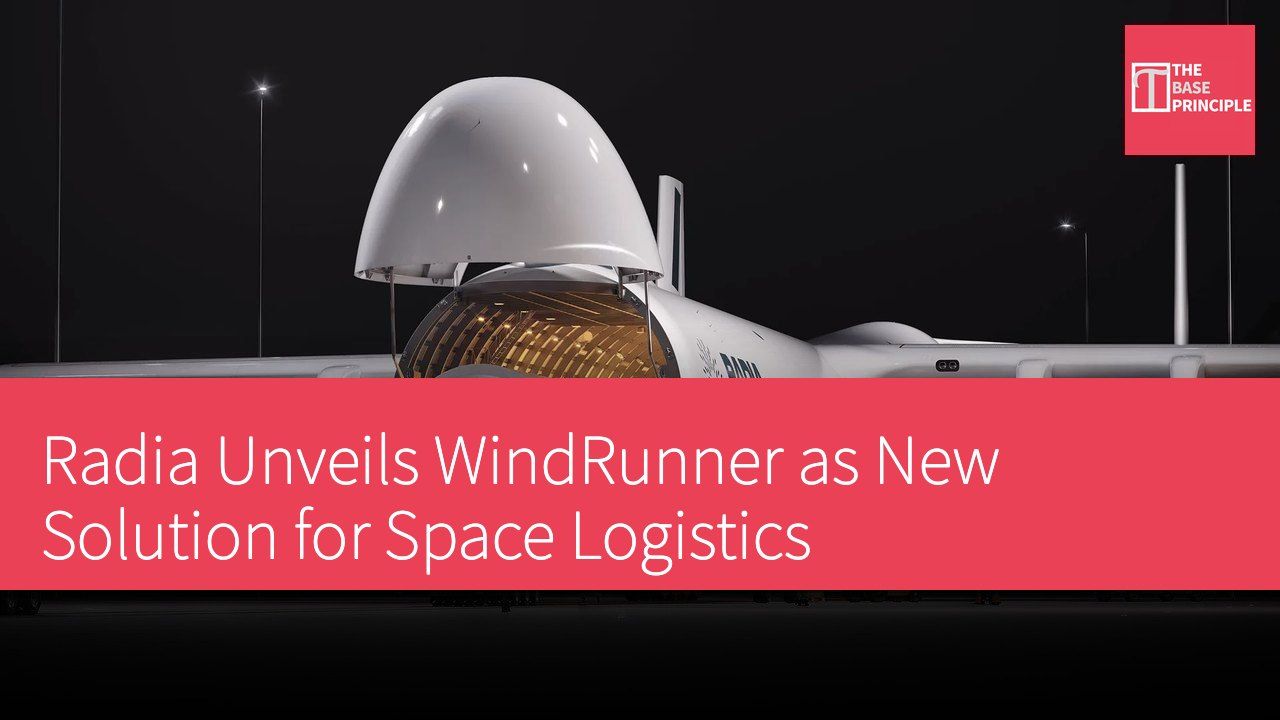
- The WindRunner is the world’s largest aircraft by volume, designed specifically for space logistics.
- The aircraft can transport ultra-large space systems without the need for disassembly.
- WindRunner supports flexible space operations and reduces transportation time.
- The design allows for the use of standard cargo handling equipment, eliminating the need for specialized facilities.
A Colorado-based company has unveiled the WindRunner, the world’s largest aircraft by volume, aimed at addressing a critical emerging constraint in the space industry. The WindRunner is designed for cargo volume rather than just payload weight, enabling the direct transport of ultra-large space systems to launch sites, manufacturing facilities, and remote or dispersed locations without the need for disassembly.
Mark Lundstrom, founder and CEO of Radia, stated, "The rockets, boosters, and spacecraft that define the ambitions of the space industry are getting larger, more capable, and more valuable. Yet, we are still relying on transportation systems designed decades ago. The WindRunner is designed to carry the world’s largest items to the hardest-to-reach places, which is exactly what the space community needs. Whether it’s a fully assembled booster, a recovered launch vehicle, or next-generation satellites, we can transport them intact within hours without disassembly."
The WindRunner features a low cargo deck height, a nose door, and an innovative cargo loading system, making the loading of ultra-large space-related cargo more convenient, thus providing the space industry with a new logistics capability.
WindRunner’s Logistics Capability
The WindRunner is not intended to replace existing launch infrastructure or strategic airlift but to complement and extend both by providing logistics capability for ultra-large, volume-dominated payloads. The WindRunner connects manufacturing, integration, launch, recovery, and maintenance operations, creating a more responsive, resilient, and flexible space mobility architecture for government, allied, and commercial operators.
Furthermore, modern space programs are increasingly facing a shortfall in transportation options, rather than a lack of ambition. The size of rocket stages, boosters, satellites, and other mission-critical systems continues to grow, while the roads, ports, and aircraft available for transport have remained largely unchanged. As a result, valuable hardware is often disassembled, constrained by existing transportation limitations, or requires days or even weeks of sea and land transport, increasing costs, time risks, and unnecessary handling, affecting some of the world’s most sensitive aerospace systems.
Supporting Flexible Space Operations
The WindRunner can support flexible space operations, reducing the transportation time for large launch systems from days to hours, while also supporting the recovery and redeployment of reusable launch vehicles for faster turnaround. The WindRunner has the capability for short takeoff and landing from approximately 1,800 meters of unpaved runway, enabling access to emerging spaceports, dispersed launch sites, and austere operating locations that are beyond the reach of traditional cargo aircraft.
The WindRunner’s design allows for the use of standard cargo handling equipment and conventional airport infrastructure, eliminating the need for specialized loading systems or customized facilities. For both military and commercial space operations, this supports a more distributed logistics architecture. Ultra-large space hardware can be transported closer to emerging spaceports, testing facilities, or austere operating locations, rather than relying solely on a few major transportation hubs.
Radia claims that the WindRunner can accommodate satellites approximately twice the size of the current largest fully assembled transportable systems. If this capability becomes feasible, spacecraft designers will have greater freedom to build larger systems without being severely constrained by transportation requirements. This could have implications for communications, Earth observation, intelligence, surveillance, and reconnaissance, as well as national security space missions.
In other words, the aircraft designed to solve logistics problems may end up influencing the way future spacecraft are designed.
The Impact of WindRunner on Space Logistics
The introduction of the WindRunner marks a significant innovation in the field of space logistics, especially in the face of the growing challenge of larger space system sizes. Traditional transportation methods are no longer sufficient, and the WindRunner offers a flexible and efficient solution for transporting large space hardware in a short time, which is crucial for improving the efficiency of space missions. Additionally, the aircraft’s design allows it to use existing infrastructure, which not only reduces costs but also promotes the sustainability of the space industry.