
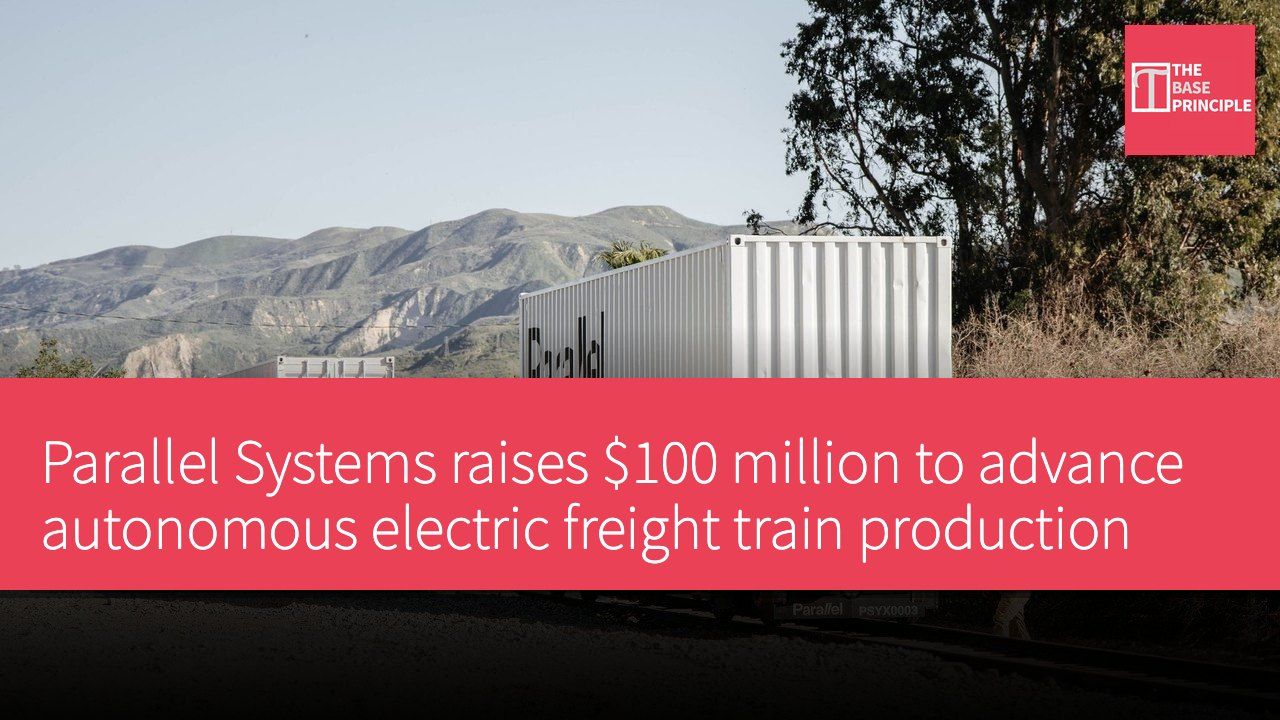
- Parallel Systems raises $100 million to expand electric freight train production.
- The new system can operate independently, enhancing short-haul freight flexibility.
- The company conducts technical testing with Genesee & Wyoming, receiving official approval.
- The new funding round will support commercial expansion of the Panther vehicle and entry into international markets.
because traditional freight trains lack flexibility on short-haul routes. Traditional freight trains rely on locomotives hauling long consists of coupled cars, an arrangement that is highly efficient for moving large volumes over long distances, but assembling trains and coordinating terminal operations makes the economics of smaller, short-haul shipments challenging. Parallel's approach differs: its battery-electric vehicles are self-propelled, eliminating the need for a traditional locomotive, and can operate independently or form coordinated platoons. These vehicles can separate and recombine to deliver freight to different destinations without traditional coupling arrangements.
Advantages of electric freight trains
The system is designed to carry standard containers, making it compatible with existing freight infrastructure and handling equipment. Onboard sensors and vehicle control software track position and operating conditions, while the company's software is designed to integrate with railroad control and logistics systems. The engineering challenge lies not only in building electric or autonomous railcars, but in coordinating multiple self-propelled vehicles while meeting railroad operating rules and safety requirements without sacrificing the energy-efficiency advantages that rail provides. Parallel is conducting technical testing in Georgia with short-line operator Genesee & Wyoming, a program that has received approval from the U.S. Federal Railroad Administration. The pilot has moved beyond a single test track; according to FreightWaves, a phase involving a 30-mile segment between Vidalia and eastern Helena, Georgia, is planned for September 2026.
Significance of the test program
The broader test program aims to evaluate the vehicles and their operating methods under increasingly representative conditions. The company says several major railroads have signed contracts to deploy its system for commercial freight service. However, the Georgia program remains a critical step in establishing how the technology performs in real-world railroad operations. Parallel says its system can open routes that conventional rail service cannot economically serve, particularly journeys under 500 miles. The company aims to combine rail's energy-efficiency and cost advantages with more frequent departures and greater flexibility.
Its website states the vehicles can travel up to 500 miles on a charge, though this is a company-claimed capability rather than independently verified performance data. The new funding will help Parallel scale Panther production and pursue international opportunities. The company has not disclosed a production timeline or the number of vehicles the Series C round will fund. If the system can operate reliably at scale, it would give railroads another way to move containerized freight while reducing reliance on short-haul trucking. The key test now is whether autonomous electric railcars can transition from monitored pilots to reliable commercial service on the existing rail network.
Item Specification Vehicle type Autonomous battery-electric freight vehicle Range per charge Up to 500 miles Test location Georgia Partner Genesee & Wyoming
Future potential of autonomous freight
Parallel Systems' technological innovation could disrupt traditional freight models, particularly in short-haul transport. As environmental awareness grows, demand for electric freight trains will increase, which can not only improve transport efficiency but also reduce carbon emissions. The company's collaboration and test program with Genesee & Wyoming demonstrate the feasibility of its technology in real-world operations, which is critical for future commercial deployment. Successful tests will provide new solutions for rail transport and could transform the freight transportation ecosystem.